
19 guides
Things to do
The places worth the drive, and how to see them well.
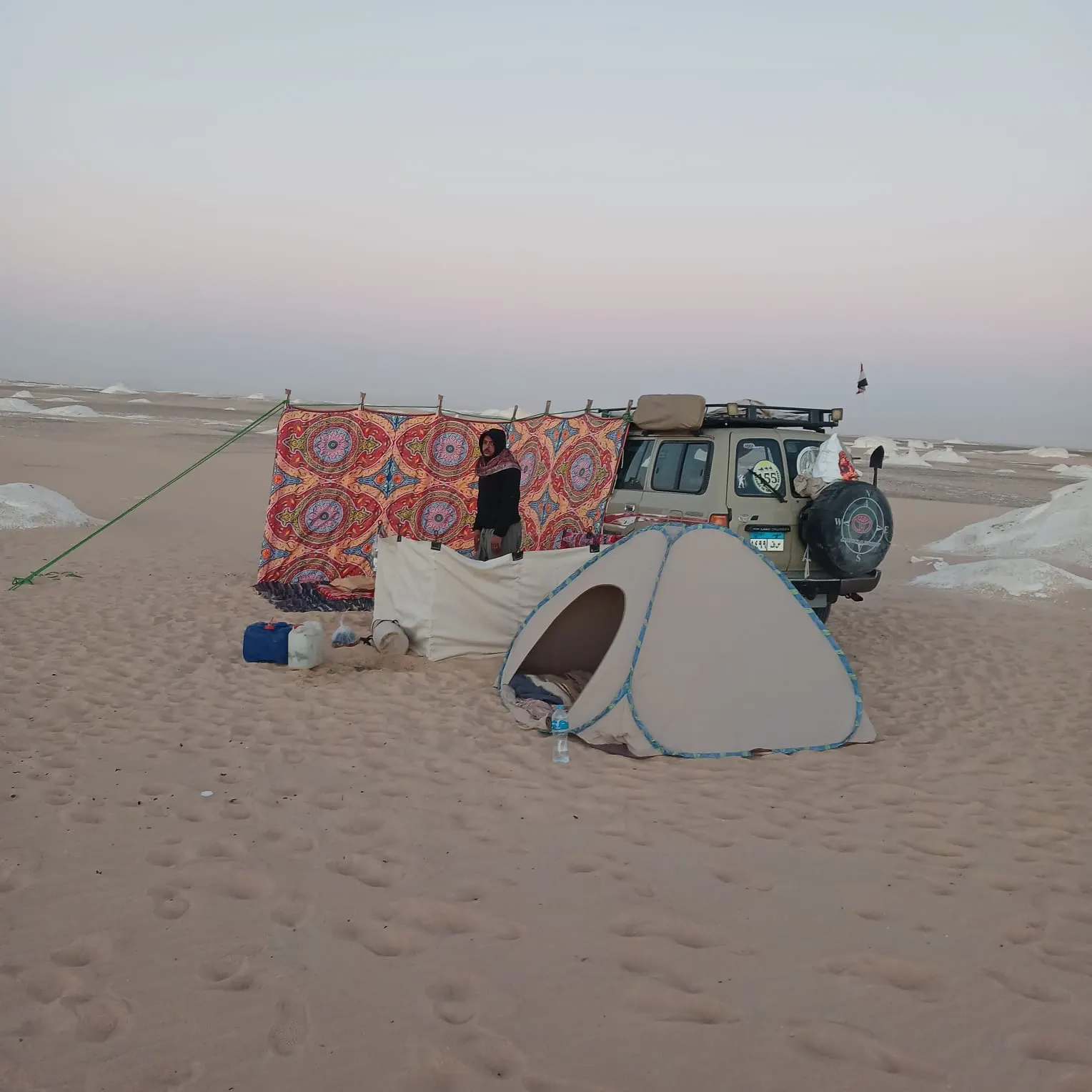
The one thing to do in the White Desert is spend a night camping among the chalk towers, for sunset, a fire-cooked dinner, the stars and sunrise. On the way south from Bawiti, about 370 km from Cairo, you stop at the Black Desert, Crystal Mountain and Agabat; add 4x4 dune driving, sandboarding, a hot spring, Djara Cave and Bahariya's Golden Mummies and painted tombs.
The essentials
Short answer: Camp, watch sunset and sunrise, drive the formations and look at the stars. Everything else is a bonus.
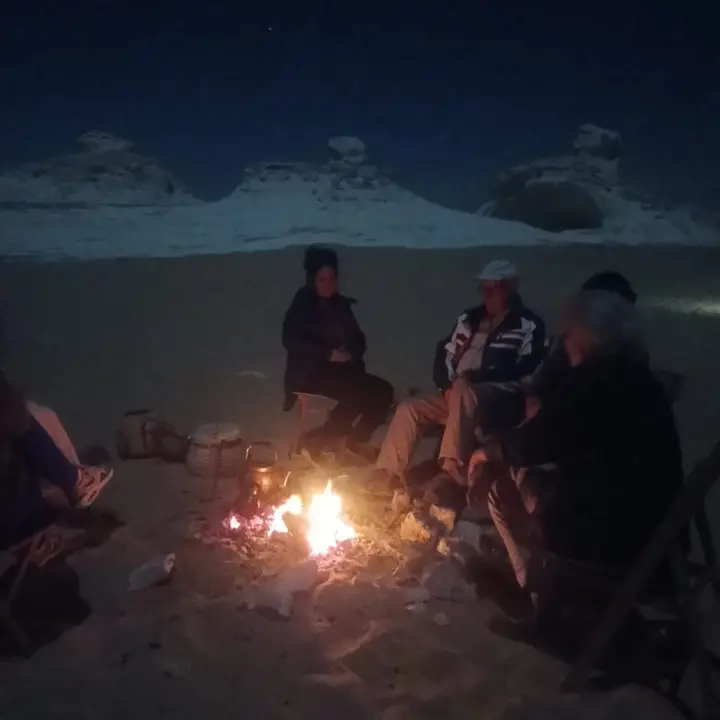
Even on two days you do the five things that define the White Desert. You cross the chalk by 4x4 and see the Mushroom and Chicken. You watch the towers glow at sunset, eat dinner by the fire and sleep under a sky full of stars. Then you wake for sunrise. The rest of this page is what turns a good trip into a great one. For timing, see how many days.
This page is the overview; each sight has its own guide, linked below.
The top ten, ranked
Short answer: The night in the chalk comes first by a long way. After that, the Mushroom field at sunset, the stars, Agabat's dunes and the Black Desert climb make up the classic trip.
Our ranking for a first visit weighs how memorable each thing is against the time it costs.
| Rank | Thing to do | Why it ranks here | Minimum trip |
|---|---|---|---|
| 1 | A night camping in the chalk | Sunset, the fire, the stars and sunrise in one go; nothing else on the list comes close | 2 days |
| 2 | Sunset in the Old White Desert | The chalk turns gold, then pink and lilac, in the last hour of light | 2 days |
| 3 | Stargazing | No towns for tens of kilometres, dry air and a flat horizon | 2 days |
| 4 | Sunrise among the formations | Soft orange light, long blue shadows and nobody else around | 2 days |
| 5 | 4x4 driving and sandboarding at Agabat | The most fun hour of the trip, on smooth slopes between rock towers | Day trip |
| 6 | The Black Desert climb | A short, steep walk for a wide view over black-capped hills | Day trip |
| 7 | The New White Desert's chalk mountains | Towers tens of metres high and far fewer visitors | 3 days |
| 8 | Golden Mummies and painted tombs in Bawiti | Greco-Roman mummies and 26th-dynasty paintings in a quiet oasis town | 3 days |
| 9 | A hot spring soak | Warm water under the palms after a cold night or a dusty day | 2 days, if time allows |
| 10 | Djara Cave | Stalactites and prehistoric engravings after a long dune crossing | 4 days |
Crystal Mountain is missing on purpose. It's worth its twenty minutes on the way, but it's a low ridge with crystals in the rock, not a mountain of crystal. Go with the right expectations and you'll enjoy it.
The sights, north to south
Short answer: South of Bawiti the road passes the Black Desert, Crystal Mountain and Agabat, then the New and Old White Desert, with the Mushroom and Chicken and the spring of Ain Khadra inside the park.
| Sight | In one line | Time needed | On the 2-day trip? |
|---|---|---|---|
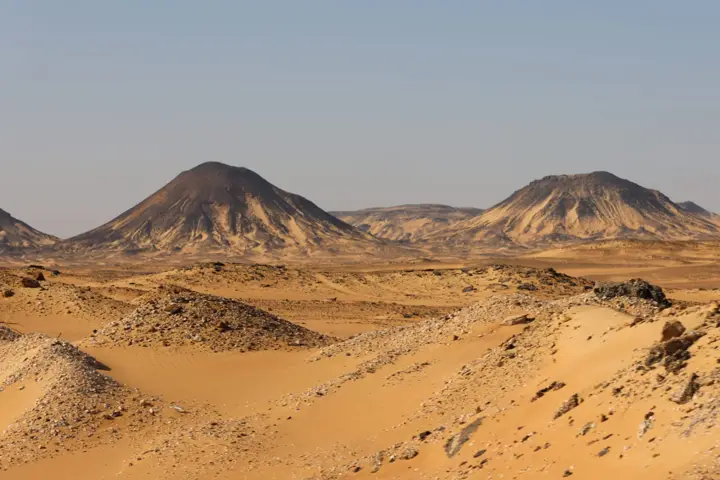
| Black Desert | Orange-brown hills capped with dark stone, about 40 km south of Bawiti | 30–60 minutes | Yes |
| Crystal Mountain | A low quartz and calcite ridge with a small natural arch, about 100 km south of Bawiti | 20–30 minutes | Yes |
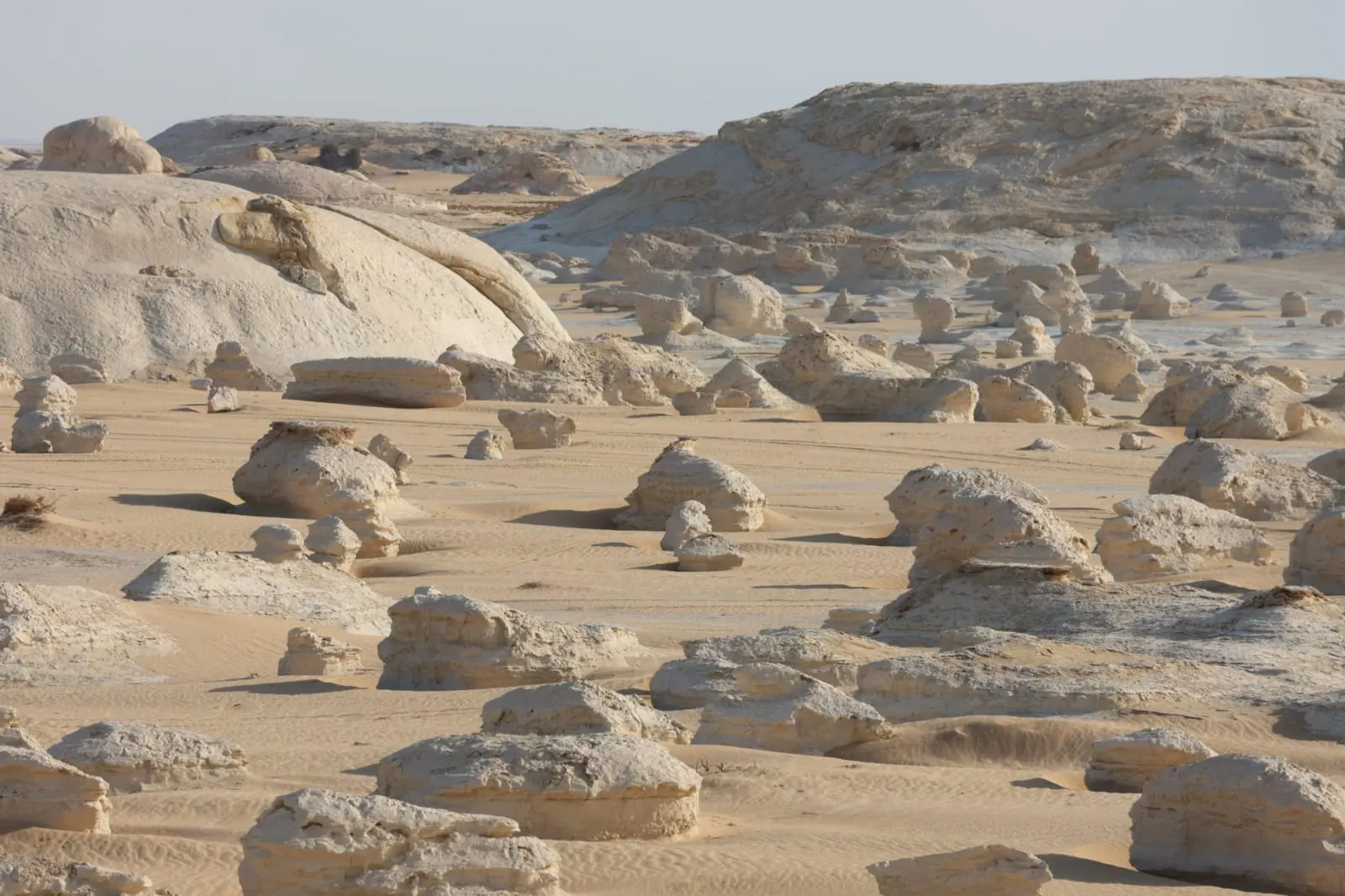
| Agabat valley | Chalk towers above steep, smooth sand slopes at the park's northern edge | 30–60 minutes | Yes |
| New White Desert | Big chalk mountains and towers in the northern part of the park | An afternoon | No, three days |
| Old White Desert | The classic field of wind-carved shapes where most camps are | Sunset and sunrise | Yes |
| Mushroom and Chicken | The two most photographed rocks, about 40 km north of Qasr Farafra | 20–30 minutes | Yes |
| Ain Khadra | A small palm-shaded spring hidden among the chalk | 30 minutes, plus off-road time | No, three days |
The order matters for light. The Black Desert and Agabat look best in the morning, the chalk in the late afternoon. On a one-night trip you reach them all on the afternoon of day one, so the stops can feel short. For distances and the timings of the day, see getting there.
How far each sight is along the road
Short answer: Everything sits on one road. The Black Desert is about 40 km from Bawiti, the Mushroom about 135 km, and Qasr Farafra about 180 km.
| Sight | From Bawiti | From Cairo | Typical drive |
|---|---|---|---|
| Bawiti, Bahariya Oasis | – | about 370 km, 4.5–5 hours by car with a stop | – |
| Black Desert | about 40 km | about 410 km | About 30 minutes from Bawiti |
| Crystal Mountain | about 100 km | about 470 km | About 45 minutes from the Black Desert |
| Agabat valley | about 120 km | about 490 km | About 1.5 hours from Bawiti with the stops |
| Mushroom and Chicken | about 135 km | about 500 km | 2–2.5 hours from Bawiti with the stops |
| Qasr Farafra | about 180 km | about 550 km | About 45 minutes from the chalk |
From a Cairo hotel, allow six to seven hours with stops to reach the Mushroom. The last stretch leaves the tarmac and crosses the plain by 4x4. There is no signpost, car park or facility at any of the formations.
Every activity at a glance
Short answer: Most of the list fits the two-day trip; Bahariya's antiquities, Ain Khadra and the New White Desert need three days, and Djara Cave needs four.
| Activity | Where | Time needed | On the 2-day trip? | Best season | Guide | Tour |
|---|---|---|---|---|---|---|
| Camping among the formations | Old or New White Desert | One night | Yes | October to April; December and January nights are cold | Camping | Overnight from Cairo |
| Sunset and sunrise | The chalk plain around camp | About 90 minutes each | Yes | All year | Sunrise and sunset | Overnight from Cairo |
| Stargazing | Your camp | As long as you like | Yes | Darkest within about four nights of a new moon; winter skies are often the clearest | Stargazing | Overnight from Cairo |
| Full-moon night walk | Old White Desert | One night | On full-moon dates | Full-moon dates, October to April | Stargazing | Full-moon camping |
| Meteor showers | Your camp | One night | On shower dates | Geminids in mid-December | Meteor showers | Geminids camp |
| 4x4 dune driving | From Agabat into the chalk | About 1–2 hours off-road in total | Yes | October to April | 4x4 dune driving | Overnight from Cairo |
| Sandboarding | Agabat sand slopes; dunes on the way to Djara | Late afternoon, a few runs | Yes, boards free | October to April | Sandboarding | Overnight from Cairo |
| Black Desert climb | Hills south of Bawiti | About 15 minutes up | Yes | October to April; avoid midday from April to October | Black Desert | Overnight from Cairo |
| Walking among the towers | Old and New White Desert | About an hour at sunset; longer walks, ask us | Short walks, yes | November to February | Old and New White Desert | Private comfort camping |
| Photography | Everywhere, best at golden hour | All trip | Yes | October to April | Photography | Overnight from Cairo |
| Hot spring soak | Bir el-Matar and Bir el-Ghaba near Bawiti; Bir Sitta near Farafra | 15–20 minutes in the water | When time allows, on day two | Winter evenings, or the morning after camp | Hot springs | Three days |
| Golden Mummies | Bawiti museum | 20–30 minutes | No, three days | Mornings, all year | Golden Mummies | Three days |
| Painted tombs | Qarat Qasr Salim, Bawiti | 30–45 minutes | No, three days | Mornings, all year | Painted tombs | Three days |
| Temple of Alexander | About 5 km west of Bawiti | 20–30 minutes | Not on the set timetable; ask us | Mornings, all year | Temple of Alexander | Three days |
| English Mountain sunset | Bawiti | 45 minutes | No, three days | All year, at sunset | Bahariya Oasis | Three days |
| Ain Khadra spring | Inside the park, off-road | 30 minutes | No, three days | October to April | Old and New White Desert | Three days |
| Farafra Oasis | 180 km beyond Bawiti | Half a day | No | October to April | Farafra Oasis | Three days |
| Djara Cave | Abu Muharrik plateau, east of the White Desert | Four days from Cairo | No | October to April | Djara Cave | White Desert and Djara Cave |
| Camel ride | Ask us | Ask us | Ask us | Ask us | Ask us when you book | Ask us |
Bahariya antiquities tickets cost about EGP 400 for foreigners since 1 October 2026 (was about EGP 100); check on the day. Opening hours change, so we check them the day before.
Sunset, sunrise and the light
Short answer: Sunset ranges from about 17:15 in December to about 20:00 in June. Arrive in the chalk an hour before it; that hour is the best of the whole trip.
Good trips plan the whole first day backwards from sunset. The light turns warm about an hour before, the best portrait light comes about half an hour before, and the pink afterglow on the chalk lasts about ten minutes after the sun drops. Sunrise is quieter and cooler, with long blue shadows.
| Month (mid-month) | Sunrise | Sunset | What it means for your day |
|---|---|---|---|
| December | ~06:49 | ~17:15 | Short afternoon; keep the road stops brisk |
| January | ~06:58 | ~17:33 | Same; it gets cold soon after sunset |
| April | ~05:44 | ~18:31 | Summer time starts at the end of April |
| June | ~06:12 | ~20:03 | Summer time; late start from Bahariya |
| October | ~07:06 | ~18:39 | Summer time ends at the end of October |
| November | ~06:27 | ~17:17 | Short, mild afternoons |
These are our own calculations, rounded. The month-by-month table and a guide to the colours are on sunrise and sunset.
Honest trade-off: in December and January the drive from Cairo uses most of the daylight on day one. A day trip misses sunset altogether; see day trip or overnight. If light matters to you, a three-day trip gives you a full, unhurried sunset in the chalk.
Stars, moon and meteors
Short answer: Choose a date within about four nights of a new moon for the Milky Way, or a full moon for glowing chalk and easy night walks. The Geminids in mid-December are the year's best shower.
The camps are tens of kilometres from Bawiti and Farafra, the air is dry and the horizon is flat. On a moonless night the Milky Way stretches across the sky, and the Andromeda galaxy is visible without binoculars. Near a full moon the stars fade, but the chalk glows silver. The brightest part of the Milky Way is high in the evening from about May to September.
| You want | Choose | What you give up |
|---|---|---|
| The Milky Way and the most stars | Within about four nights of a new moon | Night walks need a torch |
| Glowing chalk and walks without a torch | Full-moon dates | Most stars fade |
| A bit of both | A few days either side of first or last quarter | Neither is at its best all night |
| Shooting stars | A meteor shower date | Fixed dates, not always on a weekend |
The next good shower is the Geminids on 13–14 December 2026, with a dark sky after the crescent moon sets. The 2027 Lyrids and Geminids are spoiled by a full moon. See stargazing, meteor showers and the calendar.
4x4, dunes and sandboarding
Short answer: The off-road driving starts at Agabat, about 120 km and 1.5 hours south of Bawiti. On the two-day trip it's about 1–2 hours off-road in total, in a Toyota Land Cruiser, with free sandboards.
Agabat's name refers to the difficult passes that once slowed camel caravans. Today it's where most trips leave the tarmac and the fun begins: steep, smooth slopes between chalk towers. A sandboarding session is two to five runs in a 30–60 minute stop, and children can ride sitting down. Every run means walking back up the sand. That climb is the hard part, not the ride.
For longer days on the dunes, the four-day Djara Cave trip crosses dune belts with two 4x4s. See 4x4 dune driving and sandboarding. If dunes are the main reason for your trip, our comparison with a Hurghada desert safari explains how the two feel different.
Bahariya, the springs and the oasis
Short answer: Bawiti, our home oasis, has the Golden Mummies, painted 26th-dynasty tombs and the Temple of Alexander; warm springs near town make a good last stop on the way home.
Most two-day trips treat Bawiti as a lunch stop. Give it a morning instead and you see the museum, the painted tombs of Zed-Amun-ef-ankh and Bannentiu, the Ain el-Muftella chapels and the Temple of Alexander, in a half day. The temple is not on the three-day timetable, so ask us to add it. English Mountain, with its First World War British lookout, is the place for sunset over the palms. See Bahariya Oasis and the painted tombs.
| Site | What you see | Why it matters | Guide |
|---|---|---|---|
| Antiquities museum | A few of the Golden Mummies, with gilded masks and painted wrappings | From a vast Greco-Roman cemetery found in 1996 when a donkey stumbled into a hole | Golden Mummies |
| Tombs of Zed-Amun-ef-ankh and Bannentiu | Painted burial chambers of a father and son | The highlight of Bawiti's 26th-dynasty sites | Painted tombs |
| Temple of Alexander | Low walls of a temple to Amun, about 5 km west of Bawiti | One of very few Western Desert monuments in Alexander's name | Temple of Alexander |
| English Mountain | A hill with a First World War British lookout | The town's sunset view over the palms | Bahariya Oasis |
For a soak, Bir el-Matar is 7 km from Bawiti and Bir el-Ghaba 11 km out. Bir Sitta is near Farafra. They are simple pools in palm gardens or open desert, many at 40°C or more. See hot springs.
A pool may be drained for cleaning or a pump may be off, so your driver checks on the day. The iron in the water can stain pale swimwear orange; wear something dark. If you want a quieter oasis than Bawiti, Farafra has Badr's Museum, an old fortress and palm gardens, and fits a three-day loop.
Night, nature and silence
Short answer: Some of the darkest skies within reach of Cairo, fennec foxes at the edge of camp, fossil shells in the chalk and total quiet before dawn.
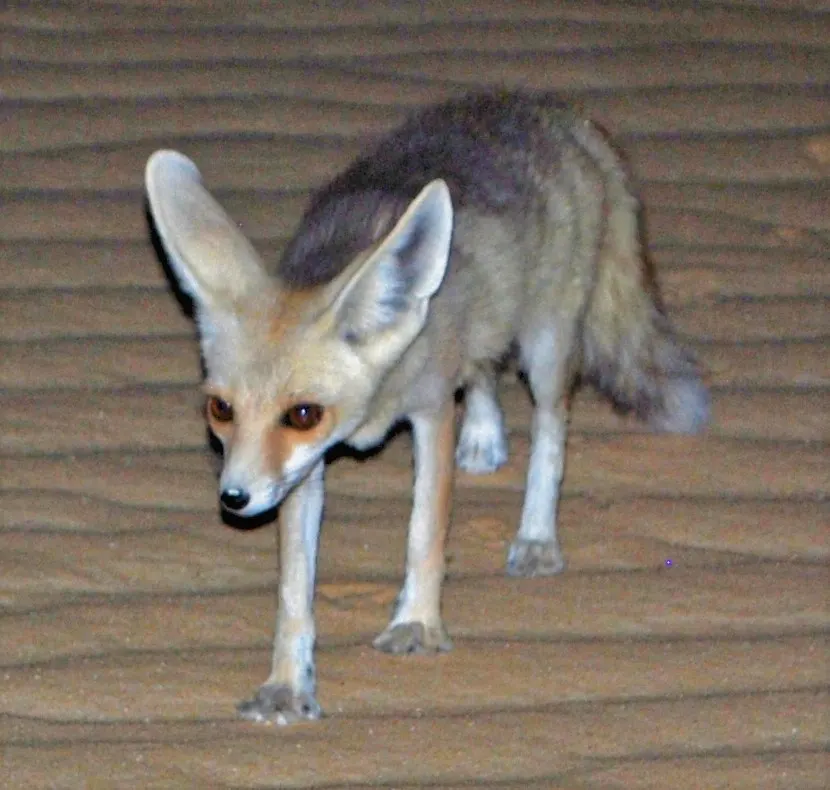
After dinner, watch for fennec foxes, the tiny desert foxes with huge ears that come close to camp for scraps; please don't feed them. Fennecs are mainly nocturnal, and their ears are about 9–10 cm long, according to Wikipedia's fennec fox article (checked 19 November 2026). Next morning, look for their tracks around the tents. Dorcas gazelles live in the park, but they are shy and you are more likely to see tracks than animals.
In the chalk you'll see fossil shells and sea urchins from the ancient sea that laid down the white rock, roughly 70 to 80 million years ago in the Late Cretaceous. Look, photograph and leave them: this is a national park. The quiet is the other thing people remember. Before dawn, far from the towns, there is very little to hear but the wind and the fire.
What you can and can't do in the park
Short answer: You can walk, camp, photograph and sandboard. You can't collect stones or fossils, climb or carve the formations, fly a drone without a permit, or feed the wildlife.
White Desert National Park covers about 3,133.5 km² of New Valley Governorate under Prime Minister's Decree No. 1220 of 2002. Expect a government protected-area fee for foreign visitors, collected through the operator and shown as its own line in your quote.
| Allowed | Not allowed | Why |
|---|---|---|
| Walking among the formations | Climbing or carving them | The chalk is soft and the shapes are fragile |
| Photographing fossils and crystals | Taking fossils, crystals or rocks | Illegal in a national park; Crystal Mountain has already lost much of its sparkle |
| A campfire at an existing fire site | New fire sites, leaving rubbish | All rubbish is carried out |
| Watching foxes from camp | Feeding them | Please leave them wild |
| Photography with a camera or phone | Flying a drone without a permit arranged in advance | Drones can be confiscated at the airport or at police checkpoints on the Bahariya road |
For the full rules, see the national park and permits and safety.
What to do by type of traveller
Short answer: Everyone should camp. After that, families want Agabat's dunes, photographers want an extra sunset, history lovers want a morning in Bawiti, and adventurers want Djara.
| You are | Must do | Add if you can | Best trip |
|---|---|---|---|
| First-time visitor | Night in the chalk, sunset, sunrise | A spring on the way home | Overnight from Cairo |
| Family with children | Sandboarding at Agabat, the fire, the stars | A third day to break up the drive | Family private trip |
| Photographer | Two sunsets and a sunrise in the chalk | New White Desert towers, a new-moon night | Three days |
| History lover | Golden Mummies and painted tombs | Temple of Alexander; ask us to add it | Three days |
| Adventure seeker | 4x4 driving and dunes | Djara Cave and the long dune crossing | White Desert and Djara Cave |
| Short on time | Black Desert, Crystal Mountain, Agabat, a few hours in the chalk | – | Day trip from Cairo |
For children, see the White Desert with kids. For more comfort at camp, see glamping.
What to do in each season
Short answer: October to April is the main season for everything. Midsummer still works if you shift the day to sunset and dawn; spring brings the risk of a windy, dusty khamaseen day.
| Season | Day high | Night at camp | Best for | Watch out for |
|---|---|---|---|---|
| November–February | 20–26°C | About 0–6°C in December and January; milder in November and February | Walking, the Black Desert climb, full days out | Cold nights; bring a down jacket, hat and gloves |
| March–April | 26–32°C | About 6–14°C | Longer evenings, milder nights | Khamaseen wind and dust, highest in April |
| May–September | 35–38°C | About 15–22°C | Warm nights and the Milky Way | Midday heat; late start, sunset and dawn only |
| October | About 31°C | About 12–16°C | Warm days, pleasant nights | Hot middle of the day |
Day highs and night lows come from our weather and night temperatures table, which gives every month. For the month-by-month verdict, see the best time to visit.
The 2027 eclipse
Short answer: On 2 August 2027 the White Desert lies in the path of a total solar eclipse, with the peak around 12:53 local time. Totality is much longer in the north than at the Mushroom.
Totality lasts 6 minutes 24 seconds in the northern Black Desert, close to the centre line, and 2 minutes 5 seconds at the Mushroom and Chicken in the White Desert, according to timeanddate's calculations for those points. In Bawiti it lasts 6 minutes 19 seconds. Farafra town is outside the path, at about 99.7%. August is one of the hottest months, so plan for shade and water. See the total solar eclipse 2027 and the eclipse camp.
Before you go
Short answer: People underestimate the distance, the cold at night and the midday heat on the Black Desert climb.
- The distance: Cairo to Bawiti is about 370 km, 4.5–5 hours by car with a stop, and the formations are about 500 km from Cairo.
- The cold: December and January nights are 4 to 6°C, and close to 0°C on still nights in the open desert. See weather and night temperatures.
- The heat: from April to October, avoid the Black Desert climb at midday. Wear shoes, not sandals.
- No toilets beyond Bawiti: there are no facilities at any of the sights. Ask us about a toilet tent when you book.
- Camp can move: occasionally a checkpoint asks groups to camp elsewhere. We tell you if it happens and why. See where we camp.
What fits each trip length
Short answer: One day covers the road sights; two days adds the night in the chalk; three days adds Bawiti, Ain Khadra and the New White Desert; four days opens Djara Cave.
| Trip | What you can fit in | Price | Book |
|---|---|---|---|
| Day trip | Black Desert, Crystal Mountain, Agabat, two to three hours among the chalk | About US$220 to 280 per person for two travellers, private | Day trip from Cairo |
| 2 days, 1 night | All of the above plus sunset, camp dinner, stars, sunrise and a spring stop if time allows | About US$185 to 230 shared · US$360 to 460 private, per person | Overnight from Cairo |
| 3 days, 2 nights | Add the Bawiti museum and tombs, English Mountain, Ain Khadra and the New White Desert | About US$495 to 660 per person for two travellers, private | Three days |
| 4 days, 3 nights | Add Djara Cave and a long off-road crossing of the dune belts | About US$605 to 825 per person for two travellers, private | White Desert and Djara Cave |
For the full breakdown, see what the trip costs. Shared or private also changes how long you can stay at each stop; see shared or private.
Combining the White Desert with Siwa
Short answer: It's possible, but not on the direct desert road. We route via Cairo.
For the road between Bahariya and Siwa, the UK government advises against all but essential travel. We route via Cairo and don't use it. If you are choosing between the two, see White Desert vs Siwa. If you want both, see the Siwa and White Desert trip.
Plan your activities with us
Short answer: Tell us what you love and we'll build the route around it: photography, adventure, history, or just peace and stars.
Message us on WhatsApp with "activities", your dates and two or three things from this page you'd most like to do. We'll suggest the right trip length and route, and confirm what's possible in your season. Want a camel ride? Ask us when you book. Contact details are on our contact page.
 Start here · 11 min readOld and New White Desert: what's the difference?Read the guide
 Popular · 8 min readStargazing in the White Desert: night sky and moon guideRead the guide
 Popular · 8 min readThe Black Desert, Egypt: what it is and how it differs from the White DesertRead the guide
Map
Where the White Desert is
Egypt’s Western Desert, with the oases at their true positions. Tap a place to read its guide.
- The White Desert
- Towns and oases
- Desert sites
- Main desert roads
Positions are true latitude and longitude. The desert sites between Bawiti and Farafra are approximate, because they spread over many kilometres. Dashed lines are the main desert roads.

More guides
11 min read
Agabat valley, White Desert
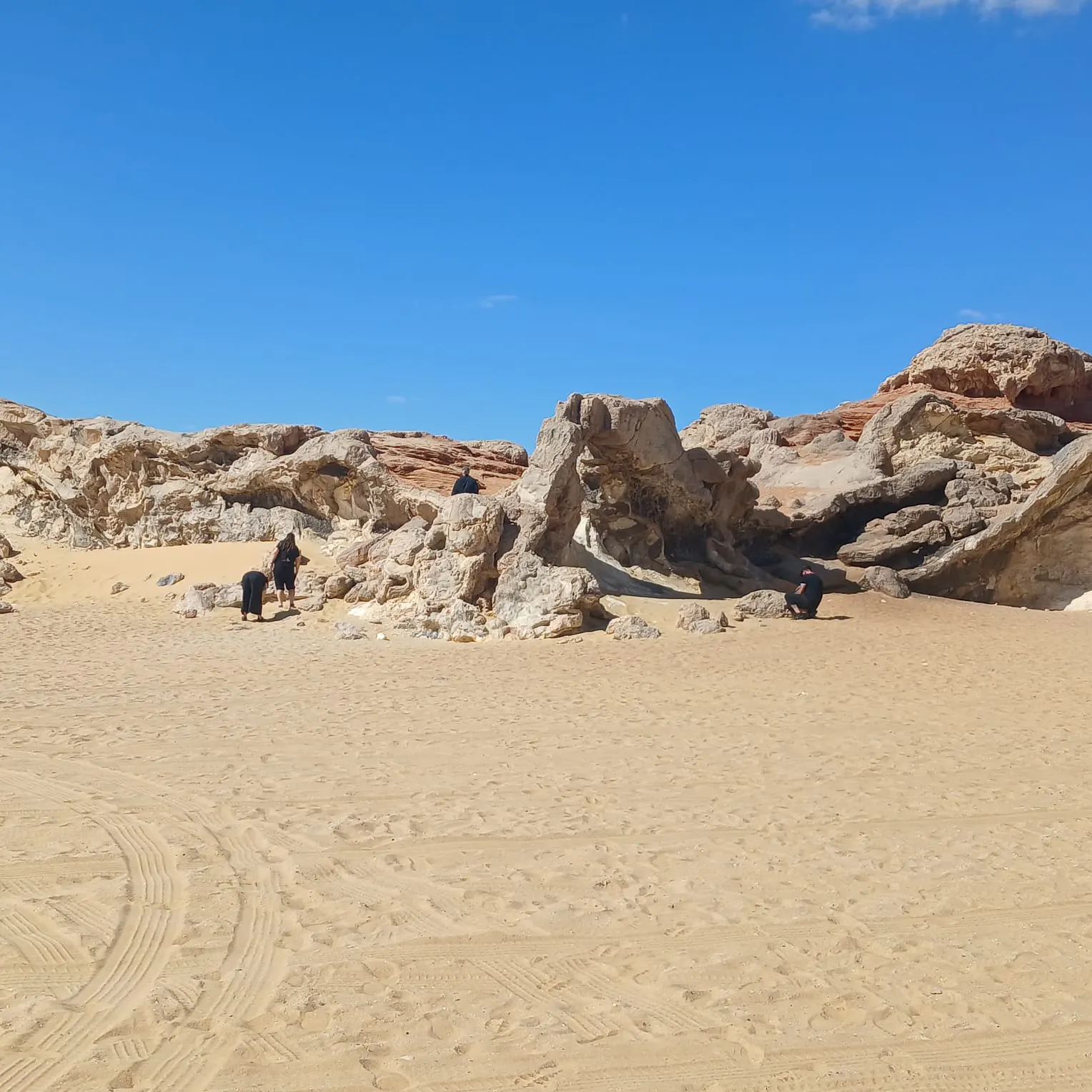
Agabat is a valley at the northern edge of the White Desert, about 1.5 hours' drive south of Bawiti, where tall chalk and limestone towers rise out of steep, smooth sand slopes. Its name refers to the difficult passes that once slowed camel caravans. Today it's one of the best photo stops on the route and where most trips let you run or slide down the dunes.
9 min read
Ain Khadra: the hidden spring in the White Desert
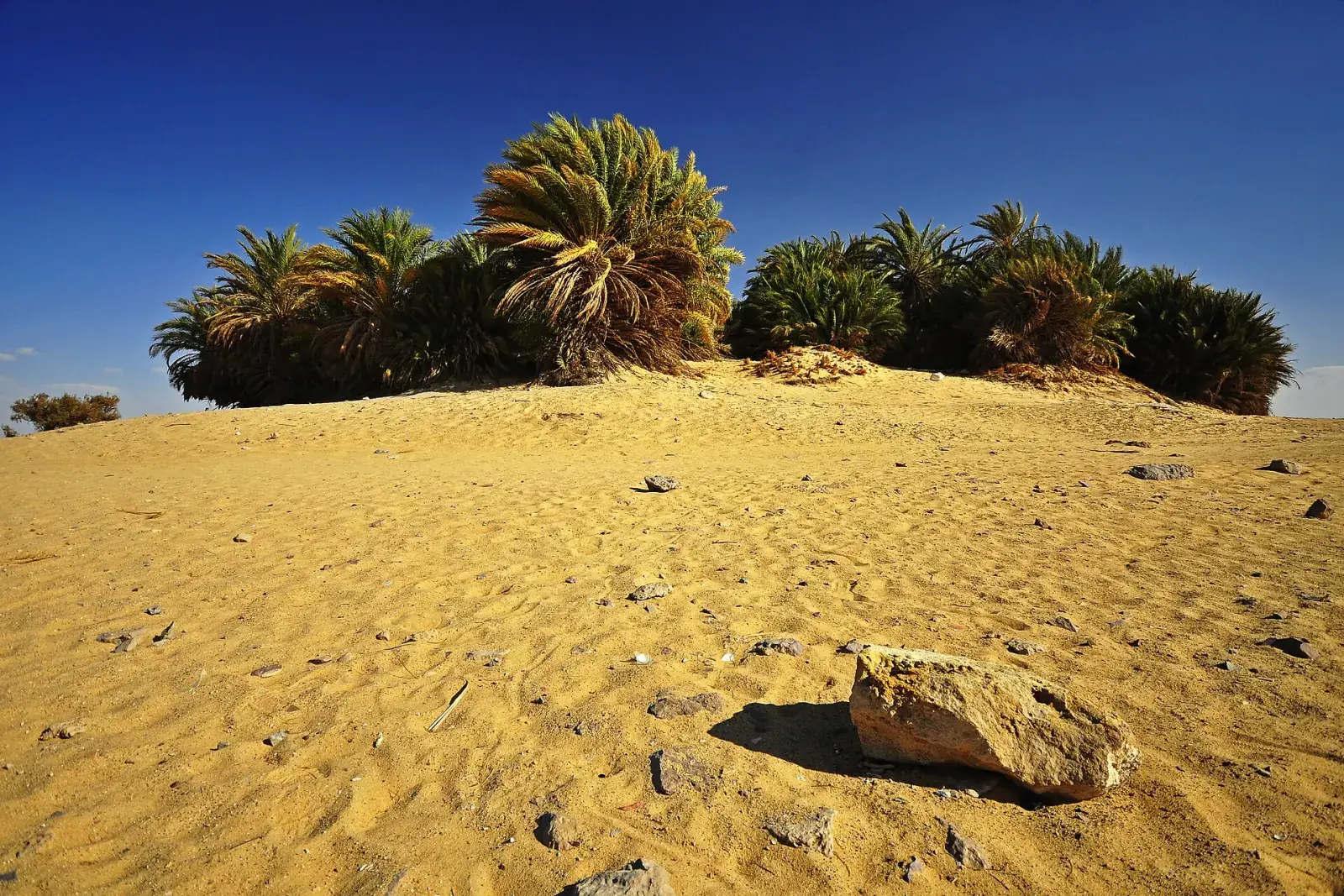
Ain Khadra, the Green Spring, is a small spring ringed by palms and reeds in the northern Farafra Depression, inside White Desert National Park, and reachable only off-road by 4x4. It is a stop on day two of our three-day trip, priced at about US$495 to 660 per person for two travellers, private. One-night trips usually leave it out.
9 min read
Bahariya Oasis tour: Bawiti sights and which trip to book
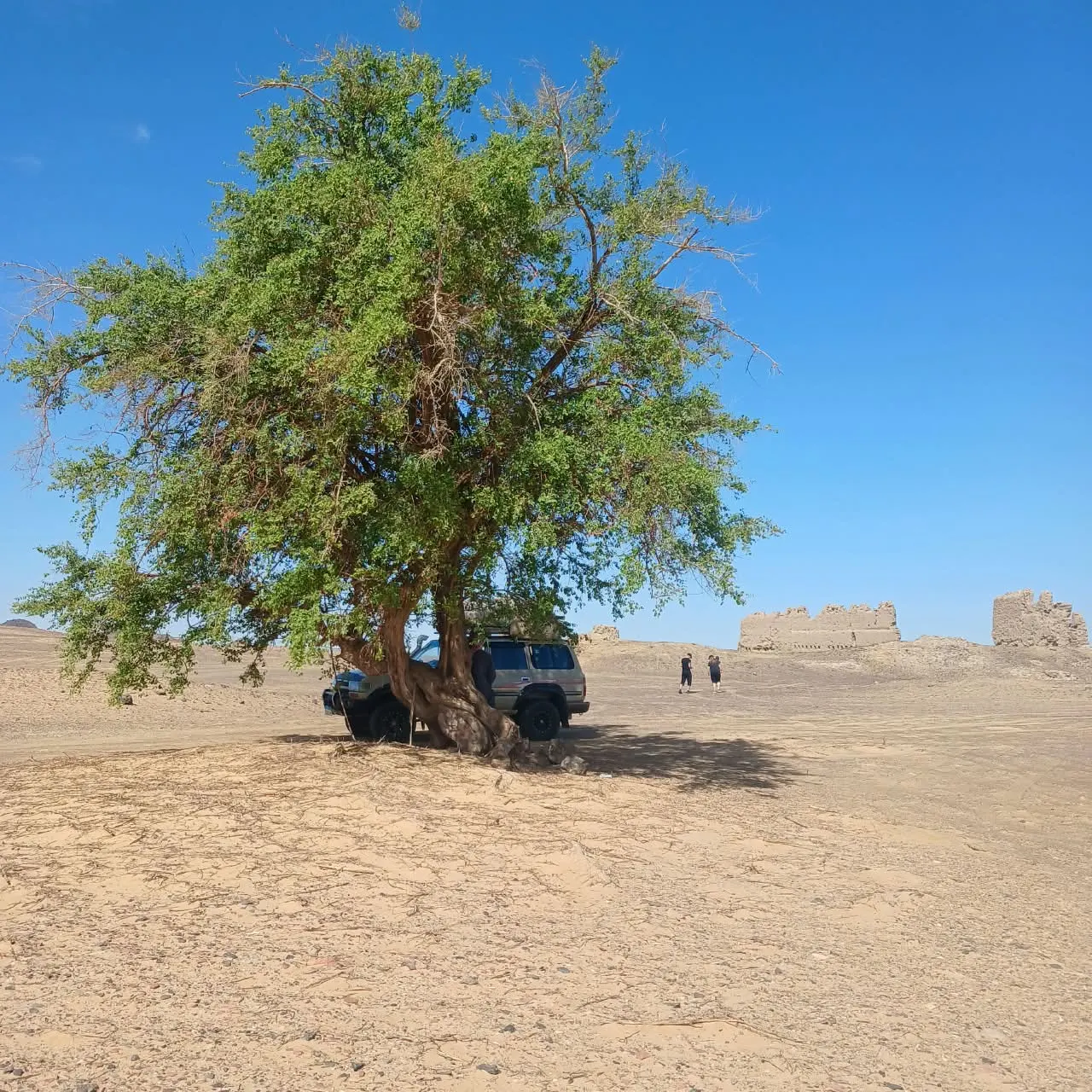
The trip we suggest first is our 2-day overnight camping trip from Cairo, priced about US$185 to 230 shared · US$360 to 460 private, per person, with lunch in Bawiti on the way. To see the museum and tombs too, book the 3-day trip, about US$495 to 660 per person for two travellers, private. For dates, message us on WhatsApp.
11 min read
Black and White Desert tour: route, stops and what's included
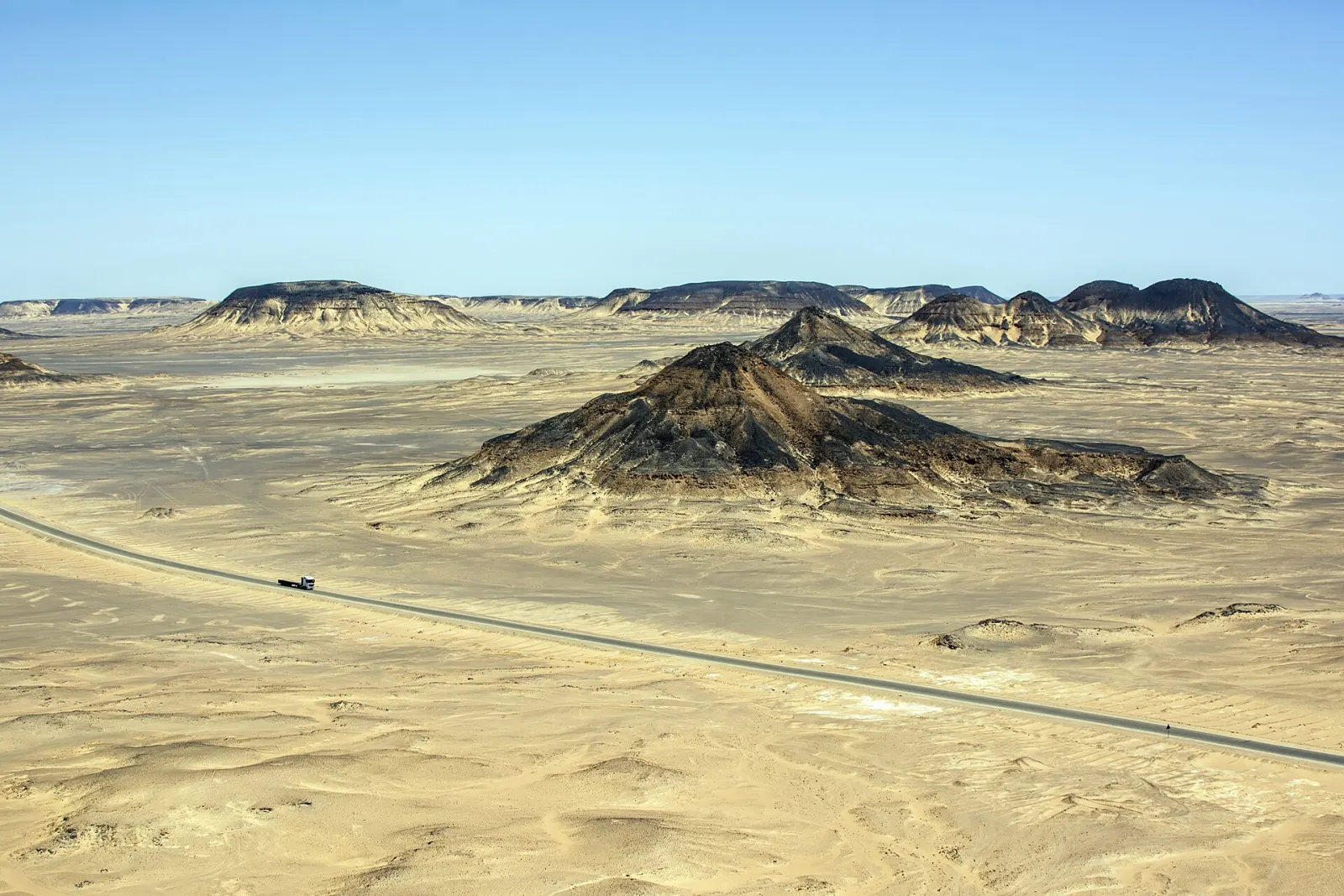
A Black and White Desert tour is the classic trip from Cairo: road to Bahariya Oasis, then by 4x4 to the dark-capped hills of the Black Desert, the quartz ridge of Crystal Mountain, the sand valley of Agabat and the chalk formations of the White Desert, with a night camping among them. It usually takes two days and one night, about 500 km each way.
9 min read
Crystal Mountain, Egypt
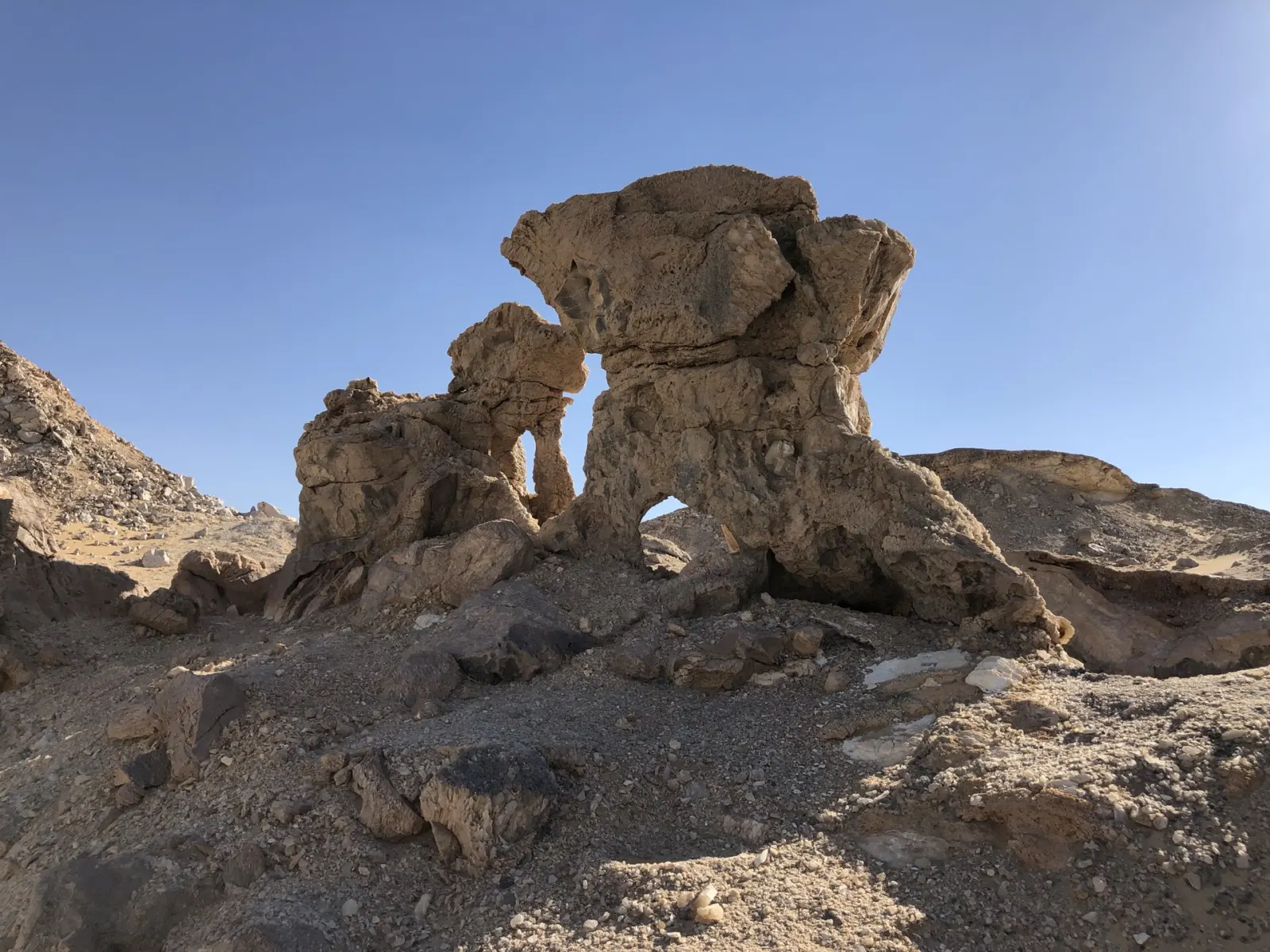
Crystal Mountain is a low limestone ridge beside the Bahariya–Farafra road, about 100 km south of Bawiti, laced with glittering crystals, mostly calcite, and ending in a small natural arch. Almost every White Desert trip stops here for twenty to thirty minutes, between the Black Desert and the Agabat valley. Enjoy it as a short geology stop, not a mountain of crystal.
9 min read
Dakhla and Kharga oases: Al-Qasr, Bagawat and where to stay
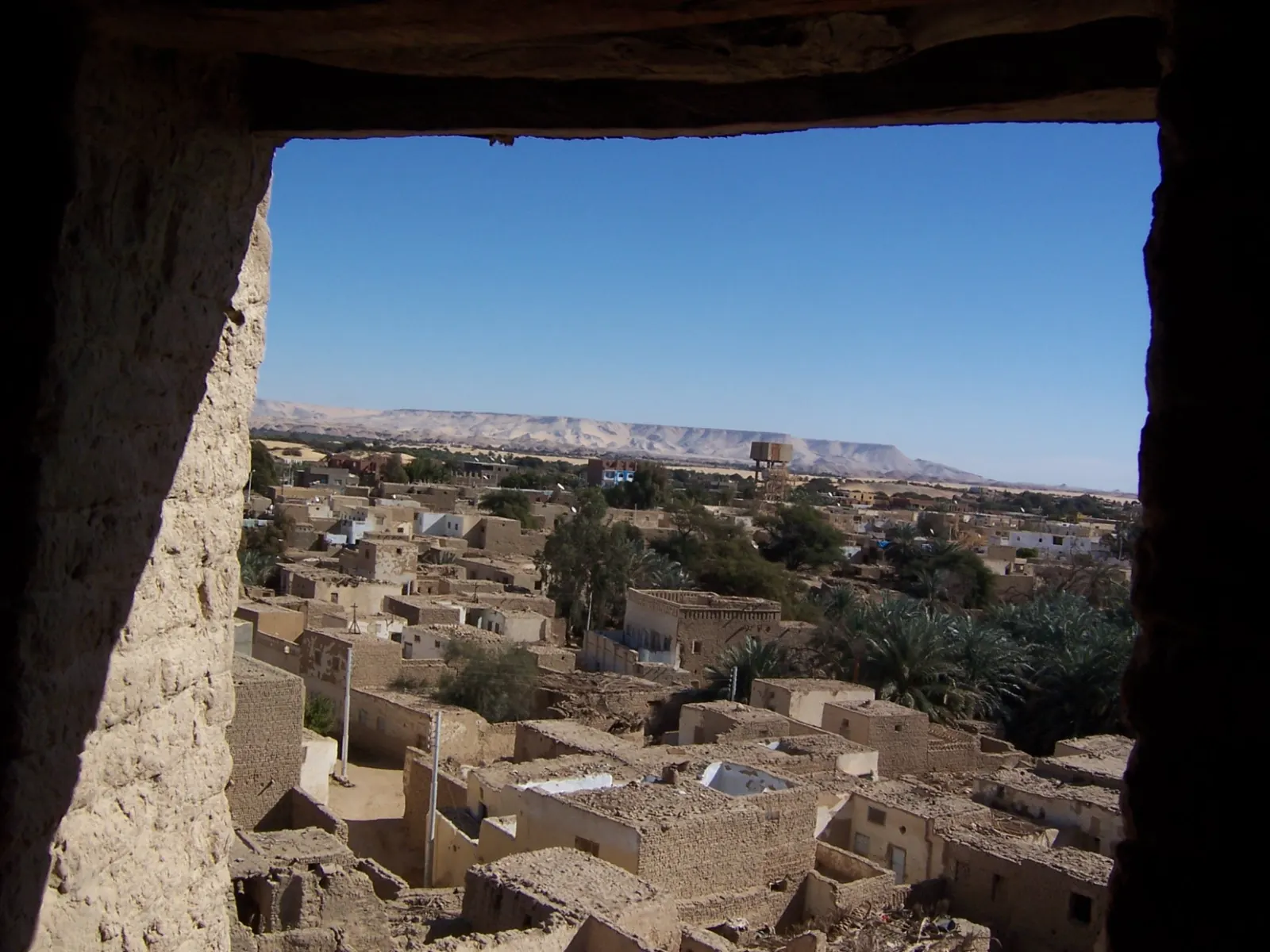
Dakhla is about 300 km south of Farafra, roughly four hours on tarmac, and Kharga is about 190 km further east. Dakhla has the Ayyubid-era town of Al-Qasr and Old Kingdom governors' tombs at Balat; Kharga has the Temple of Hibis and Bagawat, an early Christian cemetery of 263 chapels. Add at least two days to a White Desert trip.
8 min read
El Haiz: the quiet southern corner of Bahariya
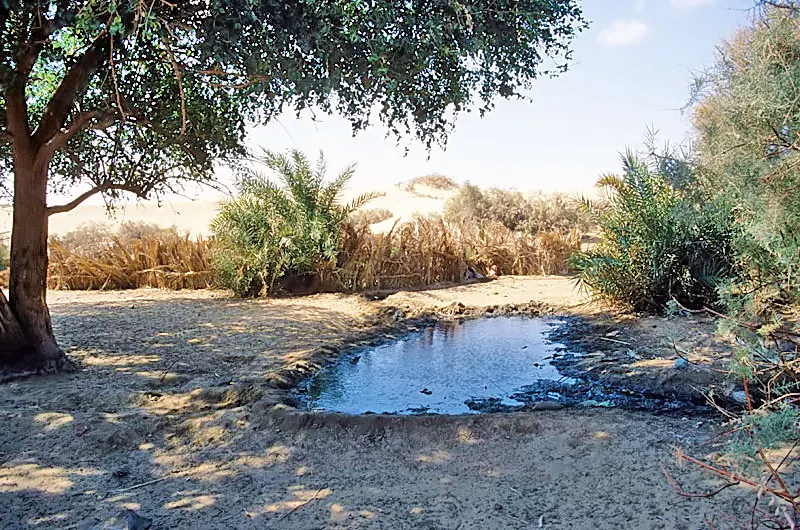
El Haiz lies about 50 km south of Bawiti, at the southern end of Bahariya Oasis, beside the road to Farafra and the White Desert. It has five small spring hamlets, and its main ruins, at El-Riz near Ain Ris, are a Roman-period settlement of about 10 hectares with a fortress and an early Christian church. Totality there on 2 August 2027 lasts 6 minutes 19 seconds.
9 min read
English Mountain (Gebel el-Ingliz), Bahariya
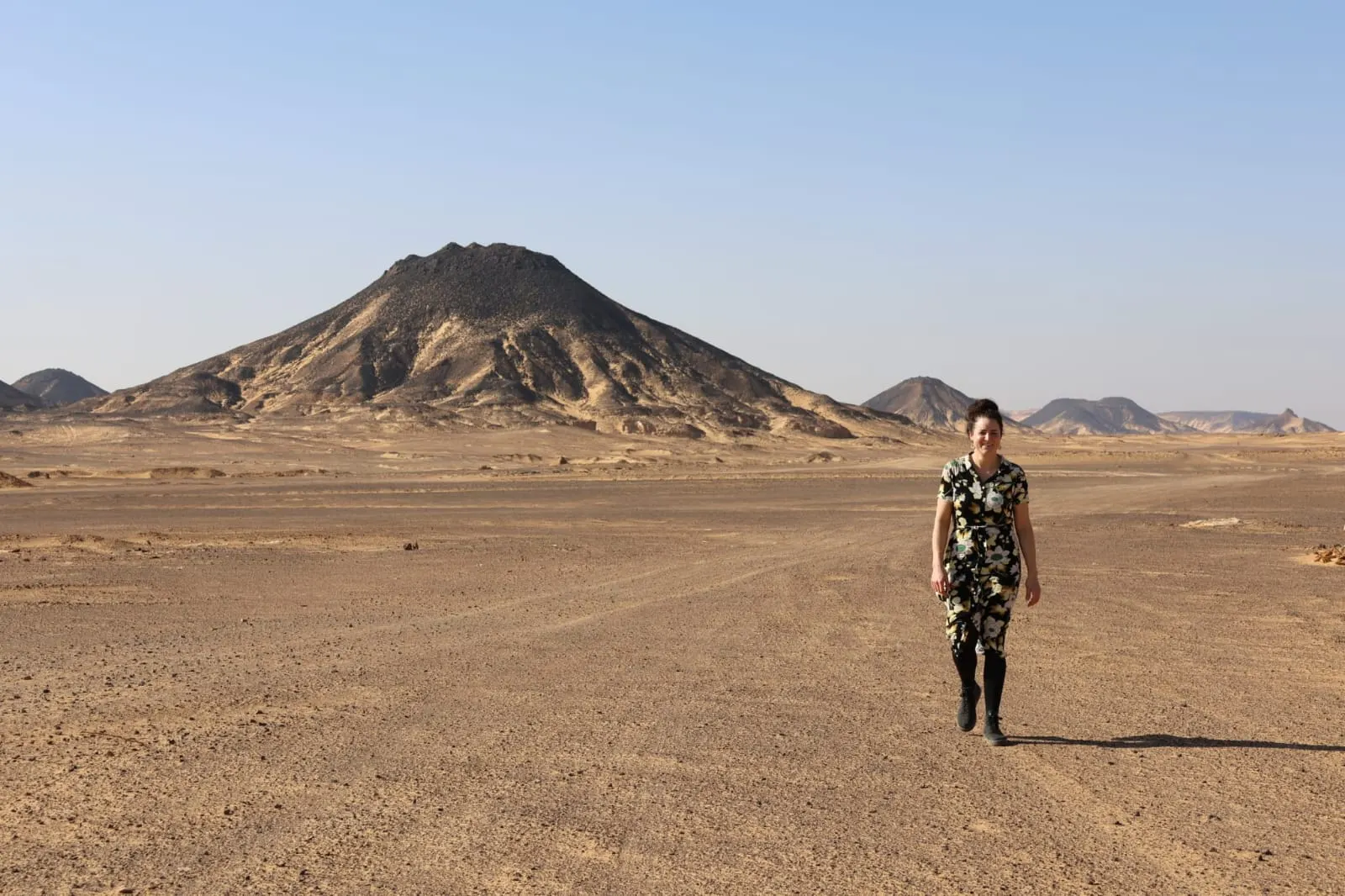
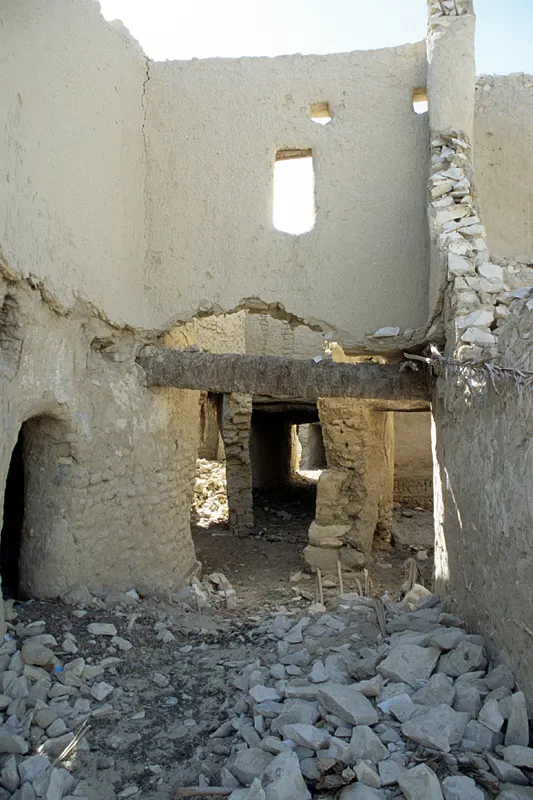
English Mountain, Gebel el-Ingliz in Arabic, is a dark hill on the edge of Bawiti in Bahariya Oasis, topped by ruined stone walls that local tradition and the archaeologist Ahmed Fakhry tie to a First World War lookout against Senussi raiders. Allow about 45 minutes for the visit. Go for sunset: about 17:10 in mid-December and 20:03 in mid-June, local time.
11 min read
Farafra Oasis: things to do in the town nearest the White Desert
Farafra is the smallest and quietest of Egypt's big oases, about 45 minutes south of the White Desert's main chalk fields and 180 km beyond Bawiti. Its town, Qasr Farafra, has artist Badr Abdel Moghny's mud-brick museum, a ruined medieval fortress and palm gardens, with the hot spring of Bir Sitta just outside. It fits a three-day loop.
10 min read
Hot springs near the White Desert: every spring in Bahariya and Farafra
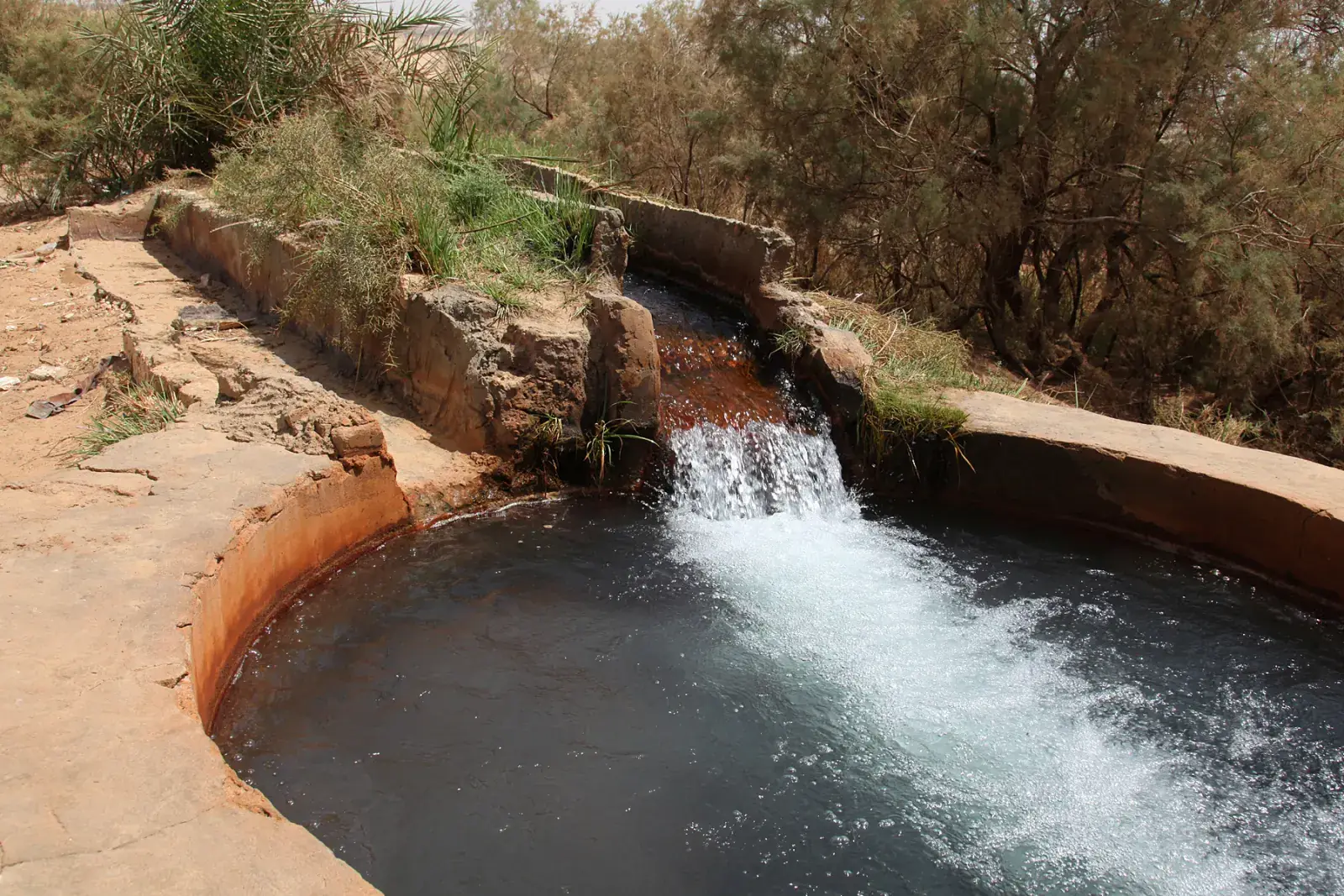
Bahariya and Farafra sit on deep, warm groundwater, and a spring soak is a classic part of a White Desert trip. The favourites are Bir el-Matar, 7 km from Bawiti, Bir el-Ghaba, 11 km out, and Bir Sitta near Farafra. All are simple concrete pools in palm gardens or open desert, many at 40°C or more.
8 min read
Meteor showers in the White Desert: 2026-2027 calendar
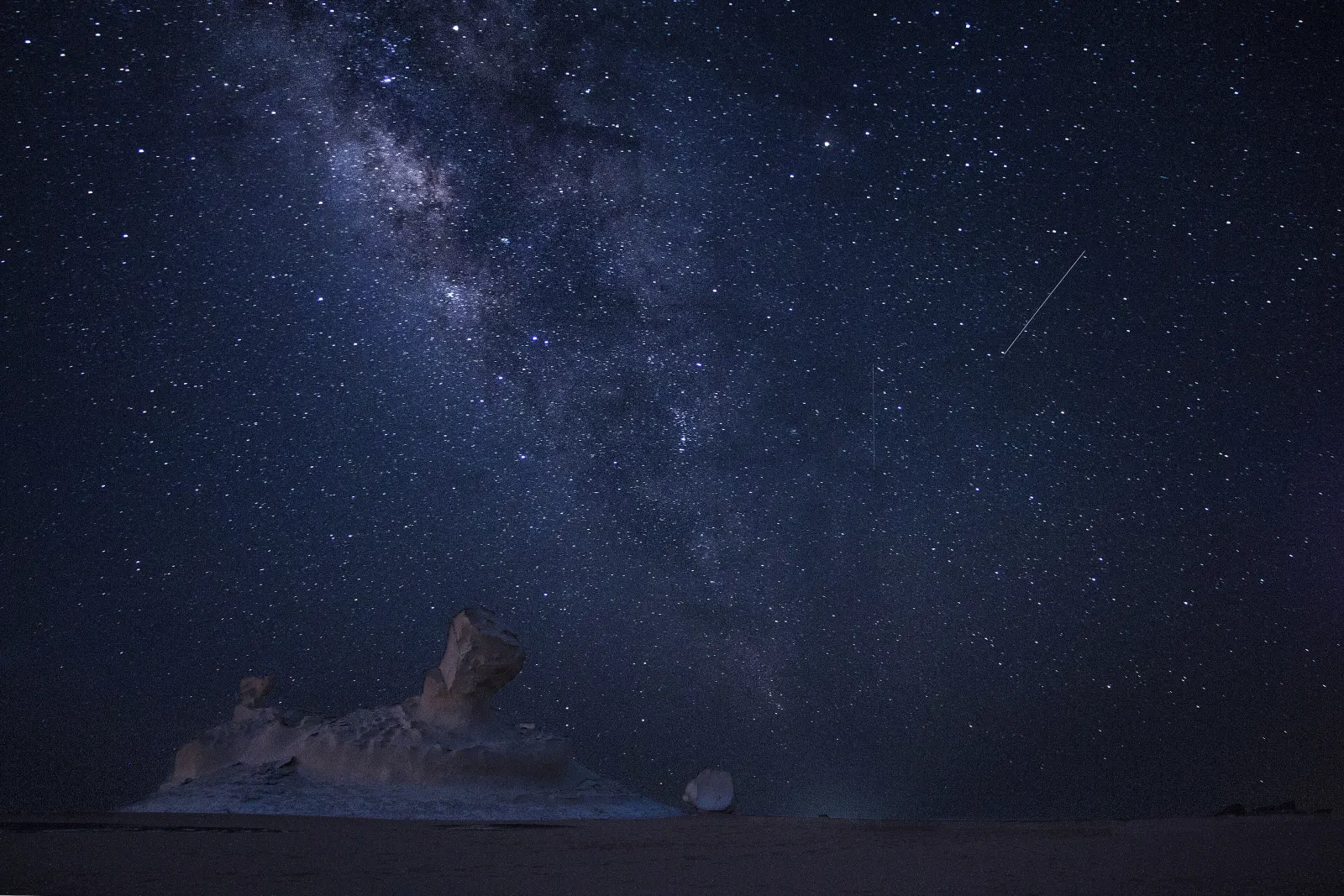
The best meteor nights in the White Desert over the next year are the Geminids on 13–14 December 2026, under a thin crescent moon that sets in the evening, and the Eta Aquariids before dawn on 5–6 May 2027, at new moon. The Quadrantids on 3–4 January 2027 are good but brief. The 2027 Lyrids and Geminids are spoiled by a full moon.
8 min read
Photographing the White Desert: settings and tips
To photograph the White Desert, shoot RAW and add +0.7 to +1 EV so the camera does not turn the white chalk grey; on a phone, tap the rock and pull exposure down slightly. At night, on a tripod, 15–20 seconds at f/2.8 and ISO 3200 captures the Milky Way. Change lenses inside the car, and leave the drone at home.
7 min read
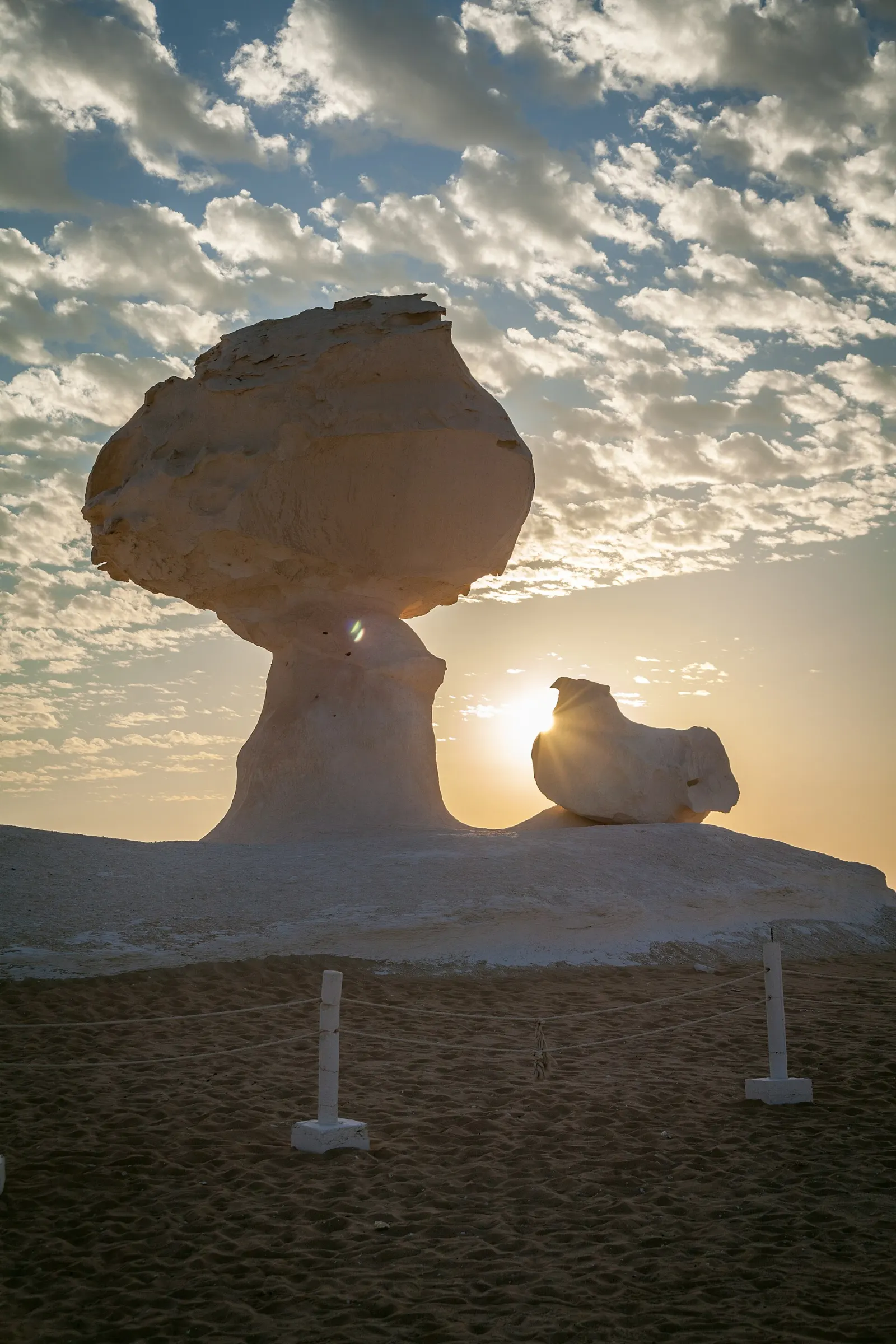
Sunrise and sunset in the White Desert
Sunset and sunrise are the reason to stay overnight in the White Desert. In the last hour before sunset the chalk turns gold, then pink and lilac; at dawn it glows soft orange with long blue shadows and no one else around. Sunset ranges from about 17:15 in December to about 20:00 in June, and good trips plan the day around it.
10 min read
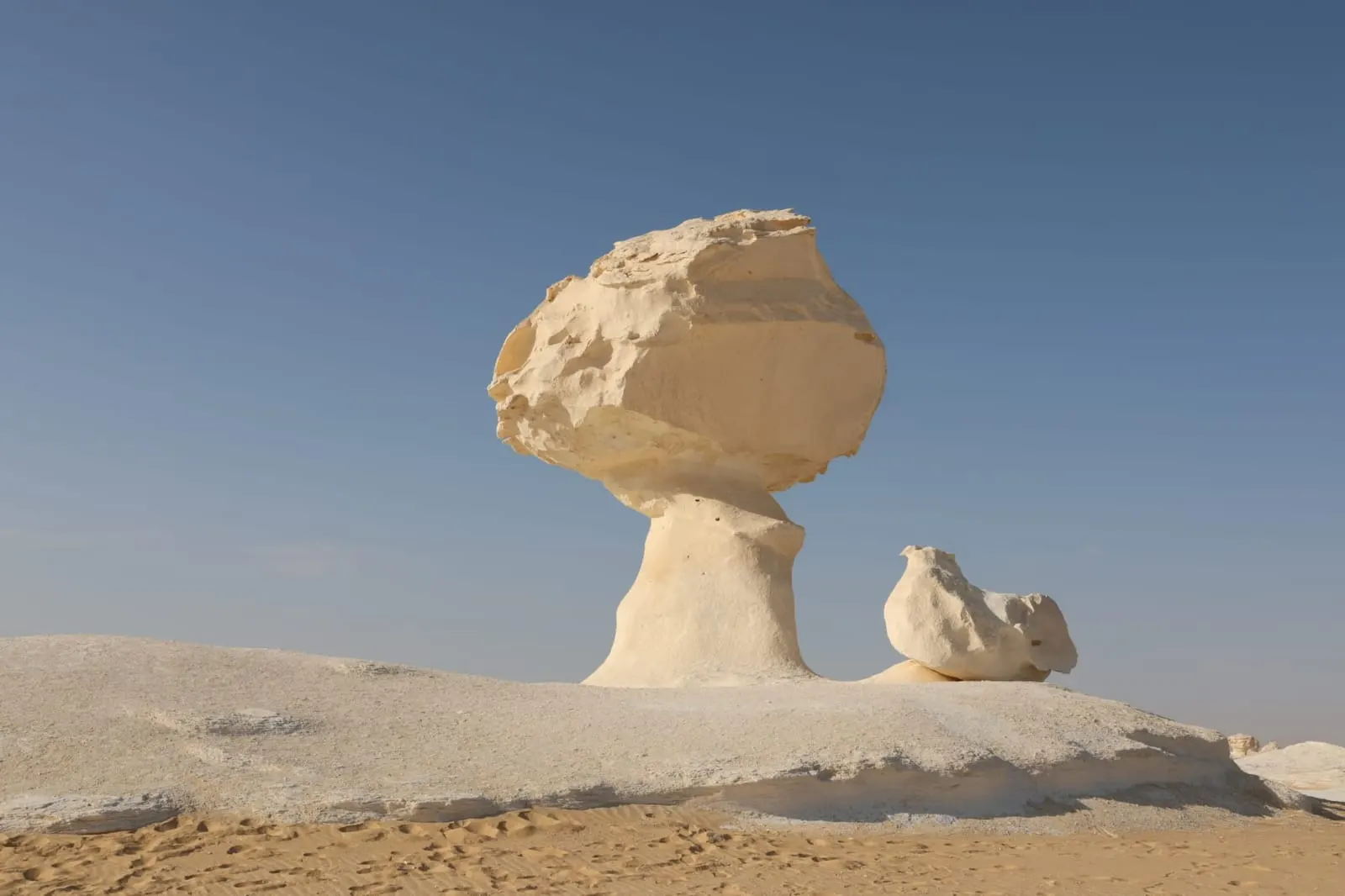
The Mushroom and the Chicken: the White Desert's famous rocks
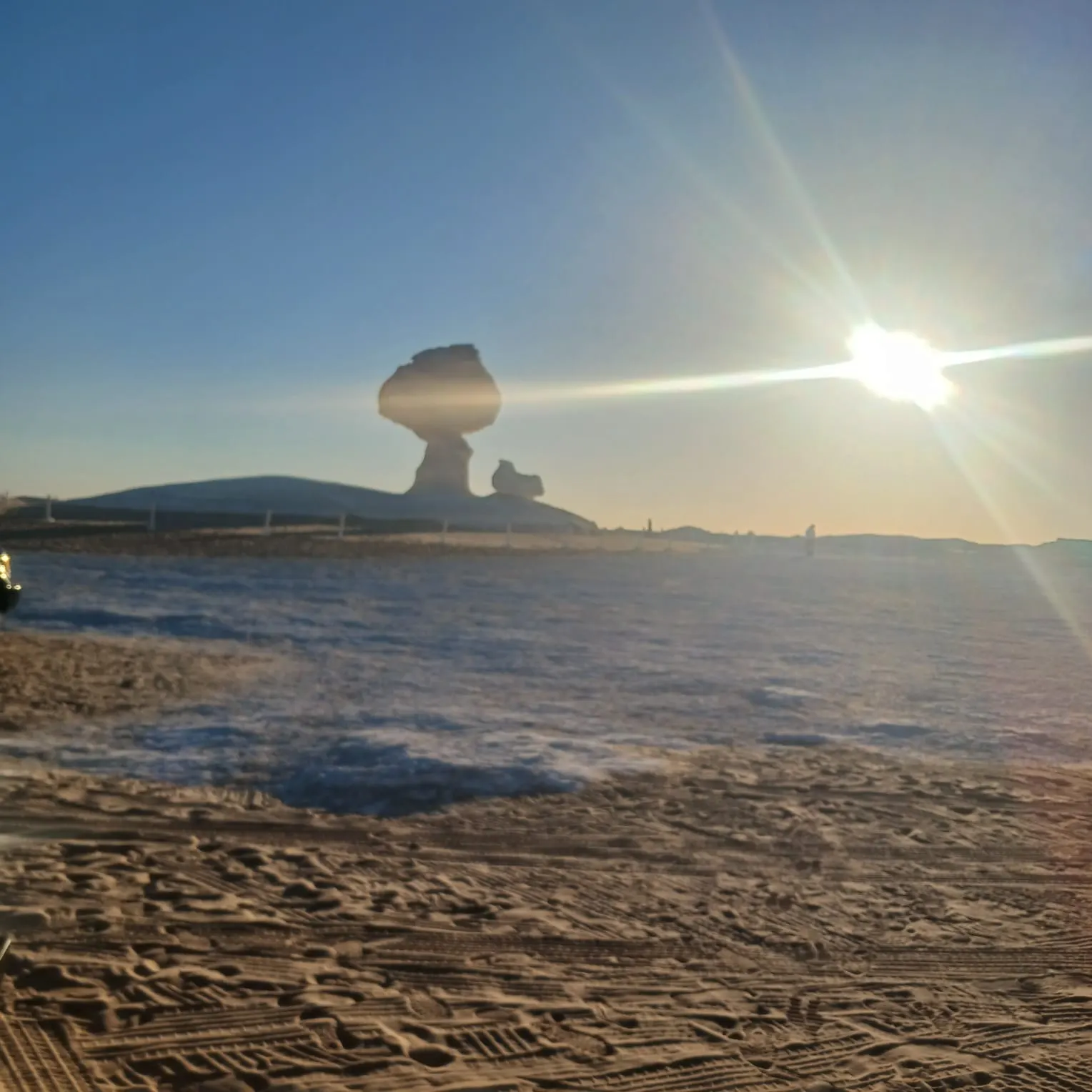
The Mushroom and the Chicken are two chalk formations standing side by side in the Old White Desert, about 40 km north of Qasr Farafra: a tall white cap on a narrow stem, and a smaller rock shaped like a sitting bird. They are the most photographed rocks in Egypt's Western Desert, and almost every White Desert trip stops there, ideally in the late afternoon.
9 min read
Wildlife of the White Desert: fennec foxes, gazelles and more
The park's 2007 management plan records at least 12 mammal species, about 24 resident bird species and about 19 reptiles in the White Desert. The animal you are most likely to meet is a fox, which the plan says is frequently seen at night near camps. Dorcas gazelles are on the record, while the slender-horned gazelle and Barbary sheep may be locally extinct.
8 min read
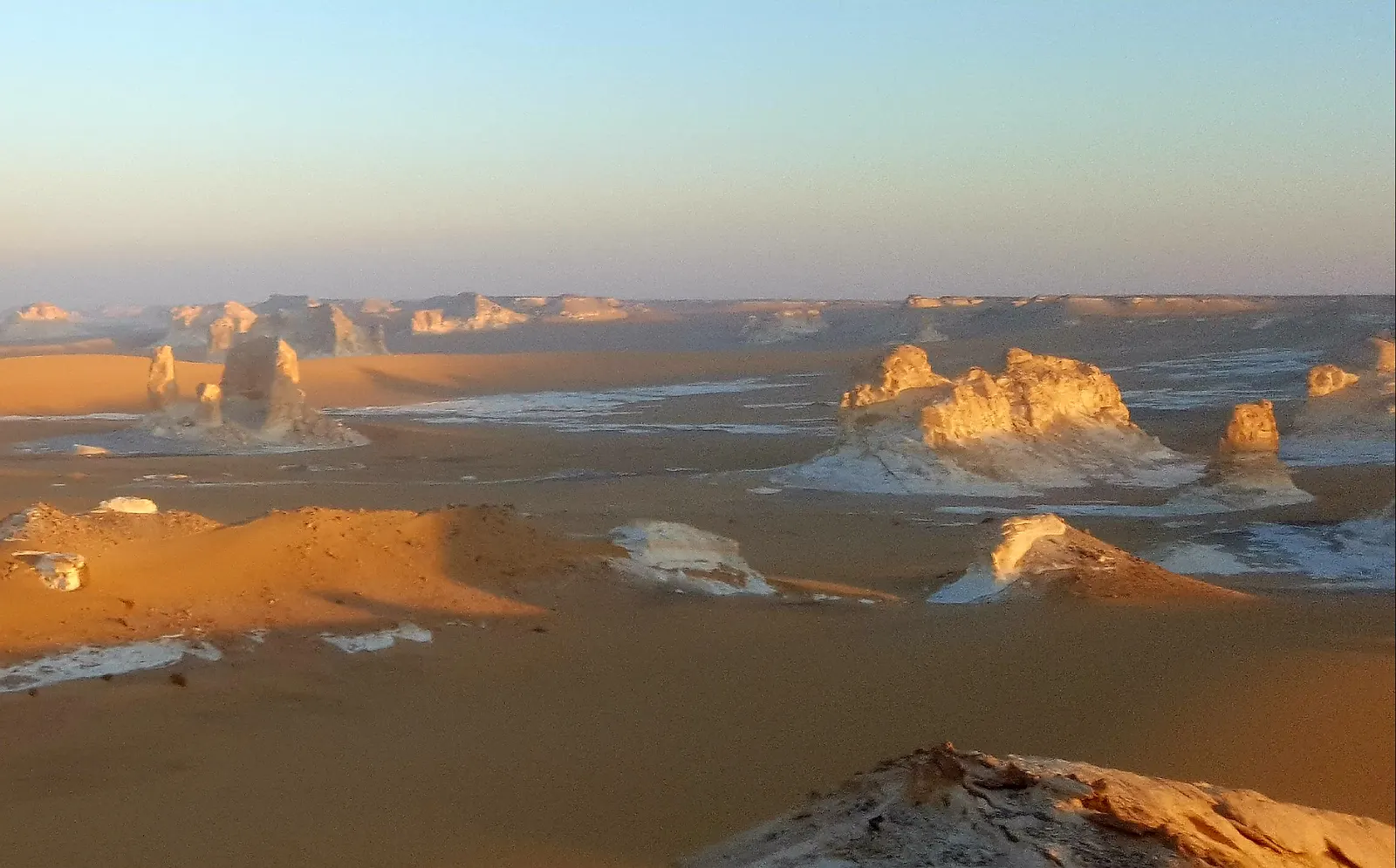
Yoga and wellness retreats in the White Desert: what's on, what a desert retreat is really like, and running your own
Yes. Yoga and meditation retreats run in Egypt's Western Desert in the cool season, often for a week or more, mixing lodge nights in Bahariya, camps among the White Desert's chalk and hot-spring soaks. October to April is the season. Expect cold dawns, some wind, simple toilets and no signal, in return for silence and a huge night sky.
Questions people ask
What is the number one thing to do in the White Desert?+
Spend a night camping among the chalk formations. Sunset, the campfire dinner, the stars and sunrise over the towers are the heart of the trip, and a day trip can't give you them.
Which sights are on a standard two-day trip?+
Usually the Black Desert, Crystal Mountain, Agabat and the Old White Desert with the Mushroom and Chicken, plus a warm spring near Bawiti on the way back if time allows. Ain Khadra, the New White Desert's big towers and Bahariya's museum and tombs usually need a third day or a private trip.
Can you do things in the White Desert without camping?+
Yes. Our private day trip from Cairo leaves at about 05:00, stops at the Black Desert, Crystal Mountain and Agabat, and gives you two to three hours among the chalk with a picnic lunch. You are back at your hotel between 20:00 and 21:00, but you miss sunset, the stars and the light at dawn.
Is sandboarding included on a White Desert trip?+
Yes, on our two- and three-day trips, which include free sandboards for the slopes at Agabat. For other trips, ask us when you book. Late afternoon is best, when the sand is cooler and firmer.
Can I collect fossils or crystals?+
No. The White Desert is a national park, and taking fossils, crystals or rocks is illegal. Photograph them and leave them where they are. Crystal Mountain has already lost much of its sparkle to souvenir hunters.
What is there to do in the White Desert at night?+
Dinner by the fire, stargazing, and a short walk among the formations by torch or moonlight. Near a new moon the Milky Way is overhead; near a full moon the chalk glows and you can walk without a torch. Foxes often come to the edge of camp after dark.
Can I do the White Desert in summer?+
Yes, with a different rhythm. From June to August days reach about 38°C, so trips leave Bahariya late in the afternoon, reach the chalk for sunset and walk at first light. Nights are warm enough for a T-shirt, and the brightest part of the Milky Way is high in the evening sky.
Will I see wildlife in the White Desert?+
Most likely a fox, often a fennec, at the edge of camp after dark, and tracks in the sand next morning. Dorcas gazelles live in the park but are shy and rarely seen from a vehicle. Please don't feed the foxes.
Is the White Desert good for children?+
Usually, yes. Children love the dunes at Agabat, sliding down on a sandboard, the fire and sleeping under the stars. From about six years old most cope well with the drive. A three-day trip breaks up the road, and you can ask us about a tent and a toilet tent.