
The short answer
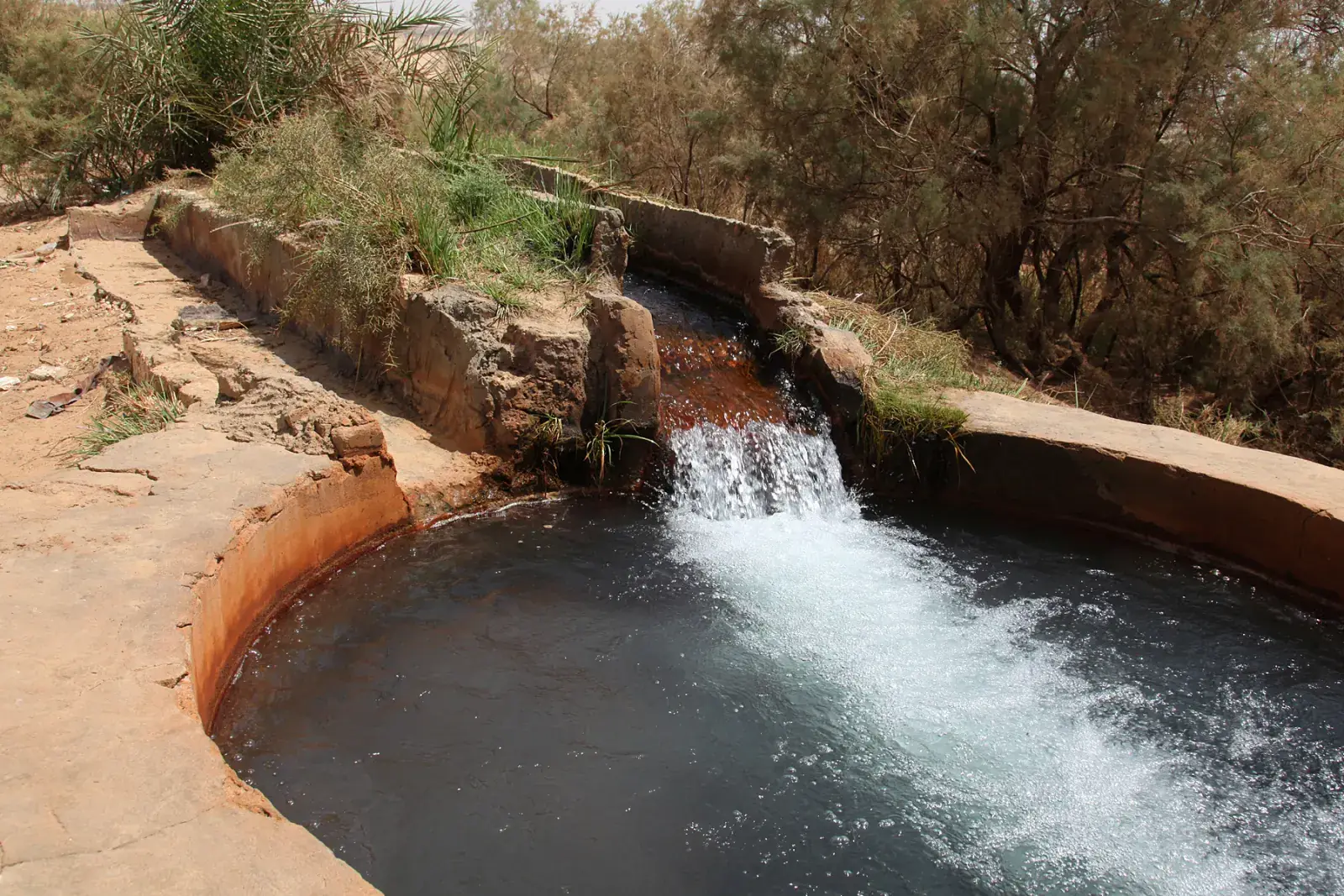
Bahariya and Farafra sit on deep, warm groundwater, and a spring soak is a classic part of a White Desert trip. The favourites are Bir el-Matar, 7 km from Bawiti, Bir el-Ghaba, 11 km out, and Bir Sitta near Farafra. All are simple concrete pools in palm gardens or open desert, many at 40°C or more.
Ask us on WhatsAppWhy the oases have hot springs
Short answer: The oases sit over the Nubian Sandstone aquifer; water from deep below comes up naturally warm and rich in iron and minerals.
Under the Western Desert lies the Nubian Sandstone Aquifer System, one of the largest stores of fossil groundwater on earth, shared by Egypt, Libya, Sudan and Chad. Much of it is rain that fell many thousands of years ago, when the Sahara was green (UN News on the four-country aquifer agreement). In the oasis depressions this water is close enough to tap. Wells and boreholes, some ancient and some drilled in the last century, bring it up from deep below, and the deeper it comes from, the warmer it is. It comes up warm or hot, often iron-red and sometimes smelling faintly of sulphur. It fills a concrete pool, then flows out along channels to water the palms and fields. That's why so many springs sit in gardens: you're bathing in the irrigation system. The water is also finite. In Farafra, the whole supply is fossil water from the bedrock aquifer, a non-renewable resource, according to Wikivoyage on Farafra (checked 19 November 2026). That is one more reason to keep soap and rubbish out of it.
The springs of Bahariya
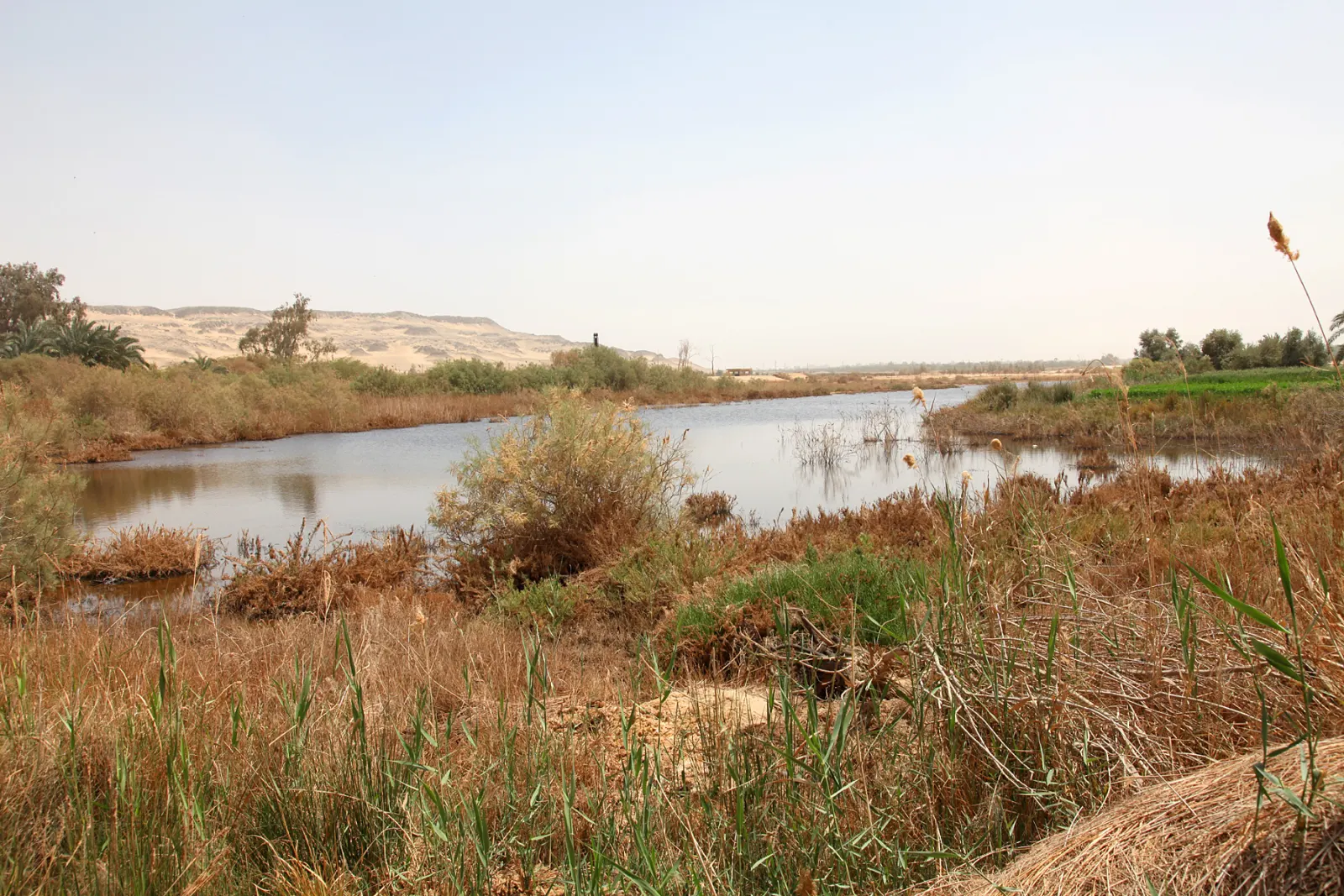
Short answer: Half a dozen well-known springs lie within 11 km of Bawiti, mostly to the north-east, from roadside pools to quiet ones in the palms.
| Spring | Where | What it's like |
|---|---|---|
| Bir el-Matar ("airfield spring") | About 7 km from Bawiti | Hot, slightly sulphurous pool in the fields; popular at sunset |
| Bir el-Ghaba ("forest spring") | About 11 km from Bawiti, among acacias and palms | Hot pool in a quiet grove; some camps nearby |
| Bir Sigam | About 1 km east of the village of Mandisha | Hot spring in gardens, quieter |
| Bir Ramla ("sand spring") | About 2 km from Bawiti | Very hot, busy with locals |
| Bir el-Naqba ("pierced spring") | About 3 km from Bawiti | Hot pool in farmland |
| Hotel spring pools | Qasr El Bawity, International Hot Spring Hotel | Private, comfortable, for guests |
Bir el-Matar is the one most visitors see. Hot, slightly sulphurous water pours into a pool among the fields, and it's a lovely place to watch the sun go down. Bir el-Ghaba is a little further out, in a grove of acacias and palms, with a few desert camps nearby. It's especially good after dark. Bir Sigam, near Mandisha, is calmer. Bir Ramla, close to town, is very hot and busy with local bathers, so it's less relaxed for visitors. Distances are by road from Bawiti (Bir Sigam's is from Mandisha), and the English meanings of the names are as listed by Wikivoyage (checked 19 November 2026), which also notes that several springs come out of the ground at 40°C and above. Pools change as farmers clean or repair them, and your driver will choose the cleanest and quietest on the day.
The springs of Farafra
Short answer: Bir Sitta is Farafra's star, a hot pool in open desert about 6 km west of town; the hotel pool at Aqua Sun uses the same water.
Bir Sitta ("Well Six") is a borehole about 6 km west of Qasr Farafra. Hot, slightly sulphurous water, usually given as about 40°C, pours into a concrete tank beside the track and then out into the fields. It's one of the most photographed spring soaks in the Western Desert, especially at sunset, when the sky turns orange over the plain. The Aqua Sun hotel stands beside it and fills its pool from the same water. In town, Ain el-Bilad was the historic spring of the old village; its flow dwindled in the mid-20th century, and Bir Sitta is the better soak. See Farafra Oasis.
Which spring suits you
Short answer: Bir el-Matar for a first sunset soak, Bir el-Ghaba for a quiet night dip, Bir Sitta if you go on to Farafra, and a hotel pool if privacy matters most.
| If you want... | Choose | Trade-off |
|---|---|---|
| The classic first soak, with a sunset | Bir el-Matar | The best-known spring, so you may share it |
| Quiet, palms and stars | Bir el-Ghaba | Furthest out from Bawiti, about 11 km |
| The shortest detour from town | Bir Ramla or Bir el-Naqba | Busier with local bathers, less relaxed |
| Open desert views and a big sky | Bir Sitta, Farafra | Only on trips that reach Farafra |
| Privacy, normal swimwear, a hot shower after | A hotel spring pool | For hotel guests, or by arrangement |
| A gentle stop for families | A hotel pool, or a quiet public spring early in the day | Ask us which pool is calmest on your day |
A tank may be drained for cleaning, or a pump may be off, so the choice is made on the day. If one spring matters to you, for example Bir Sitta for a sunset photo, tell us when you book so we can plan the route around it.
Public spring, hotel pool or Siwa?
Short answer: Public springs are free-flowing, local and atmospheric; hotel pools are private and comfortable; Siwa is known for its springs but is a separate, longer trip.
| Public farm spring | Hotel spring pool | Siwa's springs | |
|---|---|---|---|
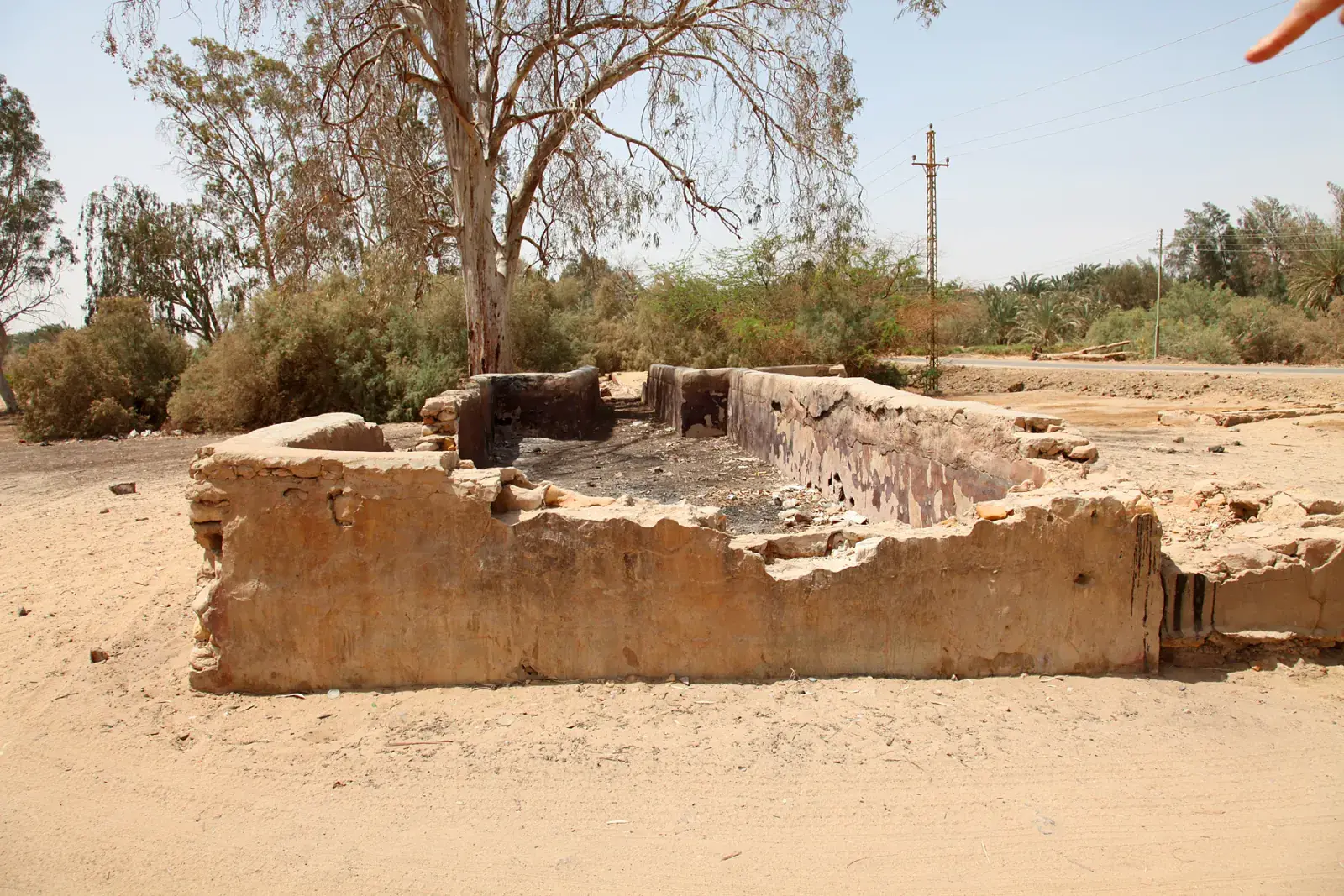
| Setting | Concrete tank in palm gardens or open desert | Enclosed pool or plunge room | Spring pools and salt lakes in a different oasis |
| Who else is there | Local families, farmers, other travellers | Mostly hotel guests | Other visitors and locals |
| Dress | Modest: T-shirt and shorts or leggings over a swimsuit | Normal swimwear | Modest at public pools |
| Facilities | Few or none: ask us | Ask us; your room is close by if you stay | Varies |
| Cost | Usually free or a small fee to the farmer | For guests, or by arrangement | Varies |
| Fits a White Desert trip? | Yes, on most routes | Yes, if you sleep in Bahariya or Farafra | Only on a combined trip routed via Cairo |
If springs are the main reason for your trip, Siwa is worth a look: it has about 200 natural springs and salt lakes besides. Our White Desert vs Siwa guide sets out how the two compare, and the Siwa and White Desert trip covers both. The UK government advises against all but essential travel on the desert road from Bahariya west to Siwa; we route via Cairo and don't use it.
Hotels with their own spring pools
Short answer: For privacy and comfort, stay at a lodge with a spring-fed pool and soak whenever you like.
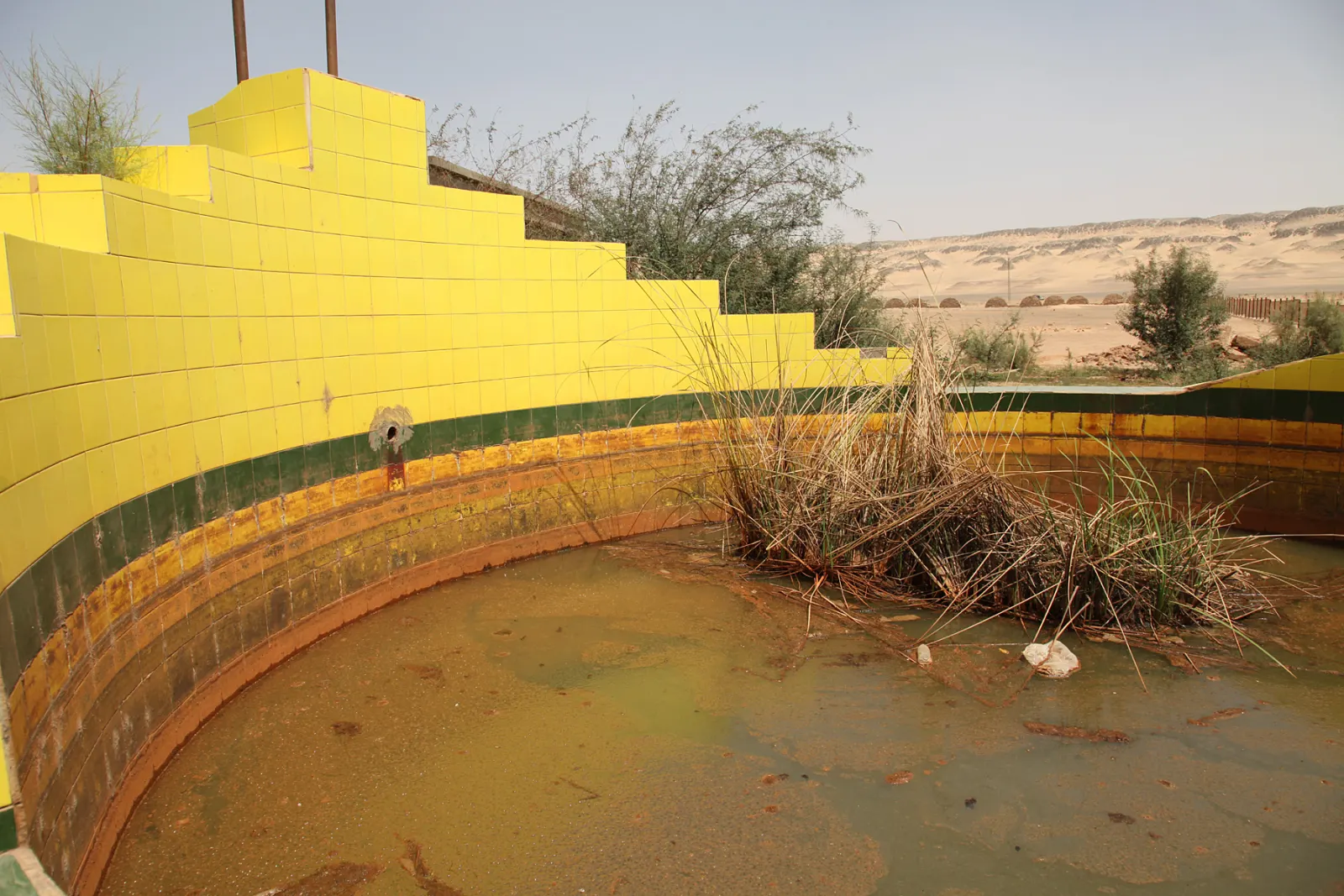
- Qasr El Bawity, Bahariya: an enclosed room with two small, hot, iron-red plunge pools and a cool pool, the most atmospheric spring bath in the oasis.
- International Hot Spring Hotel, Bahariya: built around a spring-fed pool at the foot of the Black Mountain.
- Desert Rose Eco Lodge, Bahariya: beside the Bir el-Matar spring.
- Aqua Sun, Farafra: pool fed by Bir Sitta.
See hotels in Bahariya and Farafra Oasis.
How a spring stop fits each trip
Short answer: On the overnight trip it's an optional morning stop on the way home; on the three-day trip it's an afternoon soak in Bahariya; Bir Sitta needs a route through Farafra.
| Trip | When the soak usually happens | Which spring |
|---|---|---|
| Overnight from Cairo | Morning of day two, back in Bawiti, when time allows | A Bahariya spring near Bawiti |
| Three days via Farafra | First afternoon in Bahariya | A Bahariya spring, with Bir Sitta possible on the Farafra version |
| Private comfort camping | On request, including a lodge night with a hot spring | Your choice, routing allowing |
| Day trip from Cairo | Ask us: the day is already long | Ask us |
On the overnight trip the stop is short, and it's the last thing before the long road to Cairo. That makes it a good wash after a night in camp, but plan for a damp towel in the car. On a three-day trip there's time to soak, dry off and still see the museum or climb English Mountain for sunset. See Bahariya Oasis for a half-day plan and how many days if you're deciding between trip lengths.
When to go
Short answer: The best soak is on a cold winter evening, or the morning after a desert night on your way home.
From December to February, nights at Farafra average only 4–6°C and can fall close to freezing in open desert. Slipping into hot water as the stars come out is pure pleasure. Many trips stop at a spring on the morning of the last day, to wash off the dust and warm up after the night in camp. In spring and autumn, late afternoon is best. In summer, when afternoons average 35–38°C, go at dawn or after dark. Sunset ranges from about 17:15 in December to about 20:00 in June, so a winter sunset soak means getting in the water by about 16:30. Mosquitoes can gather around the pools at dusk, especially in warm, still weather, so bring repellent or soak earlier in the afternoon. See weather and night temperatures and best time to visit.
Etiquette and safety
Short answer: These are working farm pools used by local families: dress modestly, keep quiet, ask before taking photos and never use soap.
- Dress modestly, especially women at public springs: a T-shirt and shorts or leggings over a swimsuit.
- No soap or shampoo: the water goes on to irrigate crops.
- Ask before photographing people, and don't film locals bathing.
- Flip-flops help on slippery concrete and hot ground.
- Don't stay in too long: 15 to 20 minutes in hot water is plenty, and less if you're older or have heart problems. Drink water afterwards.
- Iron stains: wear dark swimwear and a towel you don't mind marking.
- Don't drink the spring water.
- Leave nothing behind: take your rubbish back with you.
Health and water safety
Short answer: Keep soaks short, drink water, stay out of the channels and lakes below the pools, and ask your doctor first if you're pregnant or have a heart condition.
Heat. Water at about 40°C raises your body temperature quickly. Get in slowly, sit on the edge between dips and get out if you feel dizzy or your heart races. Take extra care after a long drive in the sun or a big meal. If you're pregnant, have a heart condition or high or low blood pressure, ask your doctor before you go.
Bilharzia. The US Centers for Disease Control notes that schistosomiasis, a parasitic infection spread in fresh water, is found in Egypt, and advises travellers to avoid swimming in fresh, unchlorinated water such as lakes, ponds and rivers, per the CDC Egypt travel health page (checked 19 November 2026). Spring pools are unchlorinated. The sensible approach is to bathe only in the hot pool where the water enters, and to stay out of the irrigation channels, drains and reed-fringed lakes downstream, such as the lake at Bir el-Matar. If you'd rather avoid any doubt, choose a hotel spring pool and talk to a travel clinic before you go.
Footing and light. Concrete edges are slippery. Wear flip-flops, and after dark bring a head torch, as farm pools may be unlit.
What to bring
Short answer: Swimsuit, cover-up, quick-dry towel, flip-flops, a warm layer for afterwards and a plastic bag for wet things.
Pack a dark swimsuit, a T-shirt to wear over it, a light towel, flip-flops and a fleece or jacket for when you get out. The desert air cools fast after sunset. A dry bag keeps wet kit away from your camera. Add a head torch for evening soaks, a bottle of drinking water and mosquito repellent from spring onwards. A sarong or large towel makes changing in the open much easier. See packing list and what to wear.
Add a spring to your trip
Short answer: Most of our trips can include a soak; tell us if you'd like it at sunset, after dark or on the way home.
On our overnight trip from Cairo, a spring stop fits on the way back through Bahariya. On the three-day trip, the soak is in Bahariya on the first afternoon, and if you take the Farafra version you can add Bir Sitta. Message us on WhatsApp with "hot springs" and your dates, and tell us if you'd prefer a hotel spring pool or a quieter time at a public one. For costs, see what a trip costs: a public spring is usually free or a small fee or tip.
Questions people ask
What should I wear in the hot springs?+
Men wear swim shorts. Women do best to cover a modest swimsuit with a T-shirt and shorts or leggings, which is the respectful choice at public springs in these conservative farming areas. At a lodge's private spring pool, normal swimwear is fine.
Is the spring water clean?+
It comes from deep wells and flows constantly, so the pools refresh themselves, but don't drink it. The iron in it can stain pale swimwear orange, so wear something dark.
Which is the best hot spring near the White Desert?+
For a classic open-air soak, Bir Sitta in Farafra or Bir el-Ghaba in Bahariya. For comfort and privacy, the spring pools at Qasr El Bawity or the International Hot Spring Hotel in Bawiti.
When is the best time to bathe in a spring?+
Sunset or after dark in winter, when the air is cold and the water feels wonderful, or the morning after a night camping in the desert. In summer, go early or late; midday is too hot.
Do the springs cost money?+
Public springs are usually free or ask a small fee to the farmer who looks after the pool. Hotel spring pools are for guests, or by arrangement.
Are there hot springs inside the White Desert itself?+
No hot pools, no. The hot springs are in the oasis farmland of Bahariya and Farafra. Inside the desert, Ain Khadra is a small natural spring with palms among the chalk cliffs, a lunch or tea stop rather than a soak.
Can children go in the hot springs?+
Usually, yes, with care. Water around 40°C is hotter than a normal bath, so keep children's soaks short, keep them sitting on the edge between dips, and watch them on wet concrete. Ask us which pool on your day is shallow enough and least busy.
Is there a risk of bilharzia in the springs?+
Schistosomiasis (bilharzia) is found in Egypt and spreads in fresh water, so stay out of the irrigation channels, drains and reed-fringed lakes below the pools. Bathe only in the hot pool where the water comes out, and if you have any doubt, choose a hotel spring pool and ask your doctor before travel.
Are there changing rooms or toilets at the public springs?+
Public springs are simple farm pools, so don't expect a changing block. Wear your swimsuit under your clothes, bring a towel big enough to change under, and ask us what facilities there are at the spring we plan for your day.
Go with us
Trips that include this

3 days, 2 nights
3-day White Desert tour: Bahariya, the White Desert and two nights outAbout US$495 to 660 per person for two travellers, private
Check dates
2 days, 1 night
White Desert overnight camping trip from Cairo (2 days, 1 night)About US$185 to 230 shared · US$360 to 460 private, per person
Check dates
2 or 3 days
Private White Desert camping in comfortOn request (depends on group size and nights)
Check dates