
The short answer
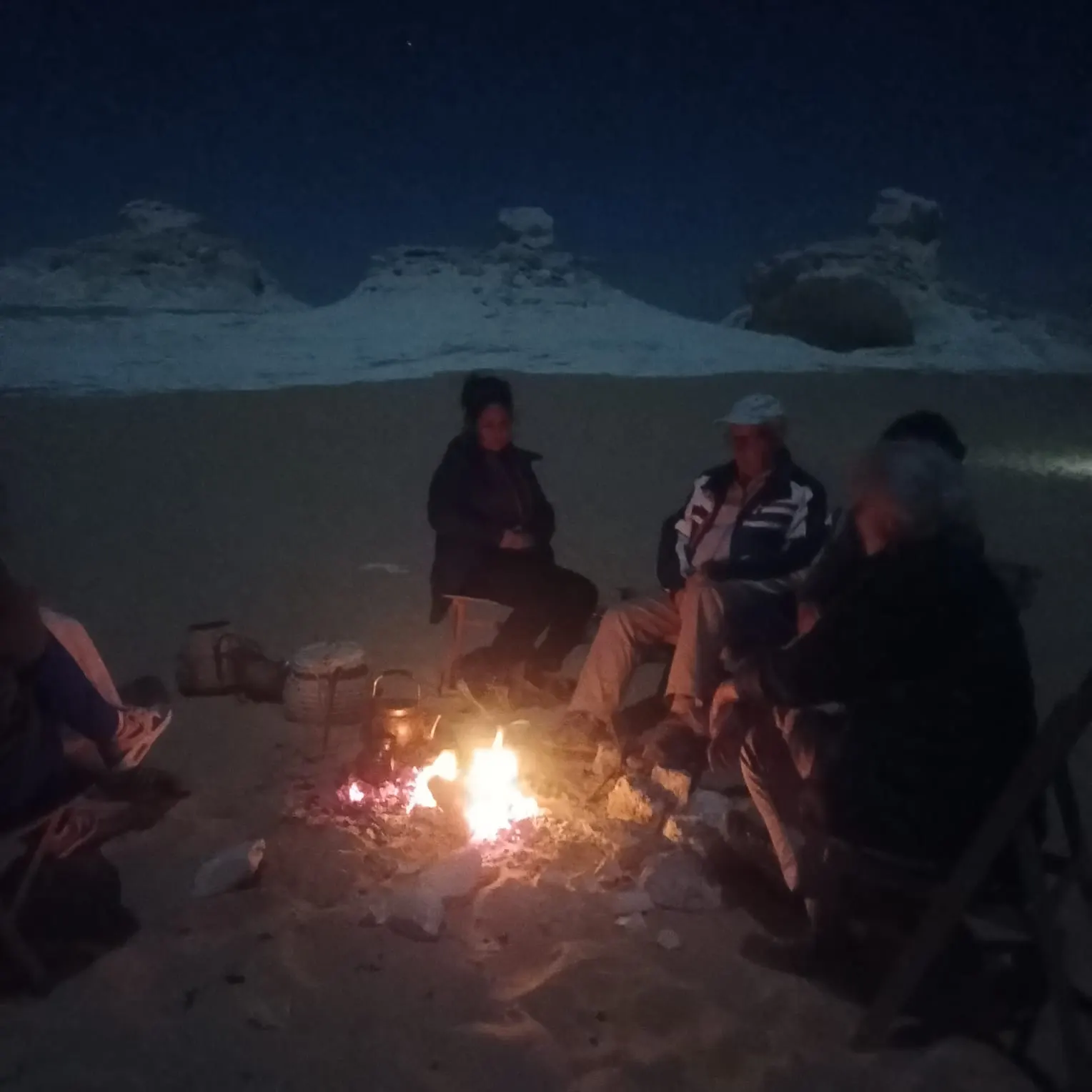
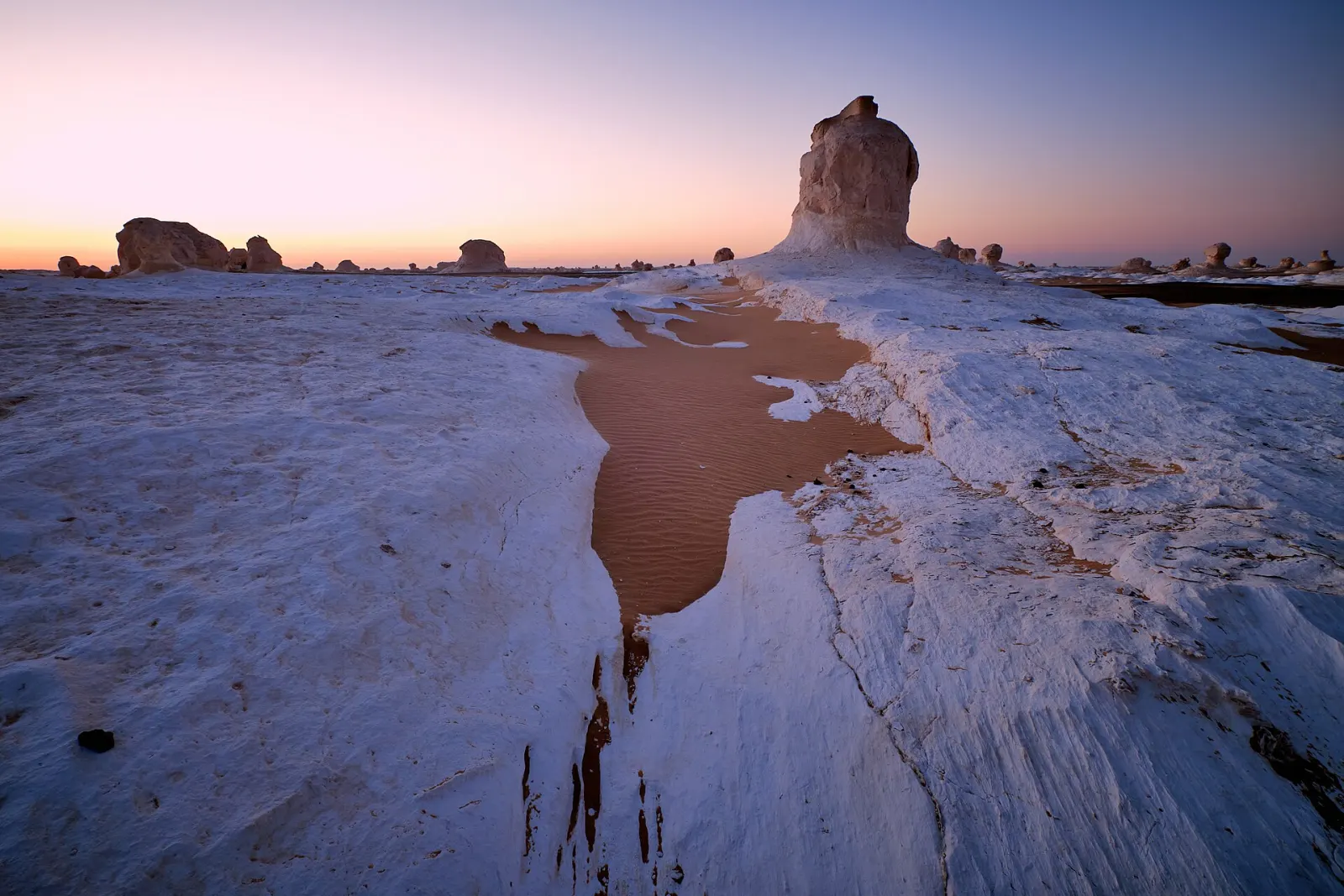
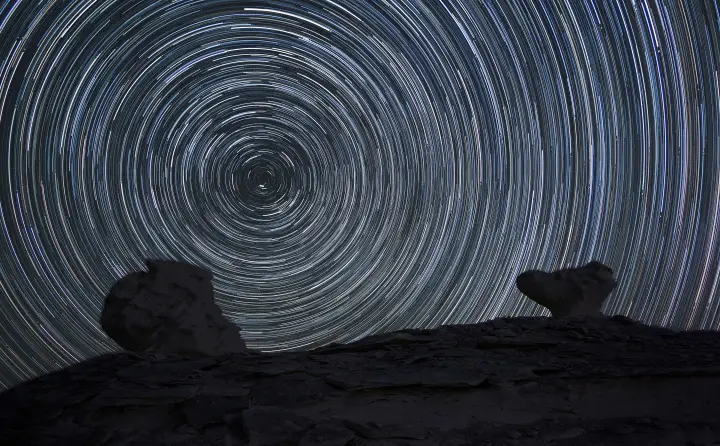
The White Desert has one of the darkest skies within reach of Cairo: no towns for tens of kilometres, very dry air and a flat horizon. Within about four nights of a new moon the Milky Way and thousands of stars show up without binoculars; near a full moon the stars fade but the chalk glows silver. The Milky Way core is brightest from May to September.
Ask us on WhatsAppWhy the sky is so dark
Short answer: The nearest towns, Bawiti and Qasr Farafra, are small and far from the camps, the air is extremely dry, rain falls on less than one day a year and the horizon is low and even.
The White Desert National Park, a protected area since 2002, lies between Bawiti in Bahariya Oasis and Farafra. Neither town throws much light into the sky, and the camps among the formations are tens of kilometres from both. There is no industry, no lit highway near the formations and very little moisture in the air: Farafra averages about 2 mm of rain a year, and cloud is rare outside the odd winter front. On a moonless night the only light is your campfire, and once you walk away from it the sky comes right down to the horizon. Stars near the horizon, which are lost in haze in most of Europe, stay sharp here.
The one thing that dulls the sky is dust. On windy spring days, mostly March to May, the khamaseen can haze the sky for a day or two. Autumn and early winter are usually the clearest. See sandstorms and wind.
What you'll see
Short answer: The Milky Way as a clear band, thousands of stars, bright planets, a satellite every few minutes and, on most nights, a few meteors.
- The Milky Way, as a clear band across the sky
- Thousands of stars, and constellations you know looking crowded with extra stars
- Bright planets, and Venus, when it is high after dusk or before dawn, strong enough to cast a faint shadow
- Satellites crossing every few minutes in the first hours after dark
- The Andromeda galaxy and the Pleiades with the naked eye in autumn and winter
- On an ordinary night, five to ten meteors an hour; on a shower peak, far more
Guests are often surprised by how bright the sky is without a moon. After half an hour your eyes adapt and you can make out the shapes of the formations by starlight alone.
A month-by-month sky guide
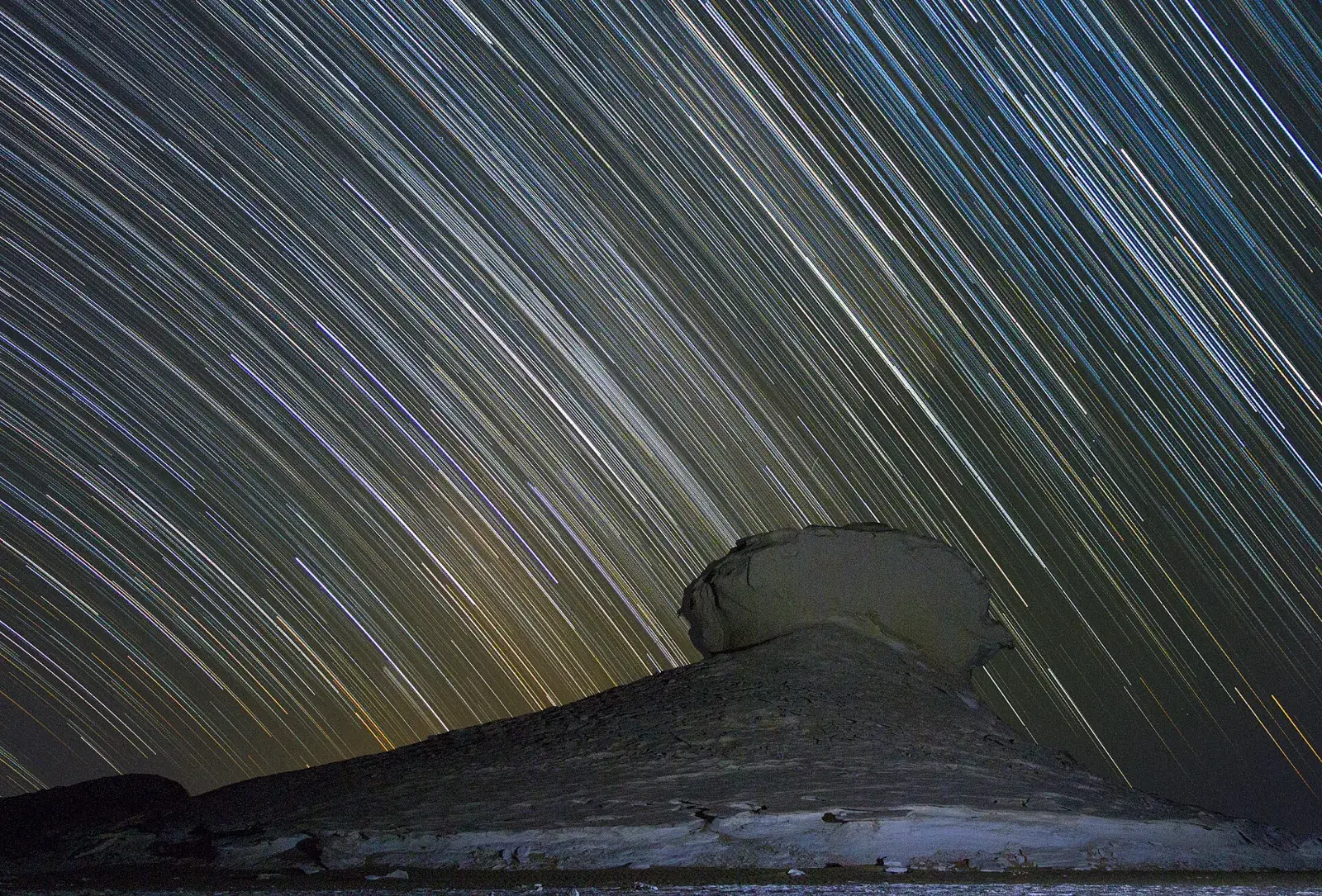
Short answer: Winter evenings bring Orion, Sirius and Canopus; summer evenings bring the bright centre of the Milky Way high in the south.
| Months | What's overhead in the evening |
|---|---|
| December–February | Orion, Taurus with the Pleiades, Sirius blazing low in the south-east, the winter Milky Way |
| March–May | Leo and the spring galaxies; the bright Milky Way core rises before dawn |
| June–August | The Milky Way's bright centre in Sagittarius and Scorpius, high in the south; the Summer Triangle overhead |
| September–November | The core sets early in the evening; Pegasus, Andromeda and its galaxy, visible to the naked eye on dark nights |
Because Egypt is further south than Europe, at about 27°N in the White Desert, you see more of the southern sky. Canopus, the second-brightest star, rises low in the south in winter, and the whole tail of Scorpius clears the horizon in summer.
Full moon or new moon?
Short answer: New moon for the stars and the Milky Way, full moon for a glowing landscape you can walk through without a torch; a quarter moon gives you a bit of both.
This is the question we get most when people pick dates, and there is no wrong answer, only a trade-off.
| Full moon | New moon | Quarter moon | |
|---|---|---|---|
| Landscape | Glowing white, walkable | Black, only shapes against stars | Moonlit for half the night |
| Stars | Only the brightest, plus planets | Thousands, plus the Milky Way | Dark sky in part of the night |
| Photography | Moonlit landscapes | Astrophotography | Both, at different times |
| Walking at night | Easy without a torch | Head torch needed | Easy while the moon is up |
| Atmosphere | Soft, romantic | Vast, humbling | A bit of each |
Under a full moon the chalk reflects so much light that the plain looks covered in snow. You can see your own shadow and read the shapes of the towers from far away. The moon rises opposite the setting sun on the night it is full, then about 50 minutes later each following night. That makes the night before the full moon the best compromise: the moon is already up at sunset, so the formations are lit from dusk, and it sets before dawn, leaving a short dark spell for stars before sunrise.
In winter the full moon rides high overhead and the glow is strongest, though nights are cold. In summer it stays lower in the south and the light is softer. If you want the moonlit night, our full-moon camping trip lists the coming dates and how the night runs.
Planning around the moon
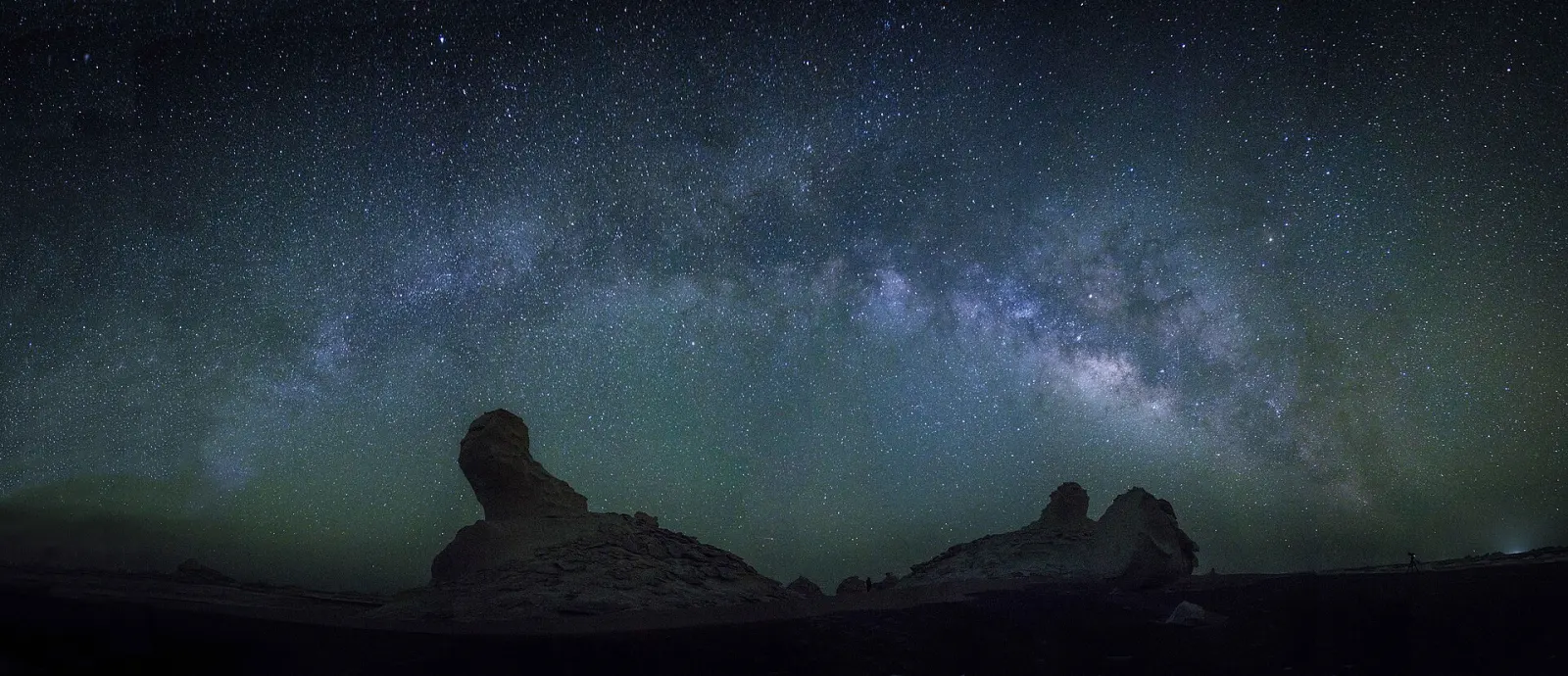
Short answer: The darkest skies are within about four nights of the new moon; a crescent setting early in the evening still leaves a dark night after it.
| Moon phase | Effect |
|---|---|
| New moon (± 4 days) | Darkest sky, best Milky Way |
| Crescent after new moon | Sets early in the evening: dark sky from mid-evening |
| Crescent before new moon | Rises in the early hours: dark evening, moonlit dawn |
| Full moon (± 3 days) | Bright all night; formations glow, stars fade |
New moons in the coming season fall on 9 December 2026, then 7 January, 6 February, 8 March, 6 April, 6 May, 4 June, 4 July and 2 August 2027. The next full moons are 24 November and 24 December 2026, then 22 January, 20–21 February and 22 March 2027.
Checked November 2026, the moon clashes worth knowing about:
- 24 December 2026: a full moon (a supermoon) on Christmas Eve, a silver night in the chalk but poor for faint stars.
- 13–14 December 2026: a thin crescent that sets in the evening, so the Geminid peak has a dark sky.
- 21 April and 13 December 2027: full moons on the Lyrids and the Geminids; lovely for moonlit chalk, poor for meteors.
- 2 August 2027: new moon, as every solar eclipse must be, so the nights around the eclipse are as dark as the desert gets.
Meteor showers in 2026–2027
Short answer: Plan around the Geminids on 13–14 December 2026 and the Eta Aquariids before dawn on 5–6 May 2027; the 2027 Geminids and Lyrids are spoiled by the moon.
Every shower with its peak night, rate, moon phase and how to watch is in our meteor shower calendar. For the Geminid night we run a dedicated Geminids meteor camp with reclining mats and winter bedding.
Getting the most out of it
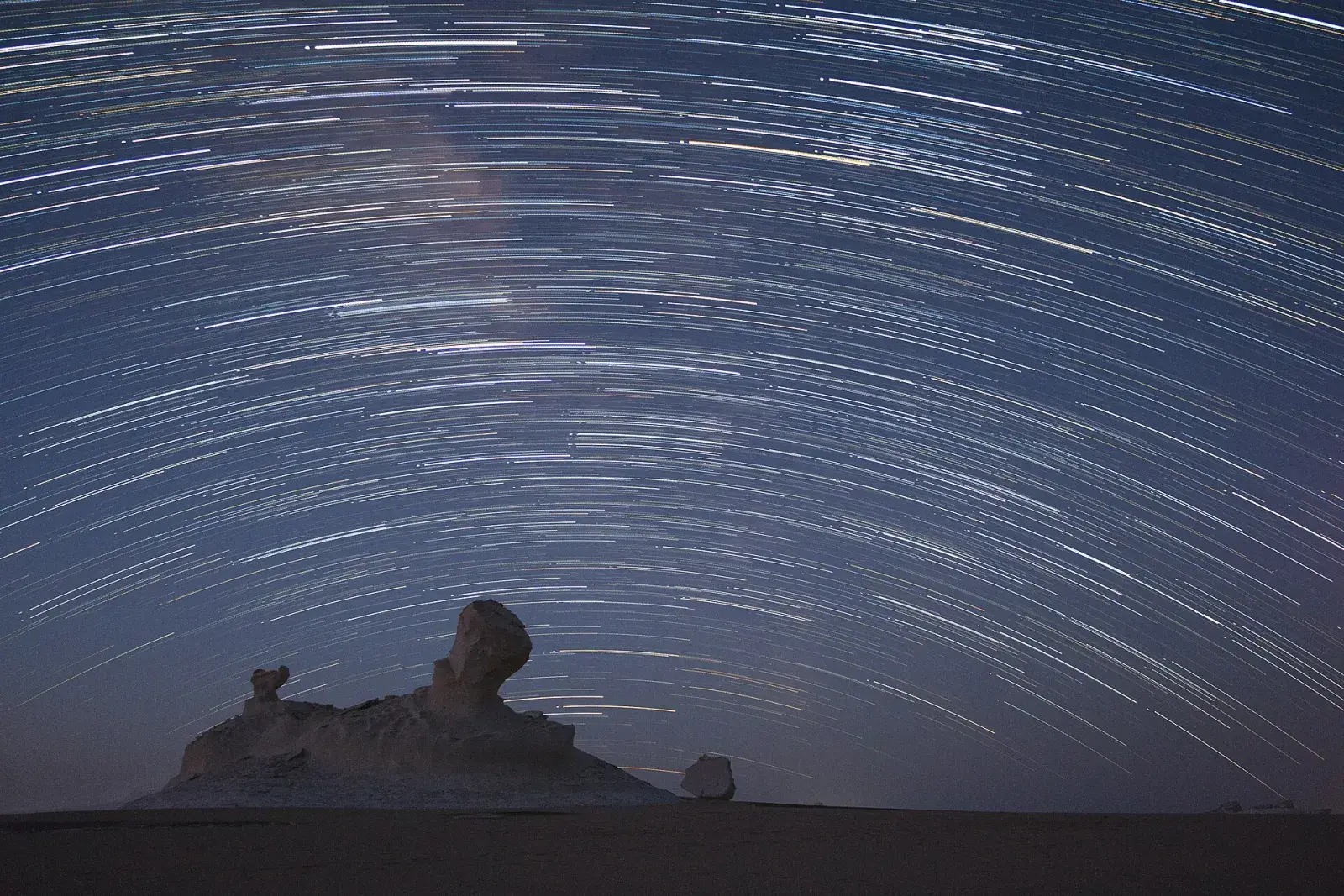
Short answer: Choose dates near the new moon, walk away from the fire, give your eyes 20 minutes and use only red light.
- Choose dates near the new moon.
- Walk 50 metres away from the fire and give your eyes 15 to 20 minutes to adjust. On a moonlit night, walk further, a few hundred metres with the guide, and the glow on the chalk becomes far stronger.
- Use a red light, or turn your phone screen to night mode at its lowest brightness.
- A sky app on your phone helps you name what you see; download it before you lose signal in Bahariya.
- Bring a warm layer even in summer; you'll lie on the sand for a while.
- Ask the crew to keep the fire low after dinner, and sit with your back to it.
For Milky Way and moonlit-landscape technique, see photographing the White Desert.
What helps
Short answer: Binoculars, a red torch, a mat to lie on and patience; we provide the mats and blankets.
- Binoculars: even small ones show star clusters, the Andromeda galaxy and moon craters.
- A red torch: keeps your night vision.
- A mat or blanket: lie flat; it's more comfortable than craning your neck.
- Warm layers: from November to March, a down jacket, hat and gloves. Read weather and night temperatures.
- Patience: the longer you look, the more you see.
Common questions answered
Short answer: Cloud is rare, the International Space Station passes often, and on private trips we camp away from other groups, choosing the spot with a light-pollution map.
- Is it cloudy? Rarely. Clouds come mostly in winter and spring and usually clear quickly.
- Can I see the International Space Station? Often, as a bright, steady point crossing in a few minutes; check an app for passes.
- Is there light from other camps? Sometimes, at the most popular sunset spots. On private trips we camp away from other groups. We choose camp spots with a light-pollution map for the darkest sky, and on star nights we usually look for a spot behind a formation.
The eclipse and the nights around it
Short answer: On 2 August 2027 a total solar eclipse crosses Bahariya, with about 6 minutes 19 seconds of totality at Bawiti, and the moonless nights either side bring the summer Milky Way overhead.
Paths, timings and where to stand are in the 2027 eclipse guide and our eclipse 2027 camp.
Our advice
Short answer: For stars, book within four nights of a new moon; for glowing chalk, book the night before a full moon; and pack warmer than you think.
- For the Milky Way at its best, come between May and September, near a new moon.
- For a moonlit landscape with a little dark sky before dawn, book the night before the full moon.
- For meteors, book the night of 13 December 2026. In 2027, choose the Eta Aquariids in May instead of the Geminids.
- In winter, bring a down jacket, hat and gloves; lying still on the sand is colder than you expect.
- Our sunset and moon calendar lists dark-sky dates and sunset times, so you know when the sky will be fully dark at camp.
Questions people ask
When is the best time to see the Milky Way from the White Desert?+
The brightest part of the Milky Way, towards Sagittarius, is high in the evening from about May to September. In March and April it rises in the early hours. Avoid the week either side of the full moon for the darkest skies; new moons in 2027 fall on 7 January, 6 February, 8 March, 6 April and 6 May.
Should I choose a full moon or a new moon for the White Desert?+
New moon for stars and the Milky Way; full moon for the glowing chalk landscape and easy night walks. A few days either side of the first or last quarter gives you some of both: moonlight for part of the night and a dark sky for the rest.
Is the full moon bad for a White Desert trip?+
Not at all; it's just different. You see fewer stars, but the moonlight turns the chalk silver-white and you can walk among the formations without a torch. Many people choose it on purpose, and the night before the full moon is often the best compromise.
Are there meteor showers worth timing a trip for?+
Yes. The Geminids on 13–14 December 2026 have a dark sky after the crescent moon sets, and the Eta Aquariids before dawn on 5–6 May 2027 fall at new moon. The 2027 Lyrids and Geminids are spoiled by the full moon. Our meteor shower calendar lists every date.
Can you see the Andromeda galaxy from the White Desert?+
Yes, on a moonless autumn or winter night it's visible to the naked eye as a faint smudge, and clearly with binoculars.
Do I need a telescope?+
No. The naked eye and a pair of binoculars show you more than most people have ever seen. The dark sky itself does the work. If you would like one, a telescope is available on request.
How dark is the White Desert sky compared with Cairo?+
In Cairo you might see a few dozen stars on a clear night. In the White Desert, about 370 km from Cairo by road to Bawiti and further still to camp, you see thousands, the Milky Way casts a faint glow on the chalk, and the Andromeda galaxy is visible without binoculars on moonless nights.
Is it too cold to stargaze in winter?+
Not if you dress for it. From December to February camp nights fall to around 1–6°C. A down jacket, hat and gloves, plus a sleeping bag and blankets on a mat, make an hour of lying under the sky comfortable. Winter skies are often the clearest of the year.
Go with us
Trips that include this
2 days, 1 night
Geminids meteor camp in the White Desert (13–14 December 2026)About US$185 to 230 shared · US$360 to 460 private, per person
Check dates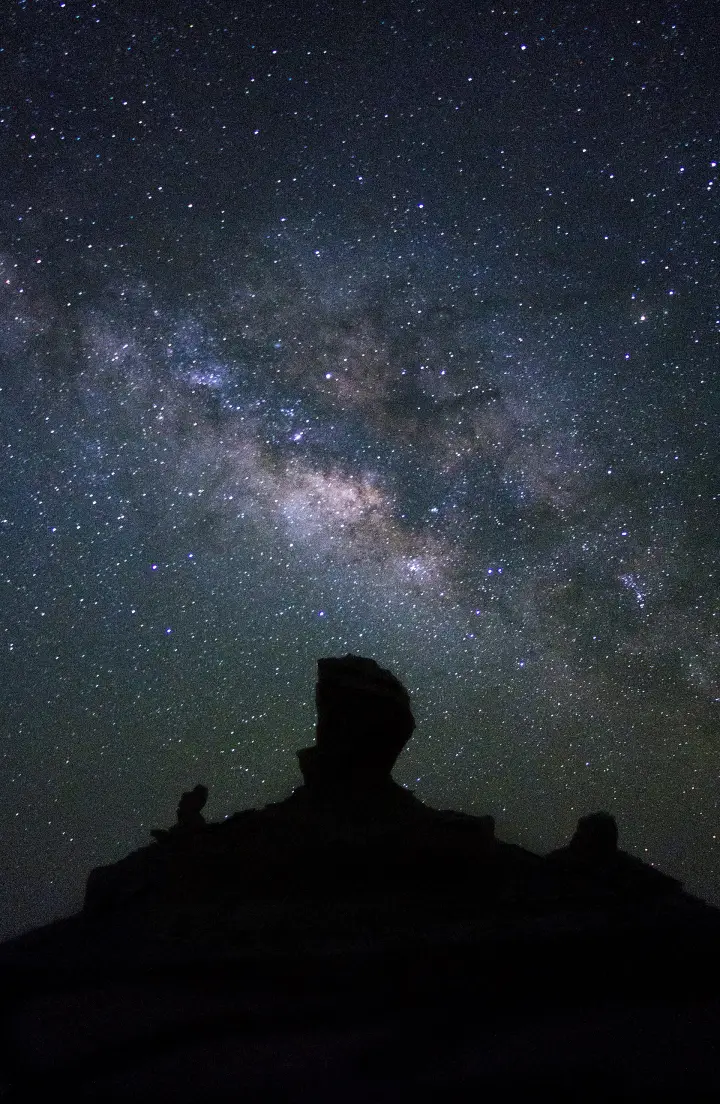
2 days, 1 night
Full-moon camping in the White DesertAbout US$185 to 230 shared · US$360 to 460 private, per person
Check dates
2 days, 1 night
White Desert overnight camping trip from Cairo (2 days, 1 night)About US$185 to 230 shared · US$360 to 460 private, per person
Check dates