
- Duration
- 2 days, 1 night
- Starts from
- Cairo or Giza hotel (or meet in Bawiti)
- Style
- Shared small group or private
- Price per person
- About US$185 to 230 shared · US$360 to 460 private, per person
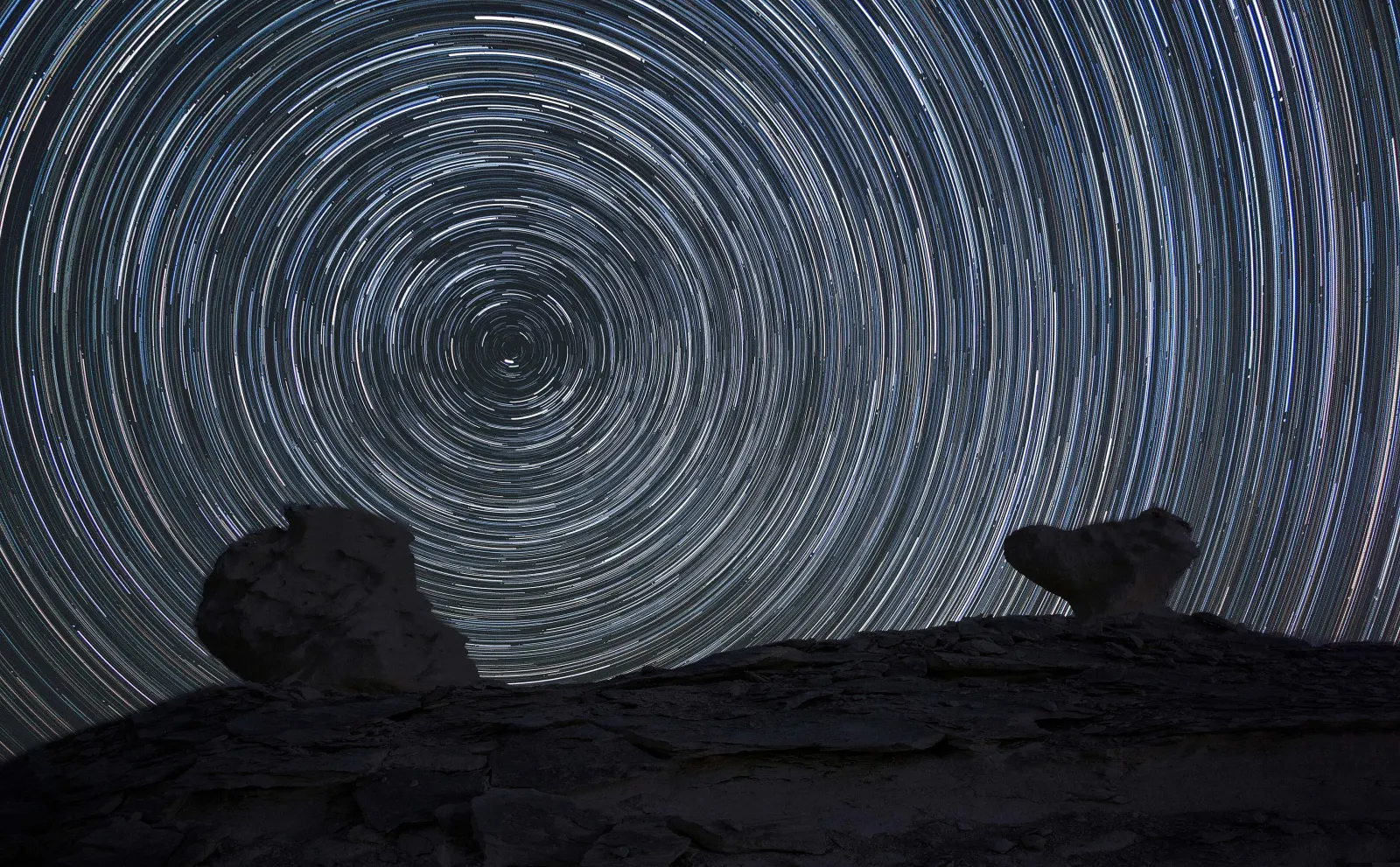
This is our overnight White Desert trip built around the Geminid meteor shower on 13–14 December 2026, the year's best meteor night. The crescent moon sets in the mid-evening, leaving the sky dark from about 21:00 to dawn. We add reclining mats, red torches and hot drinks at 01:00, with sleeping bags and spare blankets on request for nights of 3–6°C.
Check dates on WhatsAppHighlights
- ✦The Geminid peak night, 13–14 December 2026, under a dark sky
- ✦Reclining mats set out away from the campfire
- ✦Hot drinks through the night; sleeping bags, spare blankets and tents on request
- ✦Sunset among the chalk and sunrise after the last meteors
- ✦The same format for the Eta Aquariids before dawn on 5–6 May 2027
Day by day
Day 1
13 December: Cairo to the White Desert
Pick-up at about 06:30 and the road to Bawiti, about 370 km and 4.5–5 hours with a halfway stop. Lunch in Bawiti, then into the 4x4 through the Black Desert, Crystal Mountain and Agabat. Sunset in the White Desert at about 17:15, camp in the lee of a formation at a spot we pick with a light-pollution map, dinner by the fire at 19:00, and a short sky tour before an early night. Wake-up at about 01:00 for the main session, with tea on the fire, until the sky greys at about 05:30.
Day 2
14 December: sunrise and back to Cairo
Sunrise at about 06:50 among the chalk, a hot breakfast and time to warm up in the sun. A slow drive through the formations, then back north to Bawiti, with a warm spring if time allows. Lunch and the road back to Cairo, arriving at your hotel in the early evening.
Included
- ✓ Hotel pick-up and drop-off in Cairo or Giza (or meet in Bawiti); other pick-up points arranged where you need them
- ✓ Road transfer to Bahariya and a 4x4 with an experienced Bahariya driver
- ✓ Desert permit and the White Desert park entry fee, listed in your quote
- ✓ Lunch on day 1, dinner, breakfast and lunch on day 2, water, tea and hot drinks through the night
- ✓ Reclining mats and a viewing area set away from the fire
- ✓ Bedding: mattress, blankets and windbreak
- ✓ Sleeping bag, spare blankets and a tent on request
- ✓ Red torches to borrow, and a guide to point out the radiant and constellations
Not included
- – Tips for the driver and camp crew
- – Drinks other than water, tea and hot drinks
- – Travel insurance
Why this night
Short answer: The Geminids are the strongest meteor shower of the year, and on 13–14 December 2026 the moon is a thin crescent that sets by about 21:00, leaving the hours after midnight fully dark.
That is why we've built a whole departure around one date. The richest dark hours in the White Desert run from about 01:00 to 05:30, when the radiant in Gemini is high overhead, and the plan below is shaped around them. A year later the moon is full the evening before the Geminid peak and washes most meteors out, so if meteors are your reason to come, this December is the one. Rates, moon phases and every other shower are in our meteor shower calendar.
The 2026 peak in numbers
Short answer: The IMO puts the 2026 Geminid maximum at 14:00 UT on 14 December with a ZHR of 150; at camp the moon sets at about 21:00 on the 13th and the radiant is nearly overhead at about 02:00.
| What | Figure for camp (Egypt time, UTC+2) |
|---|---|
| Activity period | 4 to 20 December |
| Maximum | 14 December, 14:00 UT (16:00 in Egypt, in daylight) |
| Past maxima fall between | 23:00 on 13 December and 20:00 on 14 December |
| Peak rate (ZHR) | 150 |
| Moon | New moon on 9 December; on the 13th a crescent under a fifth lit sets at about 21:03 |
| Radiant in Gemini | Rises in the north-east at about 18:45, 30° up by about 21:20, almost overhead (84°) at about 02:05 |
| Sun | Sets 17:14; full darkness 18:37 to 05:25; rises 06:48 |
The shower figures come from the International Meteor Organization's 2026 Meteor Shower Calendar (Geminids entry, 004 GEM). Moon and sun times are for 27°19'N, 28°08'E in the White Desert, from timeanddate.com; the radiant times are our own calculation from the IMO radiant position.
The maximum itself lands in the afternoon of the 14th, so no one in Egypt sees the exact peak in darkness. That matters less than it sounds. The IMO notes that the Geminid maximum is broad, with ZHRs of 100 and more for roughly 10 to 12 hours, and our main session from 01:00 to 05:25 sits inside the window where recent maxima have fallen. The evening of the 14th is also inside it, but the moon sets later that night (about 21:57) and the radiant is still low in the early evening, so the night of the 13th gives more dark hours with the radiant high.
The night plan
Short answer: Sunset, dinner and an early night, then an alarm at 01:00 for four hours under the sky, with hot drinks and a guide.
| Time | What happens |
|---|---|
| 17:15 | Sunset in the White Desert; the crew sets camp in the lee of a formation |
| 18:00 | Tea by the fire as the first stars appear |
| 19:00 | Dinner off the embers: grilled chicken, rice, vegetables; tell us about diets two days ahead |
| 20:00 | Short sky tour with the guide: Orion, the Pleiades, the radiant in Gemini |
| 21:00 | Moonset; the fire is allowed to die down and people sleep |
| 01:00 | Wake-up, hot tea or sahlab, onto the viewing mats under your blankets |
| 01:00–05:30 | Main session: the radiant is high and rates are at their best |
| 06:50 | Sunrise, breakfast by a fresh fire |
Earlier in the evening, the Geminids are already active. Some guests prefer to watch from 21:00 to midnight and then sleep through; others sleep first and get up for the deep night. We're flexible, and the crew keeps the kettle hot either way.
Light rules at camp
Short answer: The fire is small and screened, it is left to die by 22:00, the viewing mats sit behind a formation away from it, and only red light is used after that.
Your eyes need about 20 minutes in the dark to reach full night vision, and one white screen or headlamp resets the clock for everyone nearby. So on this night the camp works to a few simple rules:
- The fire is for dinner and tea. It is kept small, screened from the viewing area, and left to burn down by 22:00. The kettle for the 01:00 session is heated on embers or a small stove behind the formation.
- Red light only after 22:00. We lend red torches. If you bring your own head torch, check it has a red mode.
- Phones on night mode, brightness right down. A red-screen filter is better still. Photos with flash are for the daytime.
- No vehicle lights. The 4x4s are parked before dark and stay off until the sky greys.
- Mats point away from camp. You lie with your feet towards the fire side, so any glow is behind you and the open sky is in front.
How to watch a meteor shower explains the rest of the routine.
Keeping warm on a December night
Short answer: We bring reclining mats off the cold sand, with sleeping bags, spare blankets and tents on request; you bring a down jacket, hat, gloves and thick socks.
December nights at camp often fall to 3–6°C, and lying still for hours makes it feel colder. What catches people out is how much heat you lose to the ground, so the reclining mats keep you off the cold sand. Sleeping bags and spare blankets are available on request, so ask when you book, and a tent is on request for anyone who wants to sleep inside between sessions.
What to bring
Short answer: Warm layers for a still, cold night, a red-light head torch, a power bank and a sky app downloaded before Bahariya; the mats, hot drinks and bedding are ours.
We supply the mattress, blankets, windbreak, reclining mats, red torches to borrow and hot drinks; sleeping bags, spare blankets and a tent are on request. You bring:
- A down or synthetic jacket and a fleece, worn together for the 01:00 session
- A warm hat, gloves and thick socks; thermal leggings help
- Dry clothes to change into before sleeping, since a damp layer chills you fast
- A head torch with a red mode, if you have one
- A power bank, since cold drains batteries quickly; keep your phone in an inside pocket
- A sky app such as Stellarium, downloaded before Bahariya, as signal is weak at camp
- Lip balm and moisturiser for the dry air
- Your own thermos and snacks if you like to graze through the night
- For photos: a tripod, a wide lens, an intervalometer and spare batteries
See camping in winter, weather and night temperatures and what to wear.
Shared or private
Short answer: Shared departures keep the price at the standard overnight level; a private camp gives you your own spot, crew and timings.
On a shared departure you join a small group, never more than four guests in a 4x4. On a private trip the vehicle and camp are yours, we camp away from other groups, and if the wind is strong you can switch to a lodge night in Bahariya. A toilet tent and other comfort extras are available on request on any trip. The price band is the same as our overnight camping trip: about US$185–230 per person shared and US$360–460 per person private for two. Peak dates fill early, so book soon. For more comfort see private comfort camping.
The same format in May: Eta Aquariids
Short answer: For the Eta Aquariids in May 2027 we can run the same camp with a pre-dawn alarm and lighter bedding; the peak date and moon are on our meteor calendar.
The May camp keeps the same shape with a different clock. Nights are mild, so you'll need just a light layer and we pack lighter bedding. The days are hot, so the timetable starts later from Cairo and rests in Bawiti through the afternoon before the drive into the chalk for sunset. The peak night, the moon and why this shower is better from Egypt than from Europe are all in the meteor shower calendar.
How to book
Short answer: Message us on WhatsApp with "Geminids", your group size and shared or private; we reply with availability and an all-in price, and a deposit holds your place.
Send us a WhatsApp message with "Geminids" or "Eta Aquariids", your group size and shared or private. If you want the night before held as a cloud fallback, say so in the same message. We'll reply with availability and an all-in price. A deposit holds your place; we need your passport details one day before the trip so we can arrange the permit. Read our stargazing guide before you come.
Questions people ask
What if it's cloudy on 13 December?+
Cloud is rare in the White Desert in December, but not impossible when a winter front passes. The night before the peak also gives good rates, so if a forecast looks doubtful a week out, we'll talk to you about moving to 12–13 December or keeping both options open.
How cold will the night be?+
Expect around 3–6°C at camp in the small hours, sometimes colder just before dawn. You'll be lying still, which feels colder than walking. That's why sleeping bags, spare blankets and a tent are available on request, and why you should pack a down jacket, hat and gloves.
How many meteors will we see?+
The International Meteor Organization gives the 2026 Geminids a ZHR of 150, an idealised figure that assumes flawless darkness and Gemini at the zenith, so what you actually count will be fewer. From the White Desert after midnight on 13–14 December, with the radiant almost straight up, something like one a minute is a fair hope if the sky is clear, with bright, slow ones among them.
Can I do this trip for the Eta Aquariids in May 2027?+
Yes, ask us. We plan to offer the same format on the night of 5–6 May 2027, at new moon, with the alarm set for about 03:00 and lighter bedding, since May nights are around 15–18°C. The Eta Aquariids are fewer than the Geminids, about 50 an hour at best, but fast and long.
Do I need to bring a camera?+
No. Meteors are best with your eyes. If you'd like photos, bring a camera with a wide lens, a tripod, an intervalometer and spare batteries. Our guide can usually help you set up a sequence that runs on its own while you watch.
Is this trip suitable for children?+
Yes, for children who can cope with a cold night and a 01:00 wake-up. Many love counting meteors. We'll add more bedding and keep the session flexible, so younger ones can watch for half an hour and go back to sleep.
Go with us
Trips that include this
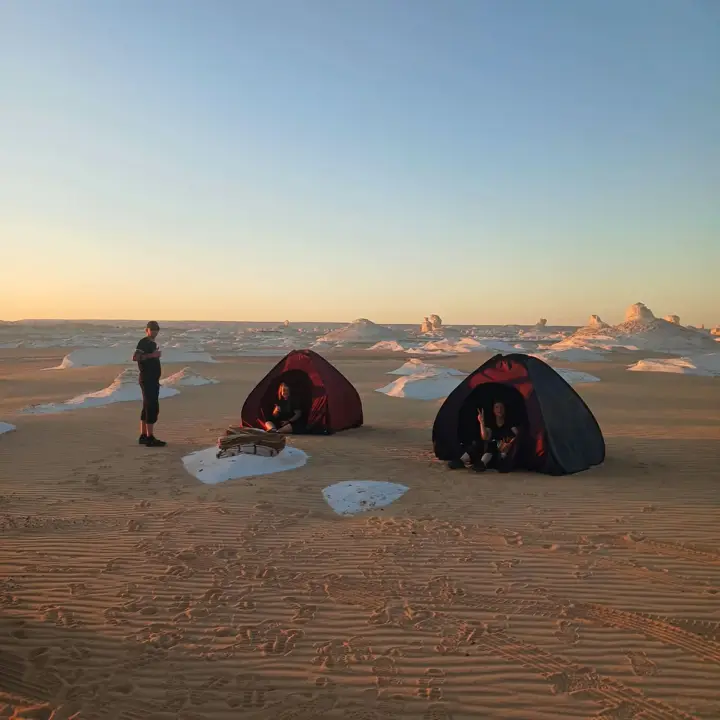
2 days, 1 night
White Desert overnight camping trip from Cairo (2 days, 1 night)About US$185 to 230 shared · US$360 to 460 private, per person
Check dates
3 days, 2 nights
3-day White Desert tour: Bahariya, the White Desert and two nights outAbout US$495 to 660 per person for two travellers, private
Check dates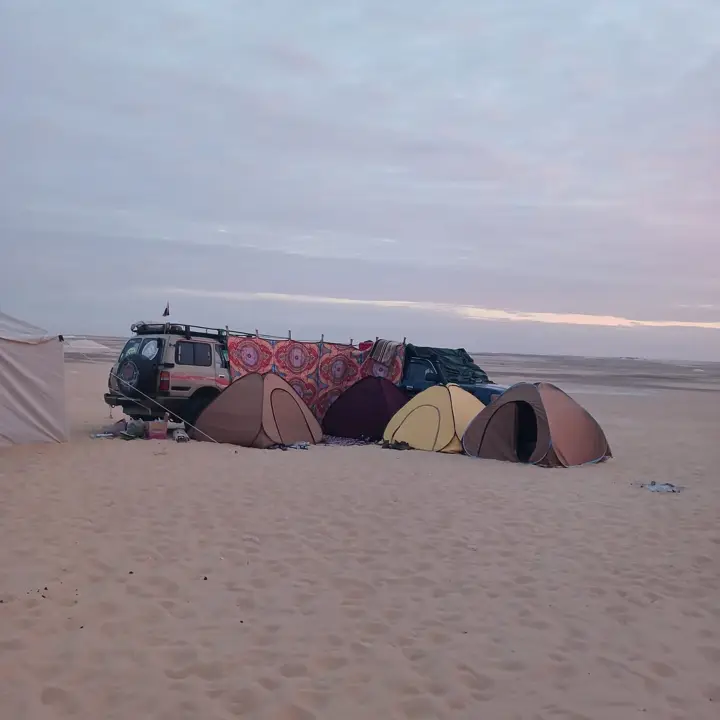
2 or 3 days
Private White Desert camping in comfortOn request (depends on group size and nights)
Check datesHow booking works
Free written quote
Message us on WhatsApp. We reply with the plan and a total price in writing, with no obligation.
50% deposit
To confirm, you usually pay 50% of the tour price; the balance is due before you arrive.
Permits handled
We arrange the desert permits; we just need a passport copy for each traveller.
Clear cancellation
Charges rise from 35% to 100% as your date gets closer. If weather spoils a camp night, we move it where we can or refund that night's camp portion.