
The short answer
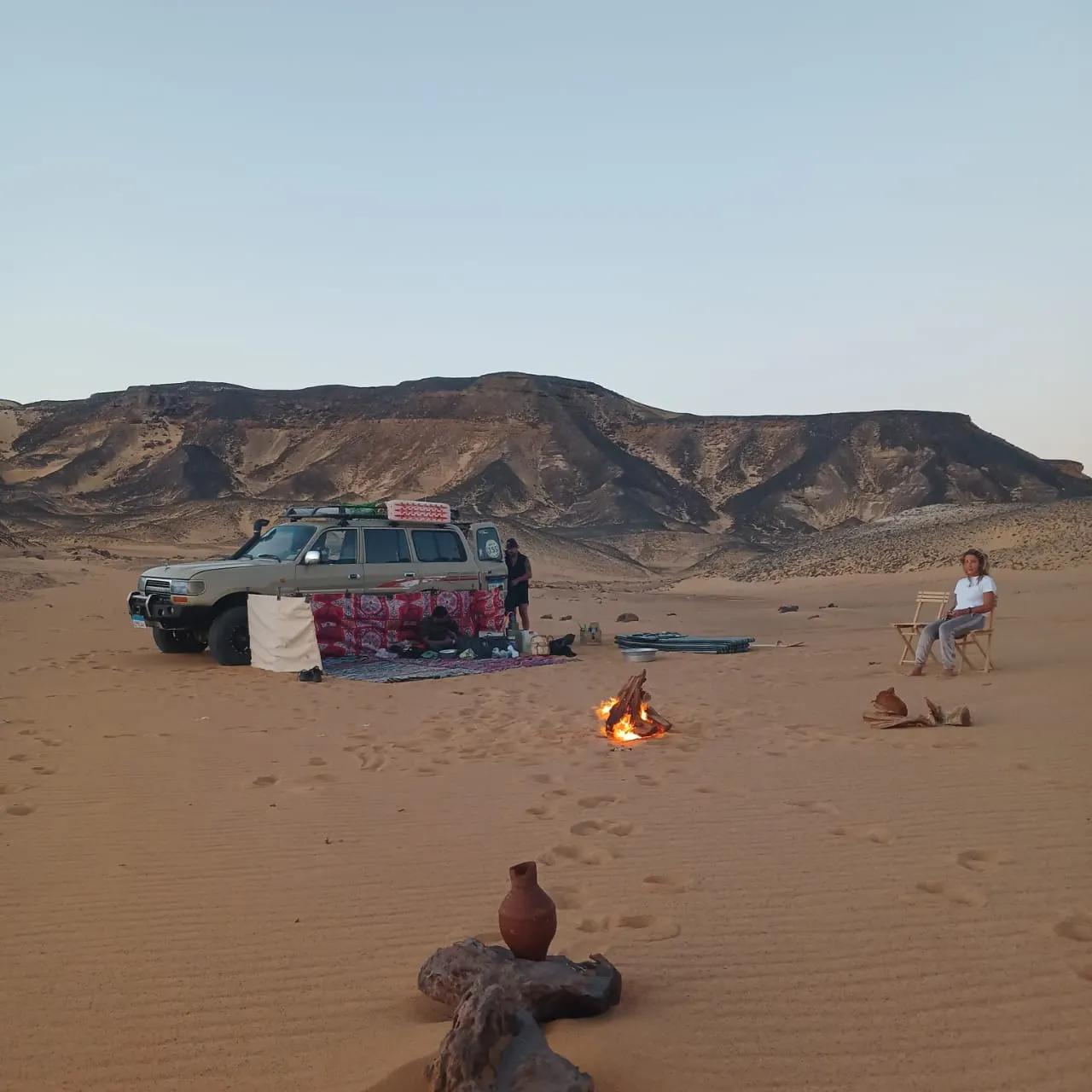
From December to February, White Desert nights usually fall to 2–6°C and sometimes below freezing, while days are a pleasant 19–23°C. With the right kit it's very comfortable: a warm sleeping bag plus blankets, a tent, a hat, gloves, warm socks and a down jacket. The fire, hot tea and a dinner straight off the embers help a lot.
Ask us on WhatsAppHow to stay warm
Short answer: A tent, insulation under you, dry clothes for bed, a hat and a hot drink before you sleep.
- Sleep in a tent, out of the wind.
- Wear a beanie and dry socks to bed.
- Put tomorrow's clothes inside your sleeping bag so they're warm in the morning.
- Eat a good dinner and drink something hot before bed.
- Ask for spare blankets or a camp bed to get off the cold ground; both are on request, as on our comfort camp.
Typical values for the White Desert and Bahariya, matching our month guides. Open desert nights can be a few degrees colder; individual days vary.
How cold does it really get?
Short answer: Most winter nights at camp fall to 2–8°C; on clear, still nights in late December and January the open desert can dip just below freezing.
The coldest moment is just before sunrise, and the clear skies that give the best stars are also the coldest nights. Wind chill makes the biggest difference, which is why a sheltered spot and a tent matter more in winter than at any other time. If a strong wind blows on a private trip, you can switch to a night in a Bahariya lodge instead. Month-by-month figures are in weather and night temperatures.
The winter sleep system
Short answer: Something insulating under you, a warm bag plus blankets over you, a tent around you and dry layers on you.
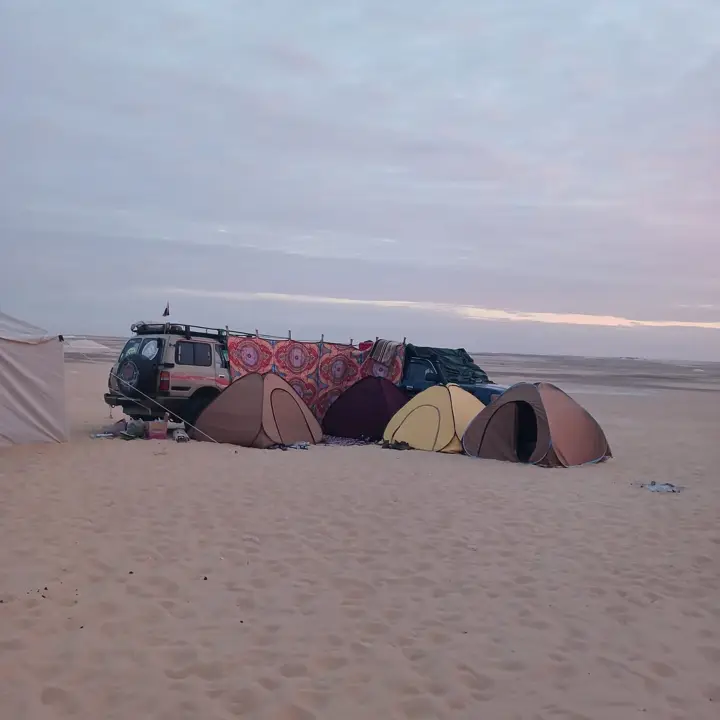
Most cold nights are cold from below. Sand and chalk draw heat from your body, so a thick mattress or a camp bed is the first defence. On top, use a sleeping bag rated for around 0°C, plus heavy blankets (ask us for a sleeping bag and spare blankets if you need them). Inside, wear a dry thermal base layer, warm socks and a beanie; change out of the day's clothes, which hold sweat and dust. A tent blocks wind and adds a few degrees. Walk-in tents and camp beds, available on request, make winter nights genuinely cosy. See glamping and tent or under the stars.
What to pack for a winter night
Short answer: Down jacket, thermal top and leggings, beanie, gloves, wool socks, a buff, and a hot-water bottle if you feel the cold.
- Down or synthetic insulated jacket
- Thermal long-sleeved top and leggings for sleeping
- Fleece or wool jumper
- Beanie and gloves
- Two pairs of warm socks, one kept dry for the night
- Buff or scarf
- Your own sleeping bag liner, for extra warmth and hygiene
- Hot-water bottle (the crew can fill it from the kettle)
- Head torch with fresh batteries; cold drains them
See the full packing list and what to wear.
Checked November 2026: winter climate and sky
Short answer: Long-term Farafra normals give January a mean low of 4.1°C and a record low of −3.3°C; the 2026 Geminids peak on the night of 13–14 December under a dark sky.
| December | January | February | |
|---|---|---|---|
| Mean high (Farafra) | 21.1°C | 20.0°C | 22.4°C |
| Mean low (Farafra) | 5.6°C | 4.1°C | 6.0°C |
| Open desert before dawn | 2–5°C | 0–4°C | 2–6°C |
| Rain | Rare shower possible | Rare shower possible | Effectively none |
| Sky highlight | Geminids, 13–14 Dec 2026 | Quadrantids, 3–4 Jan 2027 | New moon 6 Feb 2027 |
The open-desert figures are what our crew sees at camp, away from the oasis, and are a few degrees lower than town readings. Read weather and night temperatures and meteor showers, or join our Geminids meteor camp.
Evening by the fire
Short answer: Winter evenings are the cosiest of the year: a big fire, hot soup and tea, and the brightest stars.
In winter, the sun sets around 17:00 and the temperature drops fast. The crew lights the fire early, and soup, tea and dinner come off the embers piping hot. Sitting close to the flames with a blanket around your shoulders and a glass of sweet tea is one of the best moments of the trip. Long nights also mean more hours of stars: Orion and the fainter winter Milky Way ride high on winter evenings. See stargazing and food at camp.
Winter advantages
Short answer: Comfortable days for walking, crystal-clear skies, no flies, and quieter camps outside the holidays.
Winter days are the most pleasant of the year for hiking among the formations, with temperatures around 20°C. The air is often very clear, making photographs crisp and the stars brilliant. There are no flies or mosquitoes. Except over Christmas, New Year and Egyptian holidays, there are fewer groups than in spring and autumn. See Christmas and New Year, December and January.
Who should avoid winter camping
Short answer: Babies, very young children and anyone who suffers badly in the cold might prefer a lodge night or a spring or autumn date.
If you really dislike cold, choose March, April, October or November. Or ask for a walk-in tent with spare bedding, or skip camping and stay in a Farafra hotel close to the formations. See hotels in Farafra.
Our advice
Short answer: Pack for 0°C even if the forecast says 5°C, choose a tent, and change into dry clothes before bed.
What catches people out in winter is the speed of the drop. At 16:30 you're in a T-shirt; by 18:00 you want a down jacket. Have your warm layers in a day bag, not buried in the boot. Go to the toilet before you get into your sleeping bag. And keep your phone and camera batteries inside the bag with you; the cold kills them by morning.
Book a winter trip
Short answer: Message us with your dates and tell us you feel the cold; we'll plan the bedding and the camp spot around a winter night.
Send us a WhatsApp message with "winter camping". Tell us if you want a sleeping bag, spare blankets, a walk-in tent or a camp bed; all are on request. If you'd like a softer start, we can suggest a lodge night in Bahariya.
Questions people ask
Does it snow in the White Desert?+
No. The white is chalk, not snow. Frost on the ground or on the tent at dawn is possible on the coldest nights in late December and January, and Farafra's record low is −3.3°C, but snow has no realistic chance here.
What sleeping bag do I need in winter?+
A bag rated comfortable to around 0°C is right for December to February. Sleeping bags and spare blankets are available from us on request, so ask when you book, or bring your own bag. If you sleep cold, a liner adds a few degrees; tell us and we'll pack spare blankets.
Is it worth camping in the White Desert in January?+
Yes, if you're prepared for the cold. January days of about 20°C are the best of the year for walking, skies are very clear, and there are no flies or mosquitoes. The price is a night that can fall close to 0°C, which good kit makes comfortable.
Can I sleep in a tent instead of in the open?+
Yes, and in winter we recommend it. A tent blocks the wind and keeps the frost off your bedding, adding a few degrees. On request, we can bring a walk-in tent with a camp bed, which keeps you off the cold ground.
What's the best winter night for stars?+
The Geminid meteor shower on the night of 13–14 December 2026 is the standout, with a thin crescent moon setting early. The Quadrantids on 3–4 January 2027 are also good but brief. Any night near the new moon, such as 7 January 2027, is superb for the Milky Way.
Go with us
Trips that include this
2 or 3 days
Private White Desert camping in comfortOn request (depends on group size and nights)
Check dates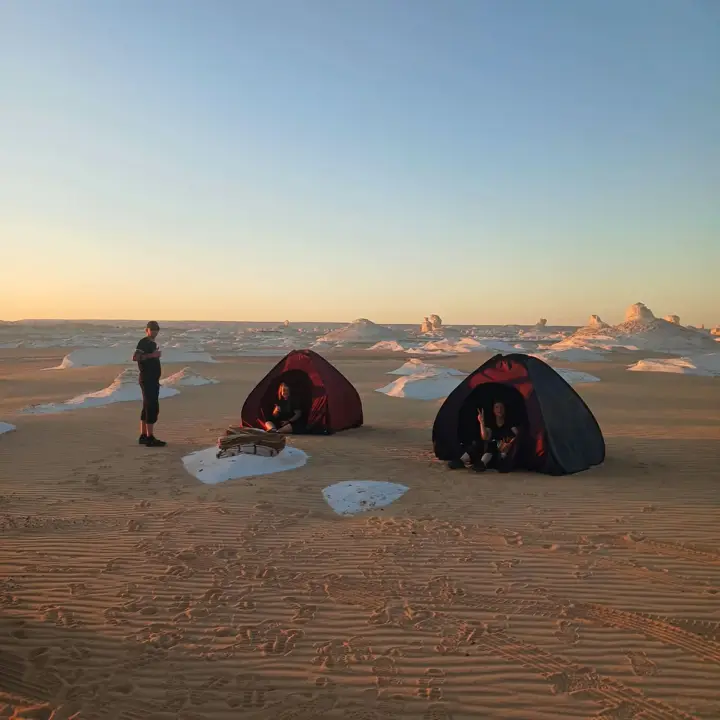
2 days, 1 night
White Desert overnight camping trip from Cairo (2 days, 1 night)About US$185 to 230 shared · US$360 to 460 private, per person
Check dates