
The short answer
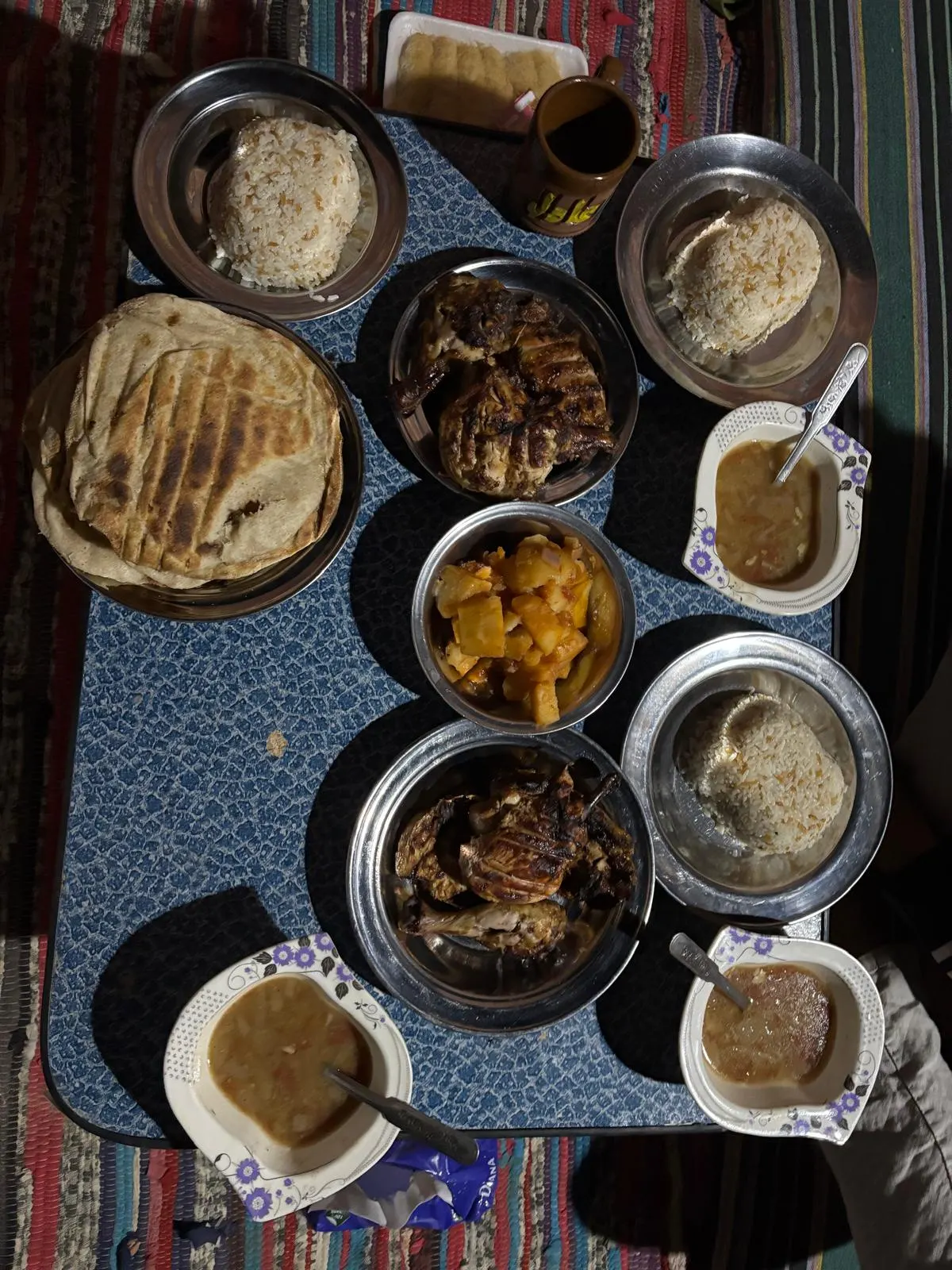
Food on a White Desert trip is simple, fresh and generous. Lunch is usually in Bawiti; dinner at camp is chicken grilled or cooked in the embers with rice, vegetable stew, salad and bread, then fruit and sweet tea by the fire. Breakfast is bread, cheese, eggs, jam, halva, tea and coffee. Vegetarian, vegan and allergy needs can be met if you tell us two days before the trip.
Ask us on WhatsAppLunch on the way
Short answer: Lunch on day one is a home-style Egyptian meal in Bawiti, usually at a lodge or a family house, before you head into the desert.
Lunch on day one is usually in Bawiti, Bahariya's main town, after the four-and-a-half to five-hour road from Cairo. It's a home-style meal: rice, salads, a vegetable dish such as okra or courgette in tomato sauce, chicken or meat and bread. We keep it simple and quick so that you reach the desert with time to enjoy the Black Desert, Crystal Mountain and Agabat before sunset rather than racing the light.
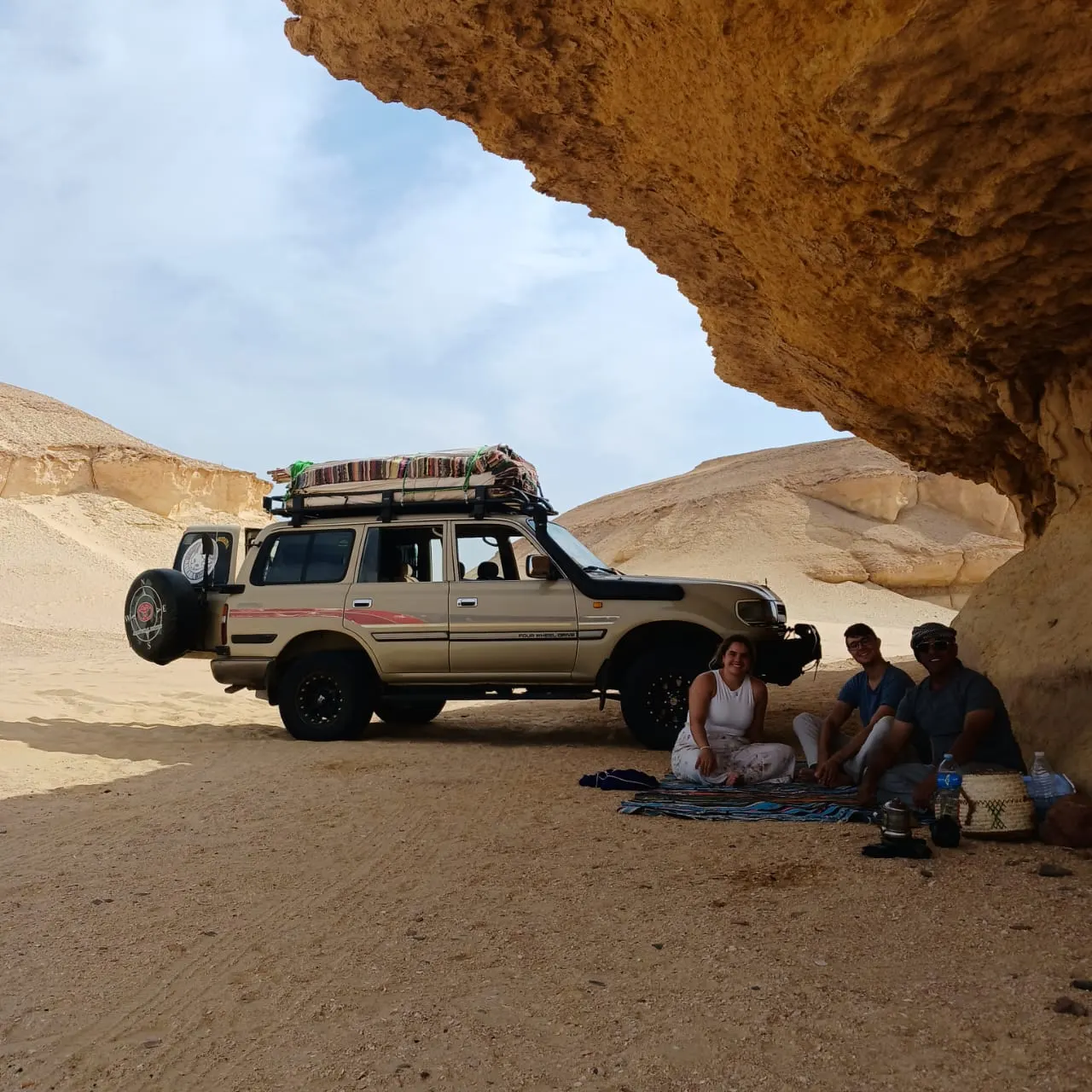
If you're on a longer trip, lunch on later days is a picnic in the shade of a rock: bread, cheese, tuna or beans, salad, fruit and tea on a small gas stove.
Dinner by the fire
Short answer: Dinner is chicken cooked in or over the embers with rice, vegetable stew, salad and bread, followed by fruit and sweet tea around the fire.
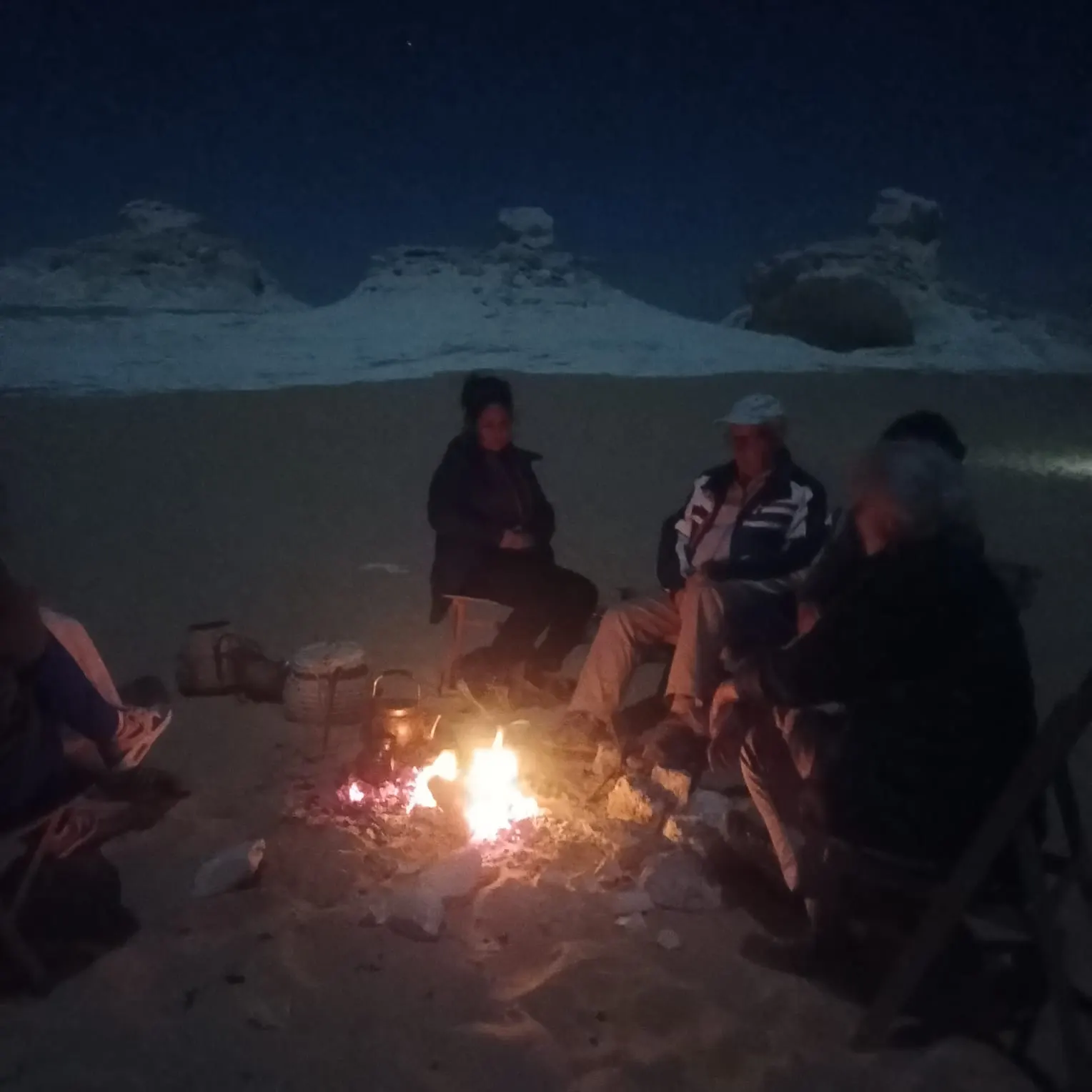
Our cook lights a fire from wood brought from the oasis gardens. A favourite is chicken cooked buried in the embers, or grilled over them, with rice, a tomato-based vegetable stew, salad and flatbread. Dessert is fruit, sometimes a sweet, and plenty of sugary black tea, often with mint or local sage. Some nights the cook also bakes flat bread straight in the hot sand under the embers; the story of that bread is on the food of the oases. On a comfort camp with a dedicated cook the menu can be longer; ask us what's possible for your dates.
The meal people talk about afterwards is this one. Guests often tell us dinner in the desert was the best meal of their whole trip, which says more about the setting, the cold air and the fire than about fancy cooking. Dinner is usually around 7–8 pm in winter, after the sunset and once the camp is set.
Breakfast
Short answer: Breakfast is bread warmed on the fire, cheese, eggs, jam, honey, halva, vegetables, tea and instant coffee.
Bread warmed by the fire, white and processed cheese, boiled or fried eggs, often a pot of fuul (stewed fava beans), jam, honey, halva, cucumber and tomatoes, tea and instant coffee. If you can't function without proper coffee, bring a small pouch of ground coffee and we'll brew it Turkish-style in a pot over the coals.
A typical menu, meal by meal
Short answer: Three cooked meals a day on a two-day trip, plus tea, fruit and water throughout.
| Meal | Where | What we usually serve |
|---|---|---|
| Day 1 lunch | Bawiti | Rice, chicken or meat, vegetable stew, salads, bread |
| Afternoon | On the way | Tea, dates, fruit |
| Day 1 dinner | Camp | Ember or grilled chicken, rice, stew, salad, bread, fruit |
| Evening | By the fire | Sweet tea, sometimes roasted peanuts or a local sweet |
| Day 2 breakfast | Camp | Bread, cheese, eggs, jam, honey, halva, tea, coffee |
| Day 2 lunch | Bawiti or picnic | As day 1, or a picnic on longer trips |
Special diets
Short answer: Vegetarian food is easy at camp, vegan, gluten-free and allergy needs work if you tell us two days before the trip, and all meat we serve is halal.
The cook shops in Bawiti before we drive south, so tell us about any special diet two days before the trip, in writing. Sample vegetarian and vegan menus, gluten-free swaps and allergy advice are on vegetarian, vegan and special diets.
Tea by the fire
Short answer: After dinner the kettle goes straight onto the coals, and sweet black tea is served in small glasses for as long as people stay up.
Tea is the centre of the evening. The cook sets a blackened kettle in the embers, adds loose black tea and a lot of sugar, and pours from a height into small glasses. Ask for "shai min ghair sukkar" if you want it unsweetened, or "sukkar shwaya" for a little sugar. Some nights there is also hibiscus (karkadeh) or a pinch of desert sage. In winter, when the air drops below 5°C after dark, a hot glass in both hands is the best kit you can have.
Water and snacks
Short answer: Bottled water is included and we never run out of water; bring your own snacks and any special drinks from Cairo.
Bottled water is included. We carry plenty, more than we expect to need, and we never run out of water. Bring any favourite snacks from Cairo; Bawiti's shops are basic, and road-stop snacks are overpriced. Fizzy drinks are available in Bawiti if we stop. See also what to pack.
Hygiene at camp
Short answer: Food is bought fresh the same morning, cooked hot, and eaten with clean hands from a soap-and-water station.
We shop in Bawiti on the morning you arrive, keep raw meat cold in an ice box, and cook it right through over the fire. Salads are washed in bottled water. A jerrycan with a tap and soap stands by the kitchen corner of the camp, and we carry hand gel. If you have a sensitive stomach, stick to cooked dishes and peeled fruit for the first day. See health and first aid and toilets and hygiene.
How the menu changes with the season
Short answer: Winter dinners are hot and early with soup and tea; summer meals are lighter, later and come with much more water.
| Season | What changes at camp |
|---|---|
| Winter (Dec–Feb) | Nights near 0–4°C, so dinner is early and hot: lentil soup, ember chicken, stew, endless tea. Fresh oranges for dessert |
| Spring and autumn | The easiest months for cooking; long evenings by the fire. Fresh dates in autumn |
| Summer (Jun–Aug) | Highs near 38°C. We drive and eat in the cooler hours, add watermelon and cold drinks from the cool box, and carry plenty of extra water |
If you travel in the cold months, read weather and night temperatures and camping in winter; a hot meal does a lot of the work a sleeping bag can't.
Rubbish and the park
Short answer: Everything the kitchen brings into the White Desert goes back out with us, including food scraps, bottles and ash we can carry.
The White Desert has been a national park since 2002, and food waste left in the sand draws foxes and lasts far longer than people expect in the dry air. Our crew bags all rubbish, packs out the plastic bottles and leftovers, and clears the fire site in the morning. You can help by keeping wrappers in your pocket and handing empty bottles back to the driver. See where we camp for how we choose and leave a site.
Our advice
Short answer: Tell us your diet two days before the trip, bring a few snacks and your own coffee if you're fussy, and come hungry to dinner.
- Write any diet or allergy into a message to us two days before the trip, not just verbally on the day.
- Bring a reusable bottle; we refill it from big bottles to cut plastic.
- Don't feed the fennec foxes that visit camp, however much they ask. It's bad for them.
- Leave room for tea. It goes on for hours.
Questions people ask
Are meals included on a White Desert trip?+
On our trips, yes. Lunch in Bawiti on day one, dinner and breakfast at camp, tea through the evening and bottled drinking water are all in the price. You only pay for extra snacks, fizzy drinks or coffee you buy on the road.
Is the food safe to eat?+
Yes. Food is bought fresh in Bawiti on the morning of the trip, cooked hot over the fire, and kept in cool boxes. Drinking water is bottled. As anywhere in Egypt, sanitise your hands before eating; we keep a water jug and soap at camp.
Can I bring alcohol?+
We don't provide alcohol, and Bahariya is a conservative place. A discreet drink at camp is usually fine if you bring it yourself from Cairo; ask us first, keep it out of sight in town and at checkpoints, and take the empties back with you.
What is the campfire chicken cooked in?+
Usually seasoned pieces of chicken wrapped and buried in the embers for about an hour, or grilled over them on a rack. The fire is built from dry wood we bring from the oasis, never from desert plants, which are protected inside the park.
Is there enough to eat, and do I need to bring snacks?+
There is always more than enough at meals. Between them, the drive is long, so bring a few favourite snacks from Cairo, such as nuts, biscuits or chocolate. We carry fruit, dates and plenty of bottled water in the car, and we never run out of water.
What time is dinner at camp?+
In winter, usually around 7 to 8 pm, once the sun has set and the tents or windbreaks are up. In summer it comes later, after the heat has gone out of the sand. Tea and dates keep you going while the cook works.
Can I help with the cooking?+
Yes, and many guests do. The cook is usually happy for you to chop salad, watch the chicken go into the embers or try shaping desert bread. Just stay clear of the fire pit while he is raking coals, and wear closed shoes.
Go with us
Trips that include this
2 days, 1 night
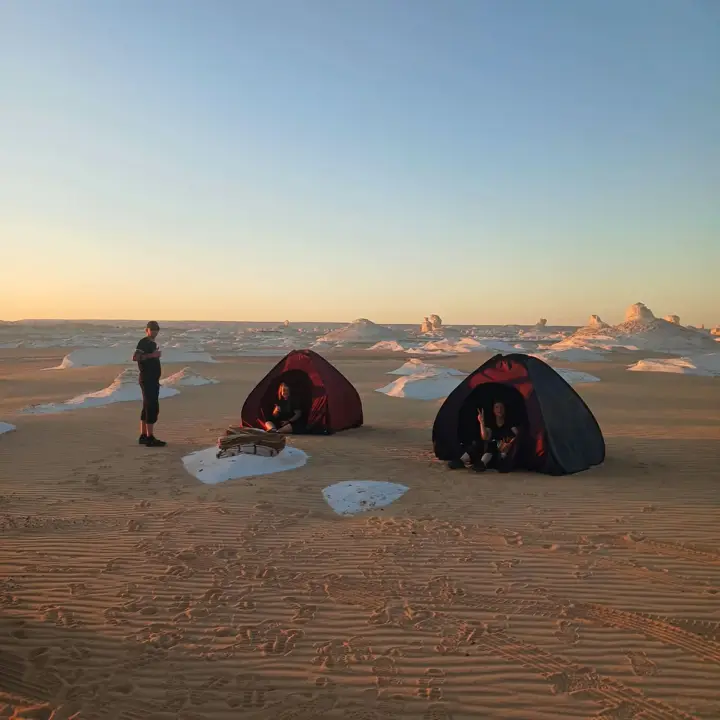
White Desert overnight camping trip from Cairo (2 days, 1 night)About US$185 to 230 shared · US$360 to 460 private, per person
Check dates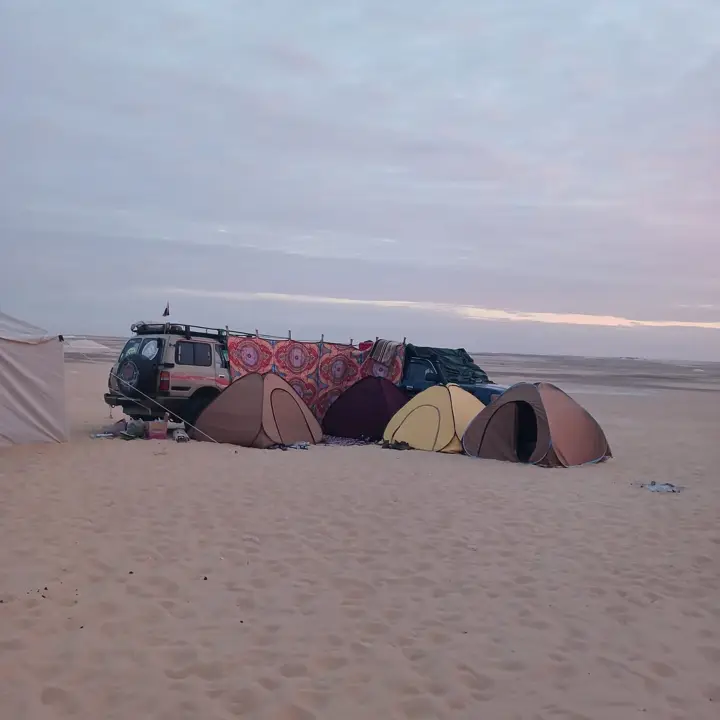
2 or 3 days
Private White Desert camping in comfortOn request (depends on group size and nights)
Check dates