
The short answer
Bahariya gets about 4 mm of rain a year, so every oasis crop is watered from ancient groundwater. Its main products are guavas, mangoes, dates and olives; Farafra's spring gardens add citrus, apricots and carob. Meals are Egyptian home cooking: fuul, rice, vegetable stews, grilled chicken and lentil soup, with sweet tea, Egypt's national drink.
Ask us on WhatsAppGardens fed by ancient water
Short answer: Bahariya averages about 4 mm of rain a year, so every date, olive and guava grows on groundwater that fell thousands of years ago.
Bahariya's climate table on Wikipedia (checked 21 November 2026) lists 1 mm of rain in each month from January to April, nothing for the rest of the year and about 4 mm in total. Farming here is only possible because of water from below. Both oases sit over the Nubian Sandstone Aquifer System, which UN News (checked 21 November 2026) calls the world's largest known fossil water aquifer, shared by Chad, Egypt, Libya and Sudan. The water is ancient and non-renewable.
Springs and boreholes bring it to the surface, and channels carry it between walled gardens. In Farafra, Wikipedia (checked 21 November 2026) counts more than 100 wells, most of them used to irrigate the cultivated land. The same water fills the warm pools you can soak in; see hot springs.
This is an old way of living. In antiquity Bahariya's wine went to the Nile Valley, and the oasis prospered on it in the Late and Greek periods, as our page on the Temple of Alexander explains. For the longer story, read history and culture.
What grows in each oasis
Short answer: Bahariya's main crops are guavas, mangoes, dates and olives; Farafra's spring groves add citrus, apricots and carob.
| Oasis | Crops named in the source | Water | Source (checked 21 November 2026) |
|---|---|---|---|
| Bahariya | Guavas, mangoes, dates, olives | "Numerous springs" in the depression | Wikipedia: Bahariya Oasis |
| Farafra | Date palms, citrus, olive, apricot and carob trees (around the spring of Ain Bishay) | More than 100 wells, many natural | Wikipedia: Farafra |
| Bahariya and the New Valley, as date regions | Dates, including semi-dry varieties | Groundwater | Al-Ahram, March 2025; Al-Ahram Weekly, May 2025 |
| Egypt's oases generally | Olives, grown with success alongside the north-west coast, Alexandria and North Sinai | Irrigated; Egypt was an early user of micro-irrigation for olives | International Olive Council, Egypt policy profile, 2012 |
The sources name the crops but not the tonnage for each oasis, so we don't give any. Bawiti is the place to see the Bahariya gardens; the Bahariya Oasis guide covers the town, and Farafra Oasis covers Qasr Farafra and its wells.
The date palm, tree of life
Short answer: Egypt is the world's largest date producer, at about 1.87 million tonnes a year, and Bahariya and the New Valley are named among its date regions.
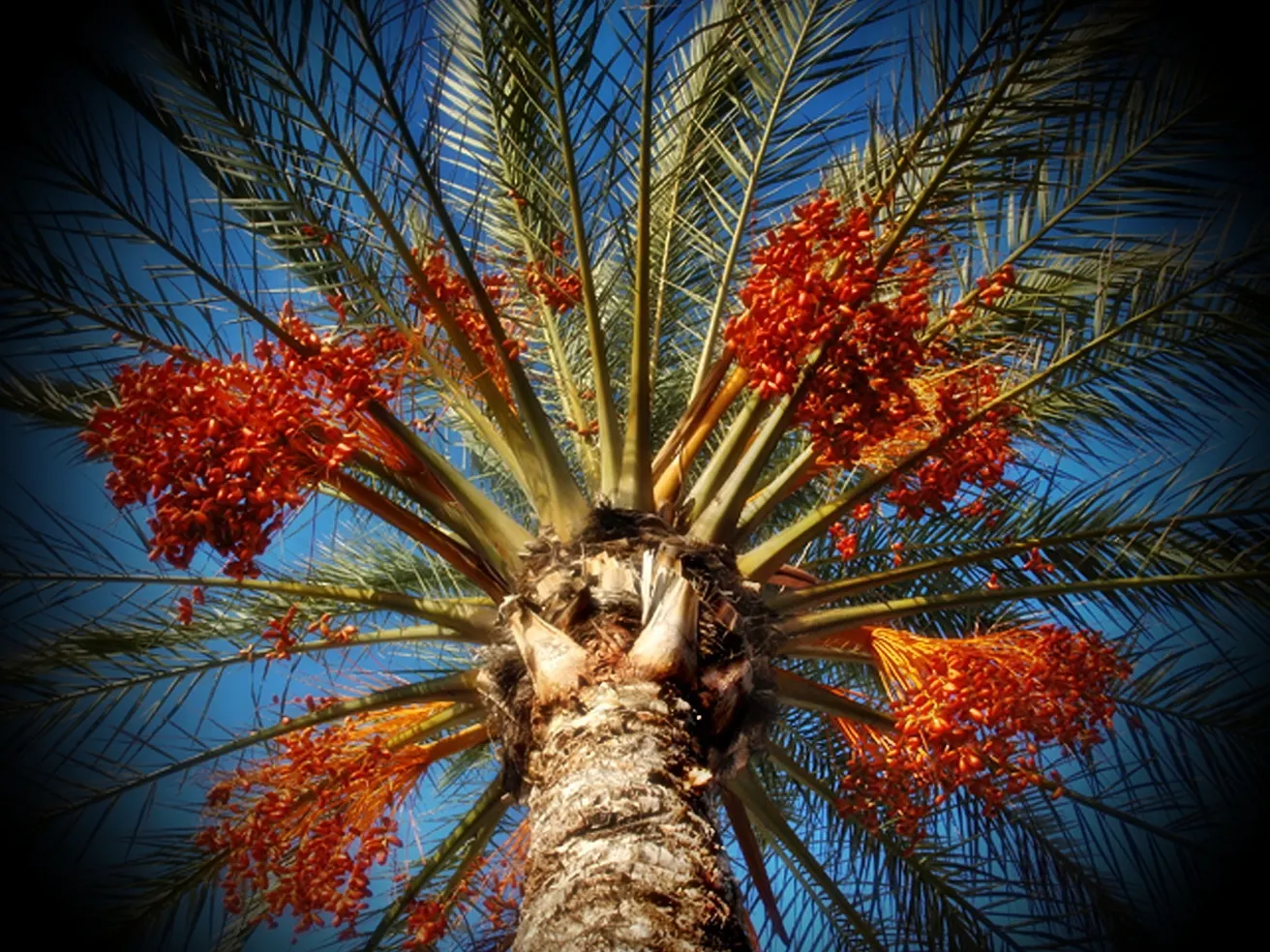
According to Al-Ahram (14 March 2025, checked 21 November 2026), Egypt grows about 1.87 million tonnes of dates a year, more than any other country, yet exports no more than 2% of it. The same article lists Bahariya and the New Valley, the governorate that includes Farafra, among the country's date-growing areas. A longer Al-Ahram Weekly feature (May 2025, checked 21 November 2026) notes that semi-dry varieties are grown in Bahariya and the New Valley, that September is when fresh dates are harvested, and that many Bahariya plantations skip pruning.
The palm is far more than fruit. In 2022 UNESCO added the knowledge, skills, traditions and practices of the date palm (checked 21 November 2026) to its Representative List of intangible cultural heritage, with Egypt among the 15 countries named. The listing covers caring for the tree and using its leaves, fronds and fibres for traditional crafts and social rituals, and calls the palm a key source of nutrition.
If you want fresh dates, travel in September. At other times of year you'll find dried and semi-dry dates in the shops, and in Egyptian sweets, where date paste is a common sweetener alongside honey and syrup.
Olives and oil
Short answer: Almost 80% of Egypt's olive crop goes to table olives, and the oases are one of the country's olive regions.
The International Olive Council's Egypt profile (2012, checked 21 November 2026) says Egypt grows its olives mainly for the table, with table olives almost 80% of production. It names the oases among the regions where the tree does well, and describes Egypt as a leader in growing olives on desert land with under 80 mm of rain a year, using irrigation. The tree is old in Egypt: the same profile dates the earliest Egyptian evidence of it to a relief of the 18th dynasty.
The profile gives harvest windows only for named varieties that come from other districts, and no figures for Bahariya or Farafra, so we don't give a local olive season here. What we can say is that olive oil, with dates, is one of the usual things travellers buy in Bawiti, as our cost guide notes.
Home cooking in the oases
Short answer: Fuul with eggs for breakfast, rice and a vegetable stew at lunch, the main meal, and lentil soup in winter.
Food in Bahariya and Farafra is everyday Egyptian cooking rather than a separate cuisine. Wikipedia's Egyptian cuisine article (checked 21 November 2026) calls fuul, stewed fava beans, a staple often considered the national dish, and describes it as a breakfast dish served with hard-boiled eggs. The same article says lunch is usually the main meal of the day and evenings tend to be lighter, and it lists stews such as okra with lamb and tomatoes, and spinach served with rice. Lentil soup (shorbet ads) is traditionally eaten in winter, which suits a cold desert evening. Dates, honey and almonds are common ingredients in Egyptian desserts.
On our trips the Bawiti lunch follows that pattern: rice, salads, a vegetable dish in tomato sauce, chicken or meat, and bread. Dinner at camp is grilled chicken with rice and vegetables.
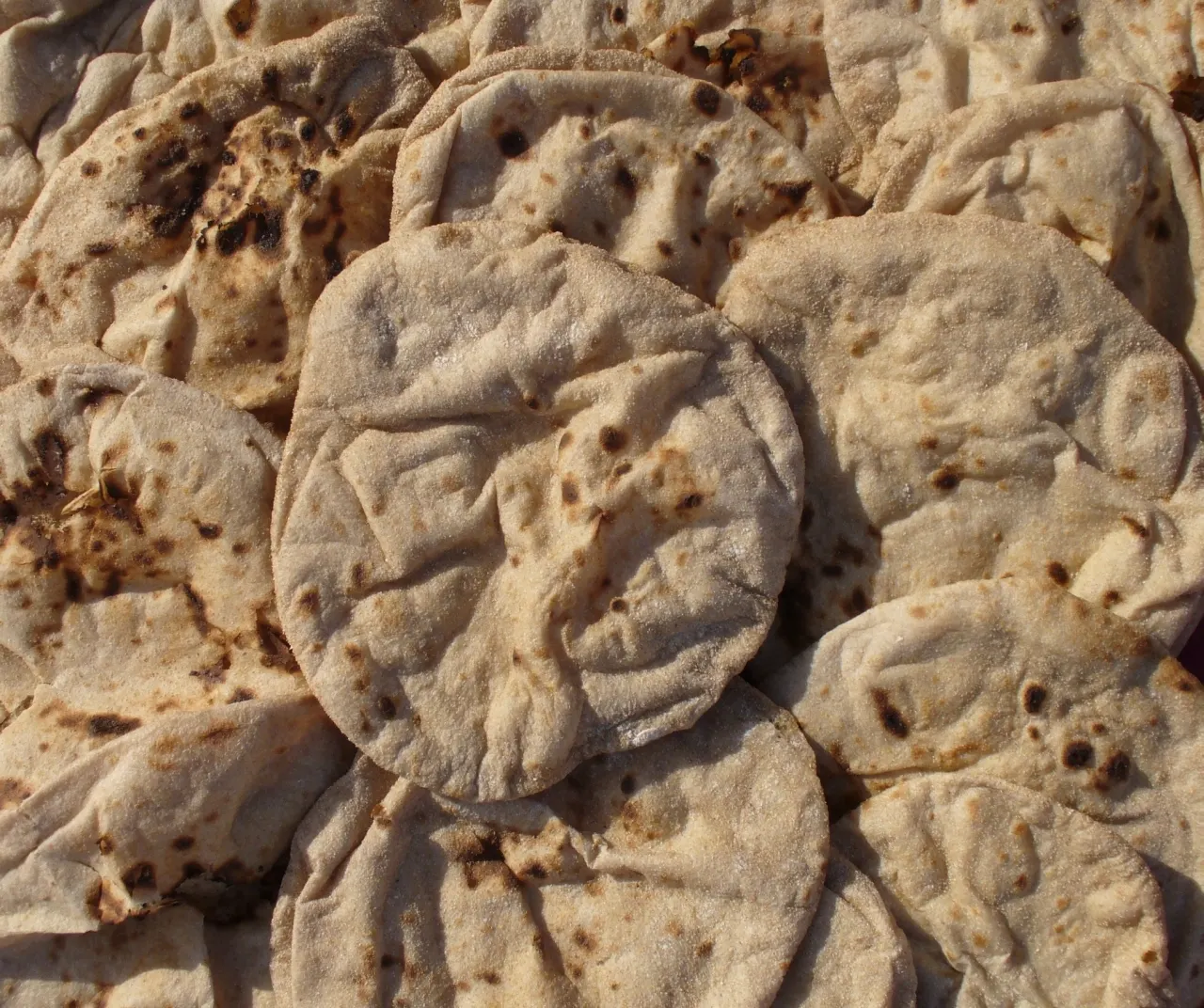
Bread comes with every meal. The everyday loaf is aish baladi, a thick pita-style flatbread, and the word aish also means life in Arabic. Out in the sand it is made in a very different way.
Bread baked in the sand
Short answer: On some nights, not all, the camp cook bakes flatbread straight in the hot sand beneath the campfire embers.
Desert bread needs no oven: the hot sand and coals of the campfire do the baking. It is not a fixed item on the menu, and whether your cook makes it depends on the night. If you'd like to watch it baked, or try shaping one yourself, ask us when you book. Our camping guide explains how the evening at camp runs.
Tea, karkadeh and hospitality
Short answer: Tea is Egypt's national drink, almost always sweetened with cane sugar and often with fresh mint; karkadeh comes hot or cold.
Wikipedia's cuisine article describes tea as the national drink, "followed only distantly by coffee", nearly always sweetened with cane sugar and often flavoured with fresh mint. At camp it is brewed in a kettle on the fire and served in small glasses. The sugar goes in while it brews, so if you want less, say "sukkar shwaya" (a little sugar) before the kettle goes on. Karkadeh, the deep-red hibiscus drink, is the other everyday choice and is served both hot and cold, so it suits a January night and a hot April afternoon alike.
When to taste what
Short answer: Fresh dates around September, lentil soup through the winter, and dried dates, olives and bread all year.
| Season | What's on the table | Source |
|---|---|---|
| September | Fresh dates at harvest | Al-Ahram Weekly, May 2025 |
| Winter | Lentil soup, hot tea and hot karkadeh | Wikipedia, Egyptian cuisine |
| All year | Dried and semi-dry dates, table olives, aish baladi | Al-Ahram Weekly; International Olive Council |
For conditions month by month, see best time to visit and the White Desert in November.
Oasis food words
Short answer: Seven Arabic words cover most of an oasis table.
| Word | What it is |
|---|---|
| Fuul | Stewed fava beans, the breakfast staple |
| Aish baladi | Thick pita-style flatbread; aish also means life |
| Frakh mashwi | Grilled chicken |
| Mashwiyat | Grilled meats such as kofta and kabab |
| Shorbet ads | Lentil soup, a winter favourite |
| Karkadeh | Hibiscus drink, hot or cold |
| Shai | Tea, strong and sweet, often with mint |
What to bring home
Short answer: Dates and olive oil from Bawiti, and hats, socks and gloves knitted from camel and sheep wool in Farafra.
| Product | Where to buy | Tip |
|---|---|---|
| Dates | Bawiti | Choose sealed boxes for the flight |
| Olive oil | Bawiti | Ask whether it is local, and pack it in checked luggage |
| Camel and sheep wool hats, socks and gloves | Farafra town and hotels | Useful on the cold night out, too |
Want a particular product, such as local honey or dried hibiscus? Ask us before the trip and we'll tell you whether there is usually time and a shop for it on your route.
Carry small Egyptian pound notes for these purchases; our money and ATMs guide explains why.
How to taste the oases from the White Desert
Short answer: The overnight trip from Cairo includes lunch in Bawiti and a fire-cooked dinner at camp; the three-day trip adds an afternoon in Bahariya.
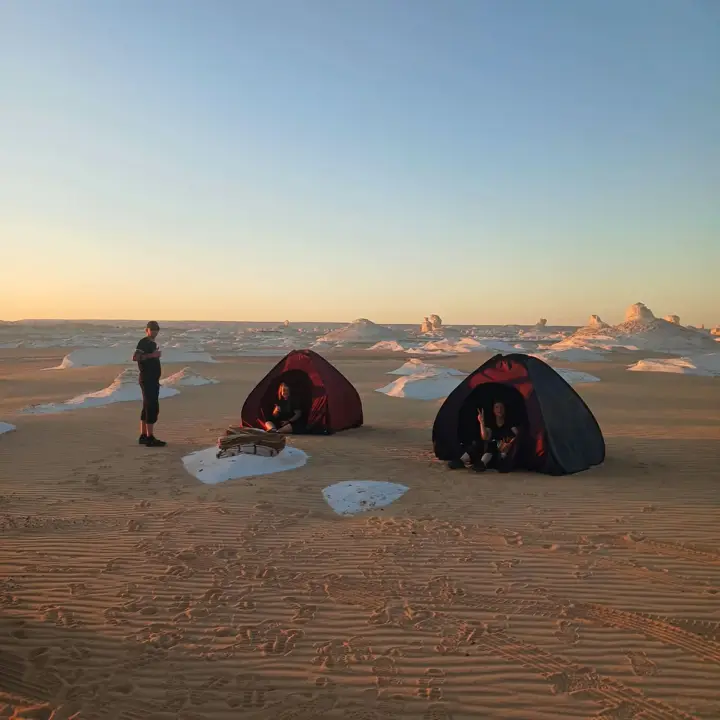
On the overnight camping trip from Cairo, lunch on the first day is in Bawiti, and dinner at camp is grilled chicken, rice and vegetables, with tea by the fire. Meals run from lunch on day one to lunch on day two, with tea and plenty of drinking water. When time allows, there is a dip in a warm spring near Bawiti on the way home.
The three-day trip via Bahariya and Farafra gives you more time in the oasis itself: an afternoon in Bawiti with the museum that holds some of the Golden Mummies and a hot spring, all meals from lunch on day one to lunch on day three, and a first night in a lodge if you'd rather. That afternoon is the best chance to walk past the palm gardens and stop at a shop for dates and oil. For a longer, slower dinner, our private comfort camping trip comes with a dedicated cook.
Want a visit to a working palm garden, a cook-along at camp or a date-tasting stop? Ask us. Vegetarian, vegan and allergy needs can be met if you tell us at least two days before the trip. Message us on WhatsApp with "oasis food" and your dates, or use the contact page.
Sources (all checked 21 November 2026): Wikipedia: Bahariya Oasis; Wikipedia: Farafra; UN News, Nubian Sandstone Aquifer, 2013; Al-Ahram, March 2025; Al-Ahram Weekly, May 2025; UNESCO intangible heritage: date palm; International Olive Council, Egypt, 2012; Wikipedia: Egyptian cuisine.
Questions people ask
What food is Bahariya famous for?+
Guavas, mangoes, dates and olives are its main crops, according to Wikipedia's Bahariya article (checked 21 November 2026). Long before that, in the Late and Greek periods, Bahariya grew rich on the wine it sent to the Nile Valley.
Is Egypt a big date producer?+
The biggest. Al-Ahram reported in March 2025 that Egypt is the world's largest date producer, at about 1.87 million tonnes a year, and named Bahariya and the New Valley among its date regions.
When are fresh dates harvested?+
Al-Ahram Weekly, in a May 2025 feature on Egypt's date industry, gives September as the harvest month for fresh dates. Dried and semi-dry dates are sold through the rest of the year.
What grows in Farafra?+
Farafra has more than 100 wells, most used to irrigate its fields. The grove around the Roman spring of Ain Bishay grows date palms with citrus, olive, apricot and carob trees, according to Wikipedia's Farafra article.
What is desert bread?+
Flatbread baked straight in the hot sand under the campfire embers, with no oven at all. Our cooks make it on some nights, not every night, so ask us when you book if you want to watch it baked.
What is the national drink of Egypt?+
Tea. It is almost always sweetened with cane sugar and often flavoured with fresh mint. Karkadeh, made from hibiscus, is the other everyday drink and is served both hot and cold.
What can I buy to take home?+
Dates and olive oil in Bawiti, paid for in small Egyptian pound notes. In Farafra, hats, socks and gloves knitted from camel and sheep wool are sold in town and at hotels.
Is the water in the oases drinkable?+
The oases draw on the Nubian Sandstone Aquifer System, which the UN describes as the world's largest known fossil water aquifer. Drink sealed bottled water as a visitor; the overnight trip includes plenty of drinking water and we never run out.
Go with us
Trips that include this
2 days, 1 night
White Desert overnight camping trip from Cairo (2 days, 1 night)About US$185 to 230 shared · US$360 to 460 private, per person
Check dates
3 days, 2 nights
3-day White Desert tour: Bahariya, the White Desert and two nights outAbout US$495 to 660 per person for two travellers, private
Check dates
2 or 3 days
Private White Desert camping in comfortOn request (depends on group size and nights)
Check dates