
The short answer
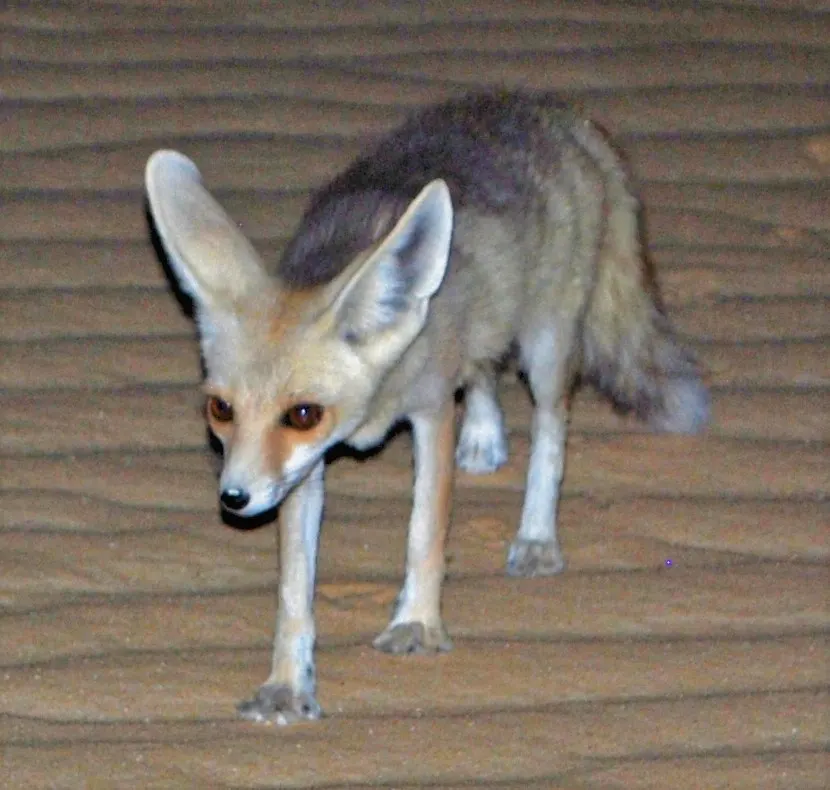
The park's 2007 management plan records at least 12 mammal species, about 24 resident bird species and about 19 reptiles in the White Desert. The animal you are most likely to meet is a fox, which the plan says is frequently seen at night near camps. Dorcas gazelles are on the record, while the slender-horned gazelle and Barbary sheep may be locally extinct.
Ask us on WhatsAppWhat lives in the White Desert
Short answer: At least 12 mammal species, about 24 resident birds, more than 100 migrant bird species and about 19 reptiles, according to the park's own management plan.
The chalk plain looks lifeless at midday, but it is a protected area with a recorded fauna. The Egyptian Environmental Affairs Agency's draft management plan for the park, written in 2007, lists at least 12 mammals, about 24 resident bird species, more than a hundred migrant bird species that pass through, mostly in spring and autumn, and about 19 reptiles plus one amphibian found in a 2004 survey (EEAA 2007 draft management plan (checked 21 November 2026)). The same plan describes the habitats as sand sheets, dunes, wadis, vegetated wadis, uninhabited oases, hills and steep cliffs.
Rain is close to nil, about 2 mm a year at Farafra (see our weather guide), so almost everything here is built to save water and dodge the sun. The fennec fox, for example, gets most of its water from the moisture in its prey and is active mainly at night (Wikipedia: fennec fox (checked 21 November 2026)). The sand cat does the same and spends the day in a burrow (Wikipedia: sand cat (checked 21 November 2026)). That is why an overnight trip is the way to see wildlife here, and why the morning sand is full of prints.
Mammals on the park record
Short answer: Foxes are the animals people actually see; gazelles are rare, and two of the larger species may already be gone locally.
The 2007 plan names the species below. It says rodents are the most numerous mammals, that the red fox and Rüppell's fox are the most visible because they come close to camps at night for food and drink, and that the slender-horned gazelle and Barbary sheep "tend to be locally extinct". The notes column summarises the plan or the linked Wikipedia page; global status is the IUCN Red List category given on each species' Wikipedia page.
| Animal | Scientific name | IUCN status | Notes |
|---|---|---|---|
| Fennec fox | Vulpes zerda | Least Concern | Smallest of the three; ears about 9 to 10 cm; mainly nocturnal |
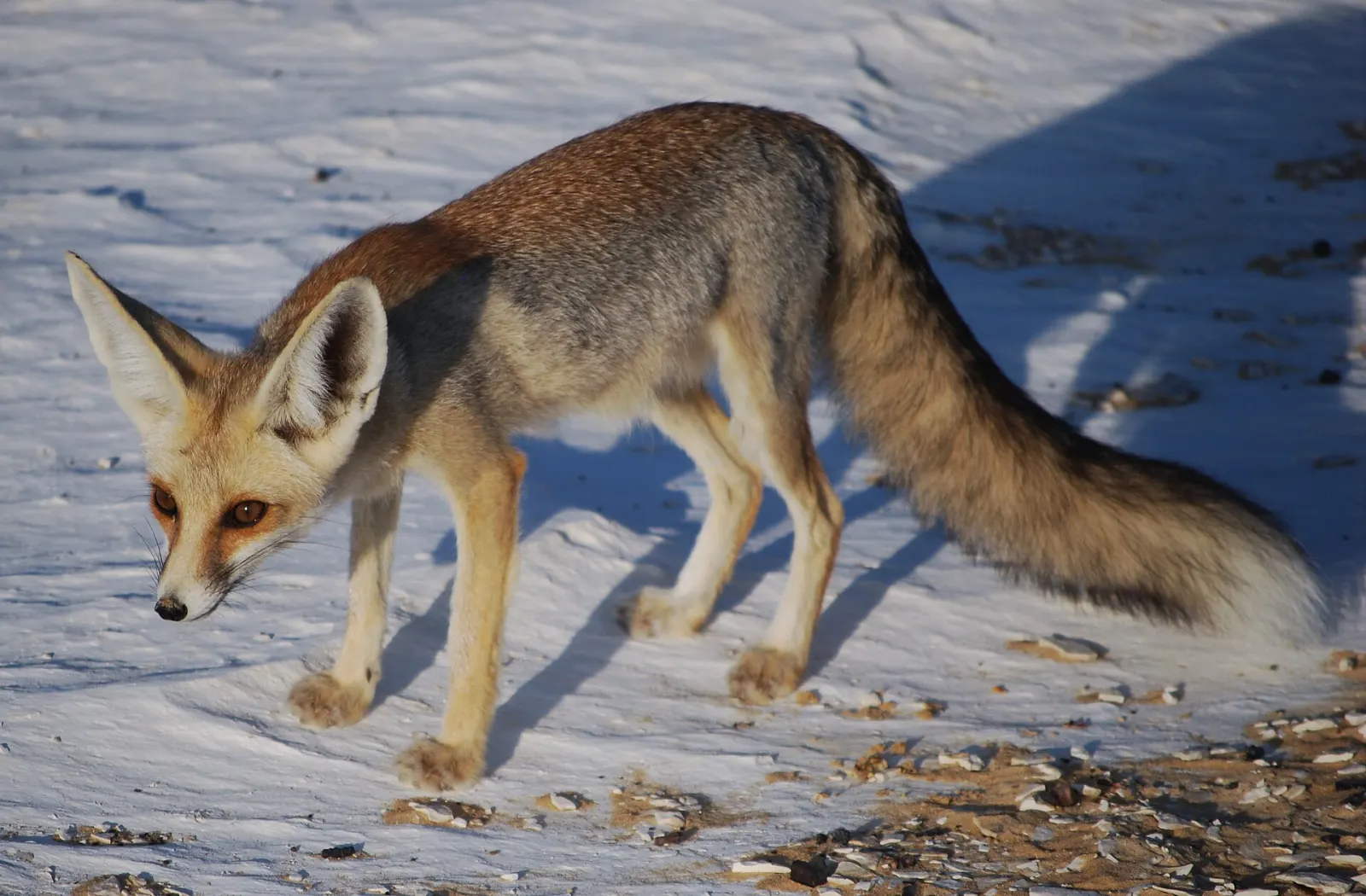
| Rüppell's fox | Vulpes rueppelli | Least Concern | White tail tip; one of the two foxes the plan says are seen near camps |
| Red fox | Vulpes vulpes | Least Concern | The other fox the plan says is seen near camps at night |
| African wolf ("jackal" in the plan) | Canis lupaster, listed as Canis aureus | Least Concern | In Egypt: desert margins, rocky areas and cliffs |
| Sand cat | Felis margarita | Least Concern | Rests in dens by day and hunts at night |
| Dorcas gazelle | Gazella dorcas | Vulnerable | About 55 to 65 cm at the shoulder |
| Slender-horned (rhim) gazelle | Gazella leptoceros | Endangered | May be locally extinct |
| Barbary sheep | Ammotragus lervia | Vulnerable | May be locally extinct; steep, rocky country |
| Lesser gerbil, lesser jerboa | Gerbillus gerbillus, Jaculus jaculus | Rodents are the most numerous mammals in the plan | |
| Bats | not identified to species | Listed as "Bat sp." in the plan |
Sources: EEAA 2007 draft management plan; fennec fox, Rüppell's fox, African wolf, sand cat, red fox, dorcas gazelle, rhim gazelle and Barbary sheep on Wikipedia (all checked 21 November 2026).
The three foxes
The fennec is tiny: females weigh about 1 to 1.9 kg and the ears reach around 9 to 10 cm. It eats rodents, lizards, insects, eggs and some plant food. Rüppell's fox averages about 1.7 kg, has a bushy tail with a white tip and a dark patch near its base, and rests in a den by day. Wikipedia notes that adult Rüppell's foxes are too big to confuse with fennecs, though the young can look similar. The red fox is the largest of the three. In a torch beam at the edge of camp, the easiest clues are size, ear shape and that white tail tip.
The jackal that turned out to be a wolf
The plan lists a "jackal", Canis aureus. Genetic work has since shown that Egypt's animal is a separate species, now called the African wolf, Canis lupaster. In Egypt it lives on desert margins, in rocky areas and along cliffs as well as near farmland (Wikipedia: African wolf (checked 21 November 2026)).
Gazelles and wild sheep
The dorcas gazelle stands about 55 to 65 cm at the shoulder and weighs about 15 to 20 kg. Saharan animals are very pale fawn, with a brown stripe along the flank above the white belly. It gets much of its moisture from plants but drinks when it finds water. The rhim gazelle is the palest gazelle of all, with slender, slightly S-shaped horns on the males. The IUCN estimate quoted on Wikipedia puts the wild population at 300 to 600 mature animals. Barbary sheep prefer steep, rocky country, and Wikipedia says the Egyptian subspecies is thought to be extinct in the wild but is still found in Egypt's Eastern Desert, on the other side of the Nile. So a gazelle would be a lucky sighting, and the plan's own wording suggests the sheep may already be gone from the park.
Birds
Short answer: About 24 resident species, led by the Eurasian thick-knee, plus more than 100 migrant species, mostly in spring and autumn.
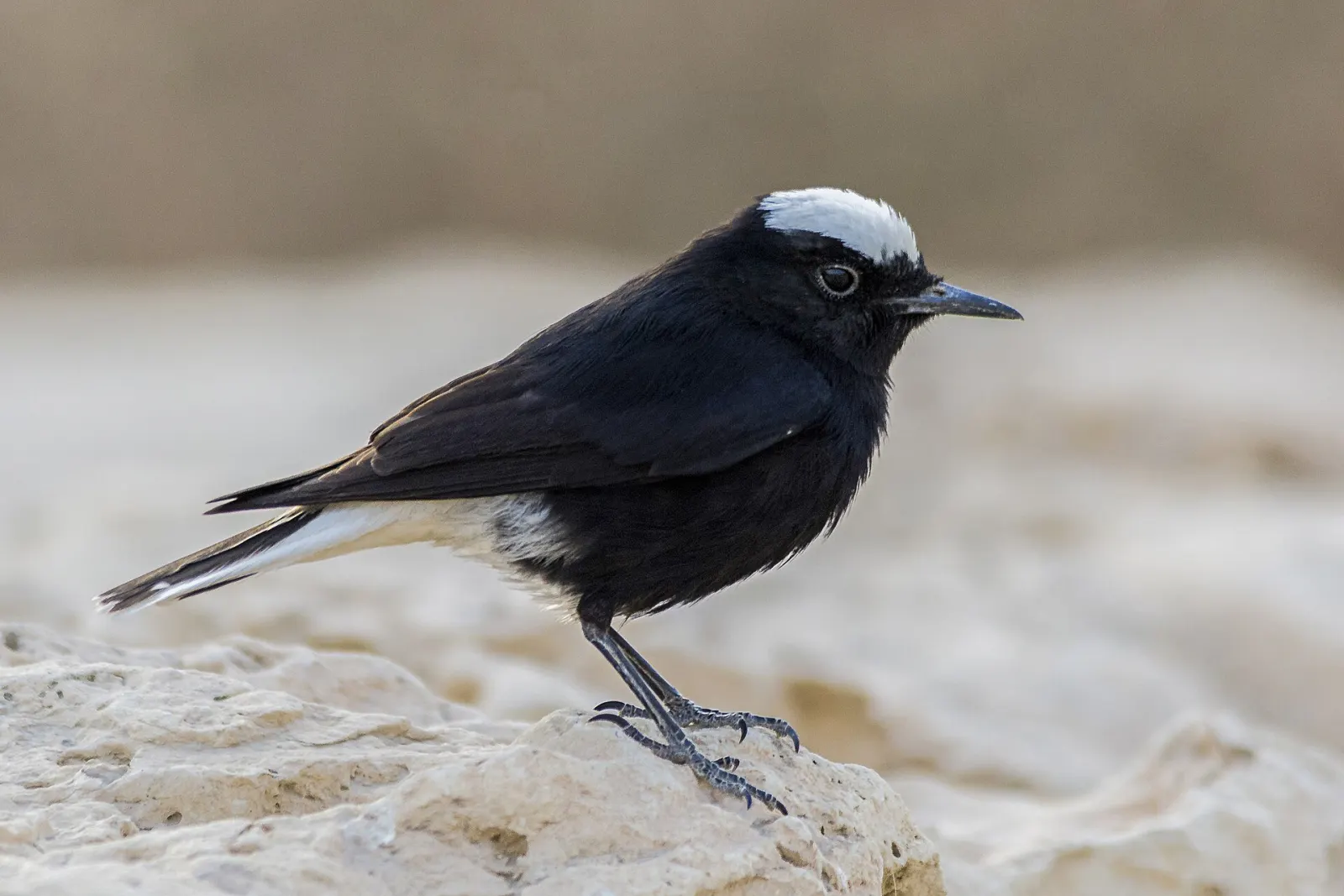
The plan names the Eurasian thick-knee as the most widespread resident on the sandy and gravel plains. Its bird list also includes the desert lark, bar-tailed lark, greater hoopoe-lark, white-tailed wheatear (Oenanthe leucopyga, the white-crowned wheatear on Wikipedia), brown-necked raven, trumpeter finch, southern grey shrike, crowned and spotted sandgrouse, Pharaoh eagle-owl and little owl. Birds of prey on the list include the long-legged buzzard, Eurasian kestrel, sooty falcon, lanner and Barbary falcon. The long-legged buzzard and the cream-coloured courser are described as rarer species that come every year.
Large numbers of migrants cross the park, more than a hundred species by the plan's count, mostly in spring and autumn, with a few staying the winter. The plan says the park's vegetation is concentrated in wadis and around springs, so green patches are worth scanning. Pack binoculars if you travel from March to May or September to November, and ask us whether a garden or spring stop in Bahariya or Farafra fits your route.
Reptiles and the one amphibian
Short answer: About 19 reptiles, including geckos, sand lizards, skinks and two vipers, plus the green toad near water.
The 2004 survey in the plan found about 19 reptile species and one amphibian, the green toad, near water sources. It names the dune lizard as the most widespread reptile in sandy areas. Recorded species include:
- Geckos: the Saharan fan-toed gecko, sand gecko, elegant gecko and two pygmy geckos.
- Lizards: the Sinai agama, Bosc's lizard, long-footed lizard, Nidua lizard, two Mesalina lizards and the desert monitor, the largest lizard on the list.
- Skinks: the ocellated skink, Audouin's sand-skink and the sandfish, which dives into loose sand.
- Snakes: the diademed sand snake, Saharan sand snake, diadem snake, horned viper and sand viper.
The horned viper averages 30 to 60 cm long and usually moves by sidewinding, pressing its weight into the sand and leaving a series of separate whole-body impressions rather than one continuous wiggle. It is known to travel at night (Wikipedia: Cerastes cerastes (checked 21 November 2026)). Its venom causes swelling and bleeding, so treat any snake with respect: closed shoes after dark, a torch for every walk from the fire, and never reach under rocks. Camps can drop to 0–3°C in December and January (weather guide), so in winter wrap up as well as watching your step.
Plants that support it all
Short answer: The plan says vegetation depends mainly on groundwater and is concentrated in wadis and around springs.
Most of the park is bare chalk, but the plan lists acacias (Acacia raddiana and Acacia nilotica), Nile tamarisk, date palms, common reed, camelthorn (Alhagi), Nitraria, Calligonum and desert grasses such as Stipagrostis. It calls some of these isolated remnants of plants that were once more widespread in Egypt's deserts, and asks that they be protected carefully. Wherever you see green, look for tracks: shade, seeds and leaves draw rodents, insects and the animals that hunt them.
How to see wildlife from the White Desert
Short answer: Stay the night, sit quietly away from the fire after dinner, and walk round camp at first light to read the tracks.
A day trip shows you little, because most of the animals here move after dark. An overnight camp puts you in place for both good moments: the hour after dinner, when foxes test the edge of camp, and sunrise, when the night's tracks are still sharp. Sunrise falls between about 05:45 and 07:05 through the year; see sunrise and sunset.
| When | What to do | What you may see |
|---|---|---|
| Dusk | Watch the sky near camp | Bats, which are on the park list |
| After dinner | Sit well away from the fire with a red torch | Foxes at the edge of the light |
| Late night | Sweep a torch low near rocks, never into tents | Geckos; eye-shine of small mammals |
| First light | Slow walk round camp before breakfast | Fox, jerboa, lizard and snake tracks |
| Spring and autumn days | Stop at springs and oasis gardens | Migrant birds |
Reading the tracks at dawn:
| Track | Likely maker |
|---|---|
| Small paw prints in a neat line | A fox |
| Paired hind-foot prints, sometimes with a tail mark | A jerboa, which hops on long hind legs and balances with its tail |
| A wavy tail line with tiny feet either side | A lizard |
| A row of separate body-shaped impressions | A sidewinding viper |
| Pointed, split hoof marks | A gazelle |
The jerboa and viper rows follow Wikipedia's descriptions of the lesser Egyptian jerboa and the horned viper (both checked 21 November 2026).
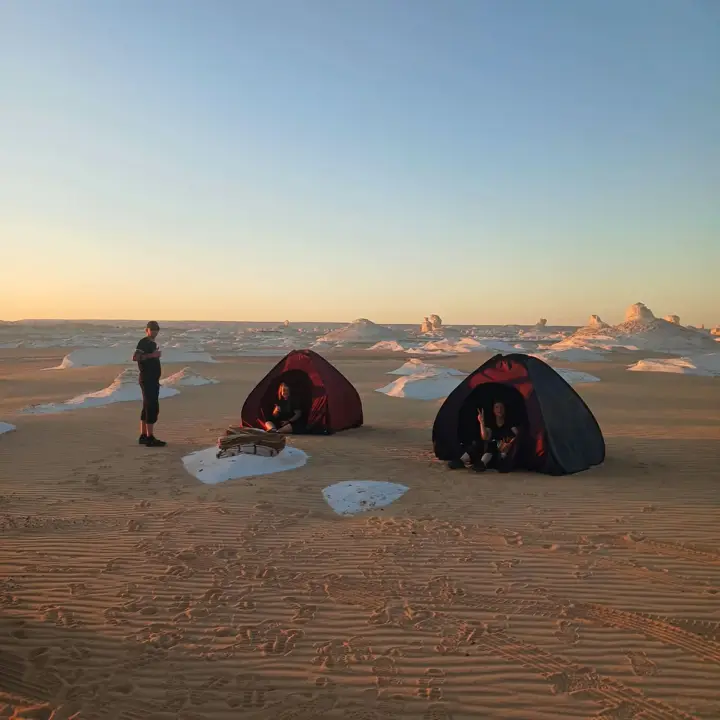
The simplest option is our overnight camping trip from Cairo, 2 days and 1 night. Price: About US$185 to 230 shared · US$360 to 460 private, per person. A private comfort camping trip, 2 or 3 days and priced on request, gives you a longer stay, and on private trips we camp away from other groups. If wildlife is your main interest, say so when you book and ask us what we can plan around it. For the night itself, read camping in the White Desert and where we camp; for the sky above, see stargazing.
Watching responsibly
Short answer: Don't feed foxes, keep food and rubbish sealed, stay on existing tracks and never chase an animal.
The 2007 plan sets out to control and limit off-road driving within the park and to stop waste being dumped or buried there. Both matter for wildlife: tyre ruts crush burrows and plants, and food waste teaches foxes to raid camps.
- Don't feed the foxes. Scraps make them bold and dependent. Keep shoes, snacks and bins inside the tent or vehicle at night.
- Take all rubbish out. Nothing gets buried in the sand, food scraps included.
- Never chase animals by car or on foot. The gazelles here are Vulnerable or Endangered, and a chase costs them energy and water they cannot spare.
- Use dim or red light and keep it off the animal's eyes; no flash.
- Leave rocks, plants and burrows alone. Many animals spend the day underneath.
The protected-area rules that apply to everyone are on our national park guide. Families can turn the morning tracks into a game; see the White Desert with kids.
Sources: EEAA White Desert Protected Area draft management plan, 2007; Wikipedia pages for White Desert National Park, the fennec fox, Rüppell's fox, African wolf, sand cat, dorcas gazelle, rhim gazelle, Barbary sheep, red fox, white-crowned wheatear, lesser Egyptian jerboa and the horned viper. All checked 21 November 2026.
Questions people ask
Will I see a fox in the White Desert?+
There is a good chance. The park's 2007 management plan says foxes are frequently seen at night near camps. Three species are on its list: the fennec, Rüppell's fox and the red fox. Sit quietly away from the fire after dinner and watch the edge of the light.
How many animal species live in the White Desert?+
The EEAA's 2007 draft management plan records at least 12 mammal species, about 24 resident bird species, more than 100 species of migrant birds passing through, and about 19 reptiles plus one amphibian, the green toad, from a 2004 survey.
Are there dangerous animals in the White Desert?+
The largest carnivore on the park's mammal list is the African wolf, recorded there as a jackal. The list does include two vipers, the horned viper and the sand viper. The horned viper averages 30 to 60 cm long and is known to travel at night. Wear closed shoes after dark, use a torch and never pick up or corner a snake.
What is the difference between a fennec and a Rüppell's fox?+
The fennec is the smallest, with females at about 1 to 1.9 kg and ears around 9 to 10 cm long. Rüppell's fox averages about 1.7 kg and has a white tip to its bushy tail. Adult Rüppell's foxes are too large to mistake for fennecs, but their young can look alike.
Are gazelles still found in the White Desert?+
Dorcas gazelles are on the park record and are listed as Vulnerable by the IUCN. The slender-horned or rhim gazelle, listed as Endangered, is also recorded, but the 2007 plan says it and the Barbary sheep may be locally extinct. The IUCN estimate for the rhim gazelle is only 300 to 600 mature animals in the wild.
Are there camels in the White Desert?+
No wild camels appear on the park's mammal list of 12 or more species. Camels you see are domestic animals. The 2007 plan's zoning allows access on foot or by camel in its wilderness and recreational zones. Whether a camel ride can be added to your trip is not something we publish yet, so ask us for your dates.
What birds can I see?+
The park records about 24 resident species. The Eurasian thick-knee is the most widespread on sand and gravel; others include the desert lark, white-tailed wheatear, brown-necked raven, trumpeter finch and Pharaoh eagle-owl. Migrants pass through mostly in spring and autumn.
Can I photograph the foxes at night?+
Yes, with patience. Sit still well away from the fire, use a dim or red torch rather than flash, raise the ISO and pre-focus on the edge of the lantern light. Never lure an animal with food for a picture; the 2007 park plan aims to stop waste being left in the park.
Go with us
Trips that include this
2 days, 1 night
White Desert overnight camping trip from Cairo (2 days, 1 night)About US$185 to 230 shared · US$360 to 460 private, per person
Check dates
2 or 3 days
Private White Desert camping in comfortOn request (depends on group size and nights)
Check dates