
The short answer
The White Desert is about 500 km south-west of Cairo by road. You drive, or take the bus, about 370 km and four and a half to five hours to Bawiti in Bahariya Oasis, then continue south by 4x4 for about 130 km, roughly two hours with stops. There is no airport or passenger train, and foreign visitors need a permit and a licensed guide.
Ask us on WhatsAppThe route in one paragraph
Short answer: One road does it all: the Cairo–Bahariya highway from the edge of Giza to Bawiti (about 370 km), then south towards Farafra past the Black Desert, Crystal Mountain and Agabat to the chalk, about 500 km from Cairo in total.
Almost every White Desert trip follows the same line on the map. The Cairo–Bahariya highway leaves the western edge of Giza near the pyramids and runs south-west across flat gravel desert, with one rest house roughly halfway. After about 370 km it drops into Bahariya Oasis at Bawiti, our home town, with palm groves, springs, a few lodges and the place where trips have lunch and switch to a 4x4. South of Bawiti the same road continues towards Farafra. Along it, or a short drive off it, are the Black Desert, Crystal Mountain, the Agabat valley and finally White Desert National Park (a protected area since 2002), whose main formations sit roughly 45 km north of Qasr Farafra.
The asphalt road linking Bahariya to Cairo was finished in the early 1970s (Wikipedia: Bahariya Oasis (checked 19 November 2026)). One oddity of the map: Bawiti is administratively part of Giza Governorate (Wikipedia: Bawiti (checked 19 November 2026)), while the park covers about 3,133.5 km² of New Valley Governorate under Prime Minister's Decree No. 1220 of 2002 (EEAA protectorate table).
White Desert map and distances
Short answer: Bawiti is about 370 km and 4.5–5 hours from Cairo, the Black Desert about 40 km beyond it, Crystal Mountain about 100 km, the main White Desert formations about 500 km from Cairo, and Farafra town about 550 km.
The figures below are approximate road distances from central Cairo, and they are the ones we plan our own drives with.
| Stop | From Cairo | From the previous stop | Driving time from the previous stop |
|---|---|---|---|
| Cairo (central) | 0 km | ||
| Rest house (roughly halfway) | ~180–190 km | ~180–190 km | About 2 hours |
| Bawiti, Bahariya Oasis | ~370 km | ~180–190 km | About 2 hours 30 minutes (4.5–5 h from Cairo) |
| Black Desert | ~410 km | ~40 km from Bawiti | About 30–40 minutes |
| Crystal Mountain | ~470 km | About 45 minutes | |
| Agabat | ~490 km | ~20 km | About 20 minutes |
| White Desert (main formations) | ~500 km | ~10–20 km | About 15 minutes, off-road |
| Farafra town (Qasr Farafra) | ~550 km | ~45 km (about 180 km from Bawiti) | About 45 minutes |
Times are for driving only; add stops for photographs, lunch and walking. Distances depend on where in Cairo you start and which camp area the crew uses that night. Starting in Giza saves about 10 km and some traffic; starting at Cairo airport adds about 30 km and up to an hour.
On 2 August 2027 the eclipse's path of totality covers Bawiti and the Black Desert but not Farafra town. Totality lasts 6 minutes 24 seconds in the northern Black Desert, close to the centre line, and 2 minutes 5 seconds at the Mushroom and Chicken in the White Desert, according to timeanddate's calculations for those points. Read the total solar eclipse of 2027 before choosing where to stand.
How long the whole journey takes
Short answer: Door to camp is a full day by any route: about eight to ten hours from a Cairo hotel with lunch and stops, longer by bus, and much shorter only if you start the day in Bawiti or Farafra.
Actual days are longer than the driving times, because nobody drives the desert leg without stopping. This is how a first day compares by starting point, in winter.
| You start the day in | Typical departure | Reach Bawiti | Reach the chalk | Notes |
|---|---|---|---|---|
| Giza or the 6th of October area | 06:30–07:00 | About 10:30–11:00 | Mid-afternoon | The easiest start; closest to the Bahariya road |
| Central Cairo | 06:00–06:30 | About 11:00 | Mid-afternoon | Leave before the morning traffic builds |
| East Cairo or near Cairo International | Earlier; ask us for a time | About 11:00–11:30 | Mid to late afternoon | Crossing the city adds up to an hour |
| Cairo bus, arriving in Bawiti | Bus departure time | Midday or later | Late afternoon, tight for sunset | A night in Bawiti first makes it easier |
In practice, our overnight trip from Cairo puts you among the formations by mid-afternoon and at camp by sunset. If that sounds like too much road for one day, read how many days and day trip or overnight.
Your three ways to get there
Short answer: A tour with hotel pick-up in Cairo, a private car to Bawiti, or the public bus to Bawiti. All three end in a licensed operator's 4x4, because that is the only way into the formations.
A tour with a pick-up. A car collects you at your Cairo or Giza hotel, or wherever you need us, such as east Cairo, Cairo Airport or Alexandria, and the operator handles the permit, the 4x4, the driver, the food and the camp. It's the simplest option and, for two or more people, rarely much dearer than doing it piecemeal. This is what our trips are, starting with the overnight trip.
A private car to Bawiti, then a local 4x4. Useful if you are combining Bahariya with somewhere else or want your own timings. The drive takes 4.5–5 hours with one stop; read Cairo to Bahariya: the drive for the timetable, toilets and what you see.
The public bus to Bawiti, then a local 4x4. The cheapest route for a solo traveller with time. It takes five to six hours, and you still need someone in Bawiti to arrange the permit and the car; we can meet you off the bus. Read the bus to Bahariya.
If you want to arrange the pieces yourself, our guide to visiting independently explains what is and isn't possible. The short version: you can reach Bawiti on your own, but not the formations.
The options side by side
| Tour with Cairo pick-up | Private car to Bawiti, then 4x4 | Public bus to Bawiti, then 4x4 | |
|---|---|---|---|
| Cairo to Bawiti | 4.5–5 hours | 4.5–5 hours | Five to six hours, plus getting to the bus |
| Who arranges the permit | The operator | The Bawiti operator | The Bawiti operator |
| Flexibility | Pick-up where you are; timings set with us | Your own timings on the road | Fixed departures; timetables change |
| Luggage | In the car with you | In the car with you | In the bus hold |
| Best for | Two or more people, short trips, first visits | People combining Bahariya with other plans | One budget traveller with a spare day |
| Indicative price, two days | About US$185–230 per person shared, US$360–460 private (see cost) | Your car hire plus a trip from Bawiti; ask us | Bus fare plus our overnight from Bawiti: about US$130–190 shared, US$255–345 private, per person |
| Main drawback | Early start | Two bookings to coordinate | Less daylight on day one |
Prices are indicative ranges; your quote shows the park fee as its own line.
Why there is no flight, train or self-drive shortcut
Short answer: Neither oasis has passenger flights or trains, and the formations sit off-road in a protected area that foreign visitors enter only with a permit and a licensed guide. The road from Giza is the only practical way in.
No flights. Bahariya and Farafra have no passenger flights. The nearest airports are in Cairo, covered in the airport section below.
No passenger trains. No passenger trains run to Bahariya or Farafra. There was once a railway of sorts. During the First World War the British Army built a 134 km military line from the Nile Valley near Samalut towards Bahariya, finished in October 1916 and taken out of use in 1919 (Wikipedia: Baharia Military Railway (checked 19 November 2026)). Nothing replaced it for travellers.
Self-drive only gets you to town. You can drive the tarmac to Bawiti and Farafra, but there are three catches:
- Papers. UK government advice says British drivers need both their licence and the 1949 international driving permit, which must be obtained before travel (gov.uk: Egypt safety and security (checked 19 November 2026)). Other nationalities should check their own rules.
- Night driving. The same advice warns against driving after dark outside the main cities and resorts (gov.uk (checked 19 November 2026)). The Bahariya road is unlit and shared with long-distance trucks.
- The park. The formations are off the road, on sand and gravel tracks. The UK advice also says anyone travelling off road should use a qualified guide and get a permit from the Ministry of Interior. That means a licensed operator and a 4x4 for the last stretch, whatever you drove to Bawiti.
In practice, self-drive means driving to Bawiti and joining a 4x4 trip there. For most visitors, a car with a driver is simpler.
The road and the checkpoints
Short answer: The highway is paved, straight and quiet, with one rest house halfway and the drop into the green Bahariya depression at the end. Expect several routine police checkpoints and keep your passport on you.
The road to Bawiti is good tarmac across empty gravel plain; the stop-by-stop account, with fuel, signal and why daylight makes the drive more pleasant, is on Cairo to Bahariya: the drive. Police checkpoints along the way are routine and quick when the permit is arranged in advance; permits and safety explains the permit and what happens at a stop.
| Question | Short answer |
|---|---|
| Is the road paved all the way? | Yes, from Giza to Bawiti and on to Farafra. Only the last stretch into the formations is off-road. |
| Toilets? | At the halfway rest house, then in Bawiti. None south of Bawiti until camp. |
| Fuel? | Scarce between towns; drivers fill up in Bawiti, and in Farafra on longer trips. |
| Phone signal? | Fades between the towns; see our phone signal and internet guide. |
| Checkpoints? | Several between Cairo, Bawiti and Farafra; most take a minute or two. |
| What do I show? | Your driver shows the permit and passenger list; officers sometimes ask for your passport. |
Don't photograph checkpoints, and keep your passport in your day bag rather than in a bag in the boot.
Bawiti to the White Desert: the 4x4 leg
Short answer: From Bawiti it is about 130 km and two to three hours with stops to the chalk, by 4x4: the Black Desert, Crystal Mountain and Agabat, then the formations by mid-afternoon and camp by sunset.
The table adds up to about seven hours of driving from Cairo, but nobody does it in one go. Lunch in Bawiti is the hinge of the day. After it, you leave the town car behind and climb into the 4x4 for the part that is the heart of the trip. This is how the afternoon usually runs on our overnight trip in winter:
| Time (winter) | Where you are |
|---|---|
| 10:30–11:00 | Arrive in Bawiti; lunch and change into the 4x4 |
| about 12:30 | Black Desert; climb one of the cones |
| about 13:45 | Crystal Mountain |
| about 14:30 | Agabat, the gateway to the chalk |
| 15:00 onwards | New and Old White Desert, walking and photos |
| about 17:00–17:30 | Sunset in December–January; camp and dinner |
In summer, sunset is two and a half to three hours later on the clock, so we push everything back and avoid the midday heat. What catches people out is the off-road part: the distances are short, but the tracks are slow and bumpy, especially over Agabat's sand slopes.
Inside the park, most visitors see two zones a short drive apart. The New White Desert, in the north, has tall chalk towers and cliffs near the road. The Old White Desert, further south, is a flat plain scattered with the classic mushrooms, including the Mushroom and Chicken. Within each zone the crew drives off-road between the formations. Read the Old and New White Desert and, for every stop in order, what a Black and White Desert tour includes.
Which 4x4?
Short answer: Mostly Toyota Land Cruisers, chosen because they are tough and easy to repair in the desert; on our shared trips there are never more than four guests in a 4x4.
Almost all crews use Toyota Land Cruisers, many of them older models chosen because they're reliable and easy to repair in the desert. On our shared trips we never put more than four guests in a 4x4, so everyone has room for a long day; a fifth person means a second car. If you need a child seat, or a back or mobility issue affects where you sit, ask us before booking. See 4x4 dune driving.
Coming in from the south: Farafra
Short answer: Farafra is about 180 km beyond Bawiti and about 45 minutes from the main chalk fields, so it suits sunrise visits and trips continuing to Dakhla, but it adds distance on the way back to Cairo.
Most visitors arrive from the north, through Bawiti. Some base themselves in Qasr Farafra, the nearest town to the main formations, or arrive from the south via Dakhla.
| Arriving via Bawiti (north) | Basing in Farafra (south) | |
|---|---|---|
| From Cairo | About 370 km, 4.5–5 hours by car | About 550 km |
| To the main chalk fields | About two hours | About 45 minutes |
| Order of stops | Black Desert first, chalk last | Chalk first, Black Desert last |
| Lodges and food | More choice | Fewer, quieter places |
| Best for | Two- and three-day trips from Cairo | Sunrise without camping, and journeys continuing south |
Every night in Farafra adds about 180 km each way to the drive back through Bawiti, unless you carry on south. Read Farafra Oasis for the town, its springs and the eclipse note, and from Luxor for the southern approach.
From the airport
Short answer: Cairo International to Bawiti takes about 5 to 5.5 hours because you cross the city; Sphinx International, west of Cairo, is closer to the Bahariya road.
From Cairo International Airport to Bawiti is around 5 to 5.5 hours, as you first have to cross Cairo. From Sphinx International Airport, west of Cairo, it's closer to the Bahariya road and can save time. Sphinx sits on the Cairo–Alexandria desert road and handles scheduled and charter flights, many of them from the Gulf, Turkey and Europe (Wikipedia: Sphinx International Airport (checked 19 November 2026)). Check which Cairo airport your ticket uses; they are on opposite sides of the city.
We can pick you up at the airport. If you land in the morning, it's possible to drive straight to Bahariya, but most people spend the first night in Giza and start fresh. If your flight lands late, a night in Giza first makes the drive more pleasant.
If Cairo is only a stopover between flights, see the White Desert on an Egypt stopover for plans that fit 48, 72 or 96 hours and the free transit visa.
Arriving from elsewhere in Egypt
Short answer: Almost every route goes through Cairo or Giza first; we don't use the road between Bahariya and Siwa, and Luxor's oasis route is a multi-day circuit.
| From | How | Approx. distance to the White Desert | Plan |
|---|---|---|---|
| Giza | Straight onto the Bahariya road | ~490 km | Pick-up from your hotel |
| Alexandria | Desert road to Giza (about 3 hours), then the Bahariya road | ~700 km | Pick-up in Alexandria; see from Alexandria |
| Hurghada | Road via Cairo (about 5 hours to Cairo) or a flight | ~950 km | See from Hurghada |
| Sharm el-Sheikh | Flight to Cairo | ~1,000 km by road | See from Sharm el-Sheikh |
| Luxor | Fly or overnight train to Cairo, or the oasis road via Kharga, Dakhla and Farafra | ~900 km over two days | See from Luxor |
| Siwa | Via the coast and Cairo; we don't use the road between Bahariya and Siwa | A full day to Cairo first | See Siwa and the White Desert |
The Cairo–Alexandria desert road is 220 km long and begins at Giza, at the north-west corner of Cairo's ring road (Wikipedia: Cairo–Alexandria desert road (checked 19 November 2026)). That is why Alexandria pick-ups can skip central Cairo altogether.
There is no shortcut from Siwa. We route via Cairo and don't use the road between Bahariya and Siwa, where the UK government advises against all but essential travel (gov.uk (checked 19 November 2026)). Read White Desert vs Siwa before you plan both. If you are carrying on south to Dakhla, Kharga and Luxor, each oasis leg is half a day or more, so add nights, not just hours; from Luxor has the route in reverse.
Timing the journey by season
Short answer: In winter we leave Cairo between 06:00 and 07:00 to reach the chalk before a sunset around 17:15; in summer sunset is after 19:00, so we leave later and avoid the midday heat.
The clock you are racing on day one is sunset, not the distance. These mid-month sunset times come from our sunrise and sunset page.
| Month | Sunset in the White Desert (approx.) | What it means for the drive |
|---|---|---|
| December | ~17:15 | Earliest sunset: early start, short lunch |
| January | ~17:33 | Much the same as December |
| July (summer time) | ~20:04 | Later start; walking timed for late afternoon |
| October (summer time) | ~18:39 | Comfortable; summer time ends at the end of the month |
| November | ~17:17 | Back to winter timings |
Holidays matter too. Around Eid and public holidays, roads out of Cairo and buses fill up, and the desert is busier. Book the desert part early, and allow extra time on the way home. For the climate through the year, read the best time to visit.
Getting back to Cairo
Short answer: The return mirrors the way out: leave Bawiti around 13:00 and reach central Cairo around 17:30, traffic permitting. Leave a buffer before any flight.
On the last day of a two-day trip, the morning is for sunrise, breakfast at camp and a slow drive north through the formations to Bawiti. From there it is the same 370 km back. East Cairo and Cairo International take longer.
Our advice on onward plans:
- Flights. Prefer a flight the next day. An evening flight on the same day can work, but it leaves you exposed to a puncture, a slow checkpoint or Cairo traffic. Ask us before you book.
- Night trains and buses. The same logic applies to the overnight train to Luxor or a late bus to the coast: leave a buffer of several hours.
- Bus back. If you came by bus, buy the return ticket early and check the time locally, as timetables change.
Our advice for an easier journey
Short answer: Sleep on the Giza side the night before, leave early, keep lunch in Bawiti short, and give the trip at least one night rather than doing 1,000 km in a day.
The long drive is the thing guests worry about most, and the first time you see the road you understand why. A few habits make a big difference:
- Stay in Giza or near the 6th of October area so your pick-up is 20 minutes from the Bahariya road, not an hour across Cairo.
- Don't try to see everything in one day. Cairo to the chalk and back is about 1,000 km; one night turns a marathon into a trip. Read day trip or overnight.
- Keep lunch in Bawiti short. The commonest complaint we hear about other trips is a long, slow hotel lunch followed by a race to reach camp before sunset. We usually keep the Bahariya sights for the return day.
- Carry snacks and water, because the rest house is the only stop and its prices are high.
- Keep your passport in your day bag, not in the boot.
- Send your passport details a day ahead, so the permit is ready before you set off.
Message us on WhatsApp with "route", where you're starting from and your dates, and we'll send a practical drive plan.
Checked November 2026
Short answer: Foreign visitors need a permit arranged in advance and a licensed guide, Siwa trips still go via Cairo, and Bahariya's antiquities cost foreigners about EGP 400 since 1 October 2026.
- Permits. UK government travel advice notes that the Western Desert requires a permit and a licensed guide for foreign visitors. We arrange it from your passport details, which we need one day before the trip; see permits and safety.
- Park fee. White Desert National Park charges a government protected-area fee for foreign visitors, collected through the operator and shown as its own line in your quote.
- Tickets. Bahariya's archaeological sites: about EGP 400 for foreigners since 1 October 2026 (was about EGP 100); check on the day.
- Buses. Public buses run from Cairo to Bawiti; timetables change, so check locally a day or two ahead.
Map
Where the White Desert is
Egypt’s Western Desert, with the oases at their true positions. Tap a place to read its guide.
- The White Desert
- Towns and oases
- Desert sites
- Main desert roads
Positions are true latitude and longitude. The desert sites between Bawiti and Farafra are approximate, because they spread over many kilometres. Dashed lines are the main desert roads.
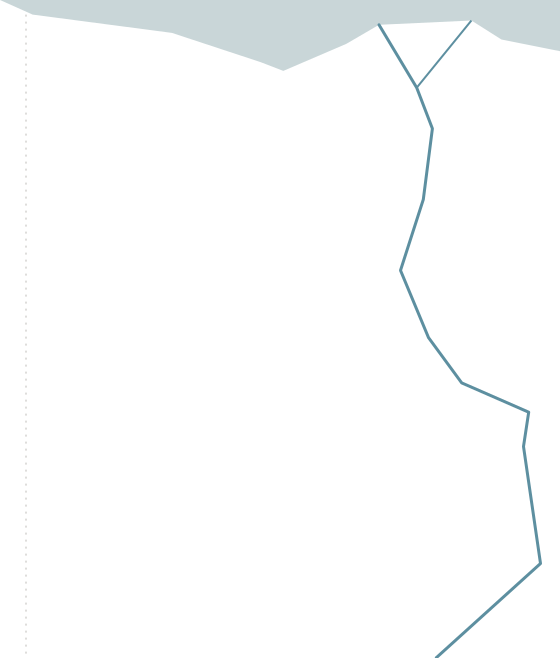
Map: Bahariya to Farafra
Schematic map, not to scale: positions are approximate, and the desert sites spread over many kilometres. The road runs about 180 km from Bawiti to Farafra; shaded areas show roughly where the black hills and the white chalk are.
Questions people ask
How far is the White Desert from Cairo?+
About 500 km by road to the main formations, or six to seven hours of travel with stops. Bawiti, the town in Bahariya Oasis where trips switch to a 4x4, is about 370 km and four and a half to five hours from central Cairo.
How far is the White Desert from Bahariya?+
The northern edge of the White Desert is about 100 to 130 km south of Bawiti, roughly one and a half to two hours with stops at the Black Desert, Crystal Mountain and Agabat. The camps in the chalk are usually about 130 km from Bawiti.
How far is the White Desert from Farafra?+
The main chalk formations are about 45 km north of Qasr Farafra, roughly 45 minutes by road. Farafra is the nearest town to the heart of the White Desert, about 180 km beyond Bawiti and about 550 km from Cairo.
Can I take a bus to the White Desert?+
Only as far as Bawiti. Public buses run from Cairo to Bawiti in about five to six hours. From there you still need a 4x4, a desert driver and a permit, which a licensed local operator arranges; we can meet you off the bus in Bawiti. The bus saves money but costs time.
Can I drive myself to the White Desert?+
You can drive the paved road to Bahariya and Farafra, but the formations are off-road inside a protected area, and foreign visitors need a permit and a licensed guide. Self-drive into the park is not a practical option for most visitors.
How far is the White Desert from Luxor?+
Roughly 900 km by the southern road through Kharga, Dakhla and Farafra, which needs at least two days. Most travellers fly or take the overnight train to Cairo instead and start from there.
Can I get from Siwa to the White Desert directly?+
Not with us. We route via Cairo and don't use the road between Bahariya and Siwa, where the UK government advises against all but essential travel. Allow a full day of driving between Siwa and Cairo, then the usual two days for the White Desert.
What time should I leave Cairo for the White Desert?+
Between 06:00 and 07:00 in winter. That gets you across Giza before the traffic, into Bawiti by late morning and into the chalk by mid-afternoon, ahead of a sunset at around 17:15 in December. In summer we plan the timings around the heat.
Is there a train to the White Desert?+
No. No passenger trains run to Bahariya or Farafra. A British military railway was built from the Nile Valley towards Bahariya in 1916 but was taken out of use in 1919. Today every trip uses the road from Giza.
Can I fly to Bahariya or Farafra?+
No. Neither oasis has passenger flights. The nearest airports are in Cairo: Sphinx International on the Cairo–Alexandria desert road, west of the city, and Cairo International in the east. From either you continue by road.
How long does the journey back to Cairo take?+
About the same as the way out. On the last day of a trip we usually leave Bawiti around 13:00 and reach central Cairo around 17:30, traffic permitting. East Cairo and the international airport take longer, so leave a buffer before any flight.
Can I drive to Bahariya with a foreign licence?+
The UK government says British drivers need the 1949 international driving permit as well as their licence, and advises against driving outside main cities at night. Even with the right papers, the White Desert itself is off-road and needs a permit and a licensed guide.
Go with us
Trips that include this
2 days, 1 night
White Desert overnight camping trip from Cairo (2 days, 1 night)About US$185 to 230 shared · US$360 to 460 private, per person
Check dates
3 days, 2 nights
3-day White Desert tour: Bahariya, the White Desert and two nights outAbout US$495 to 660 per person for two travellers, private
Check dates