
The short answer
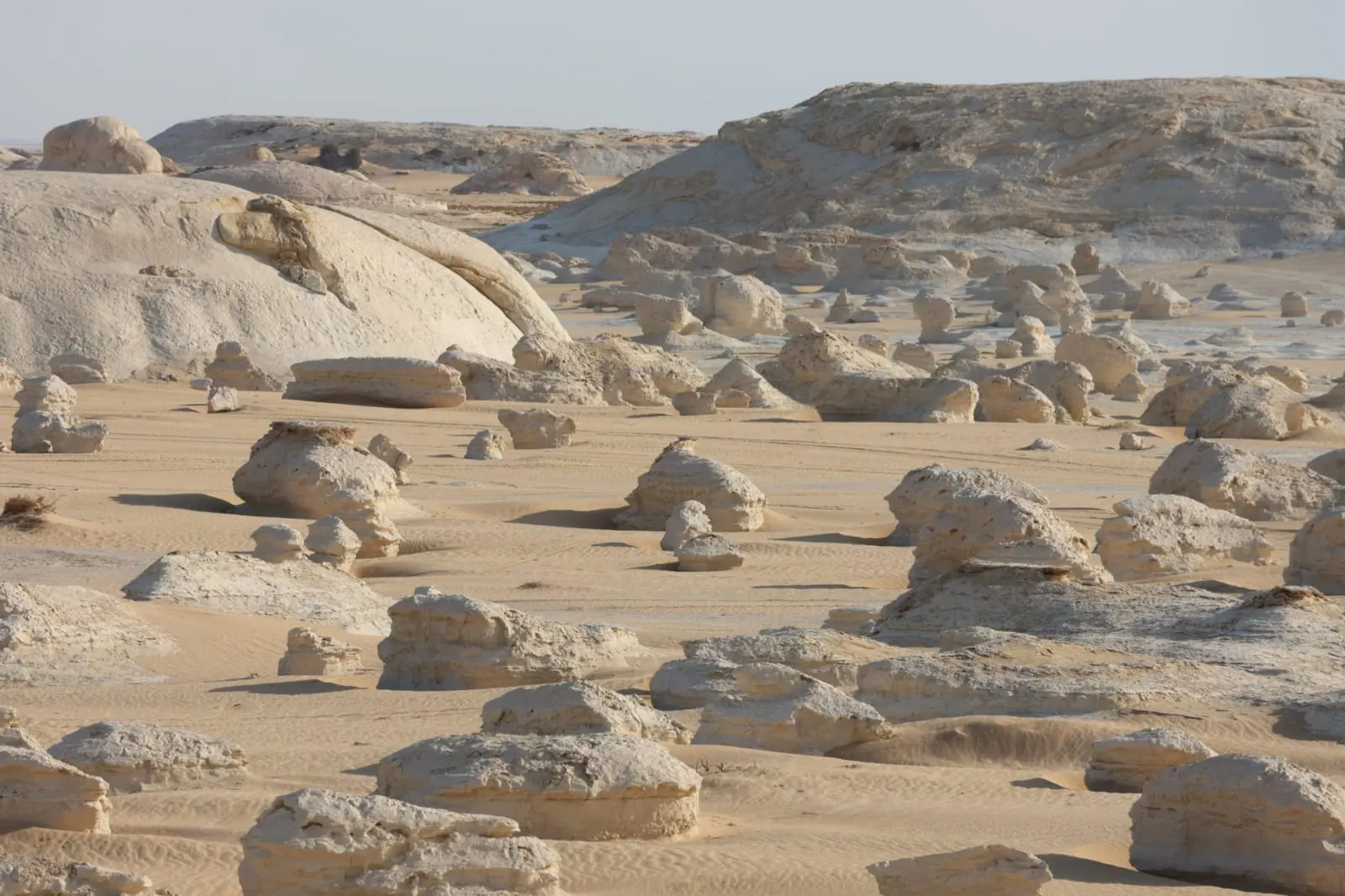
The New White Desert is the northern part, closer to Agabat, with large chalk mountains and towers. The Old White Desert is further south, nearer Farafra, and holds the famous field of wind-carved mushrooms and animal shapes such as the chicken. Good trips visit the New in the afternoon and finish in the Old for sunset and camp.
Ask us on WhatsAppThe White Desert isn't one spot. It's a long stretch of chalk country inside White Desert National Park, and drivers in Bawiti split it into two halves. Knowing which half you'll see, and when, makes a big difference to your trip.
Where each part is
Short answer: The New White Desert is the northern half, reached off-road from Agabat; the Old White Desert is the southern half, around 40 km north of Qasr Farafra and close to the main road.
Driving south from Bawiti, Bahariya Oasis, you pass the Black Desert and Crystal Mountain, then drop through the cliffs of Agabat. Beyond Agabat, the chalk begins. The northern part, with its big white mountains and escarpments, is what most crews call the New White Desert. Further south, nearer Farafra, the ground flattens into the plain of small formations that people call the Old White Desert.
| New White Desert | Old White Desert | |
|---|---|---|
| Location | North, just beyond Agabat | South, ~40 km north of Qasr Farafra |
| Rough distance from Cairo | ~490–500 km | ~500–510 km |
| Formations | Large towers, cliffs, chalk mountains | Mushrooms, animal shapes, small towers |
| Access | Off-road only | Short off-road from the asphalt |
| Crowds | Few cars | Most groups at sunset |
| Best light | Afternoon, sunrise on the cliffs | Sunset, moonlight, sunrise |
For the road itself: Cairo to Bawiti is about 370 km, 4.5–5 hours by car from central Cairo with a stop. Agabat is roughly 120 km south of Bawiti, and the Mushroom and Chicken about 135 km south of Bawiti. Bawiti to Qasr Farafra is about 180 km. The full drive is on getting there.
The New White Desert
Short answer: The New White Desert has big chalk mountains, long white cliffs and towers tens of metres high, reached off-road from Agabat, with far fewer visitors than the southern mushroom field.
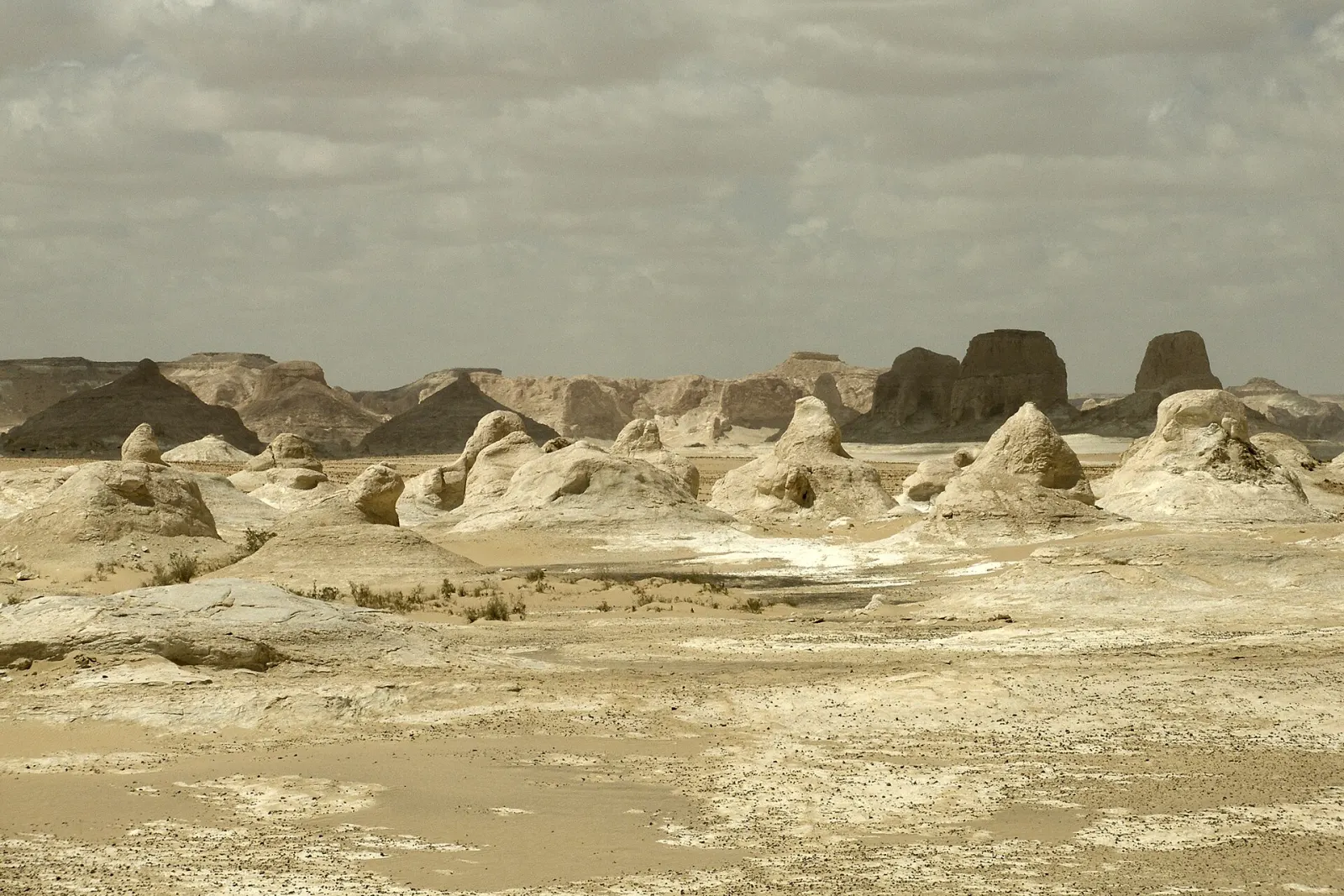
The name is a little misleading. The area isn't newer; it simply became a tourism stop later. Here the chalk rises in pale mountains and long escarpments, cut into towers, domes, pyramids, arches and natural "doors". Some carry darker caps of harder rock. Between them lie wide bays of soft sand where the 4x4 has to be driven with care.
What guests notice most is the scale. You park at the foot of a white wall and the car looks like a toy. It's quiet, too. Because it takes time and an experienced driver to reach, far fewer cars come here than to the mushroom field, and it is often possible to have a valley to yourself.
It's off-road only. There's no signage and the tracks shift with the sand, so it needs a driver who knows the area. The small spring of Ain Khadra, a patch of reeds and palms among the chalk, lies in this northern part and is usually visited on three-day trips.
The Old White Desert
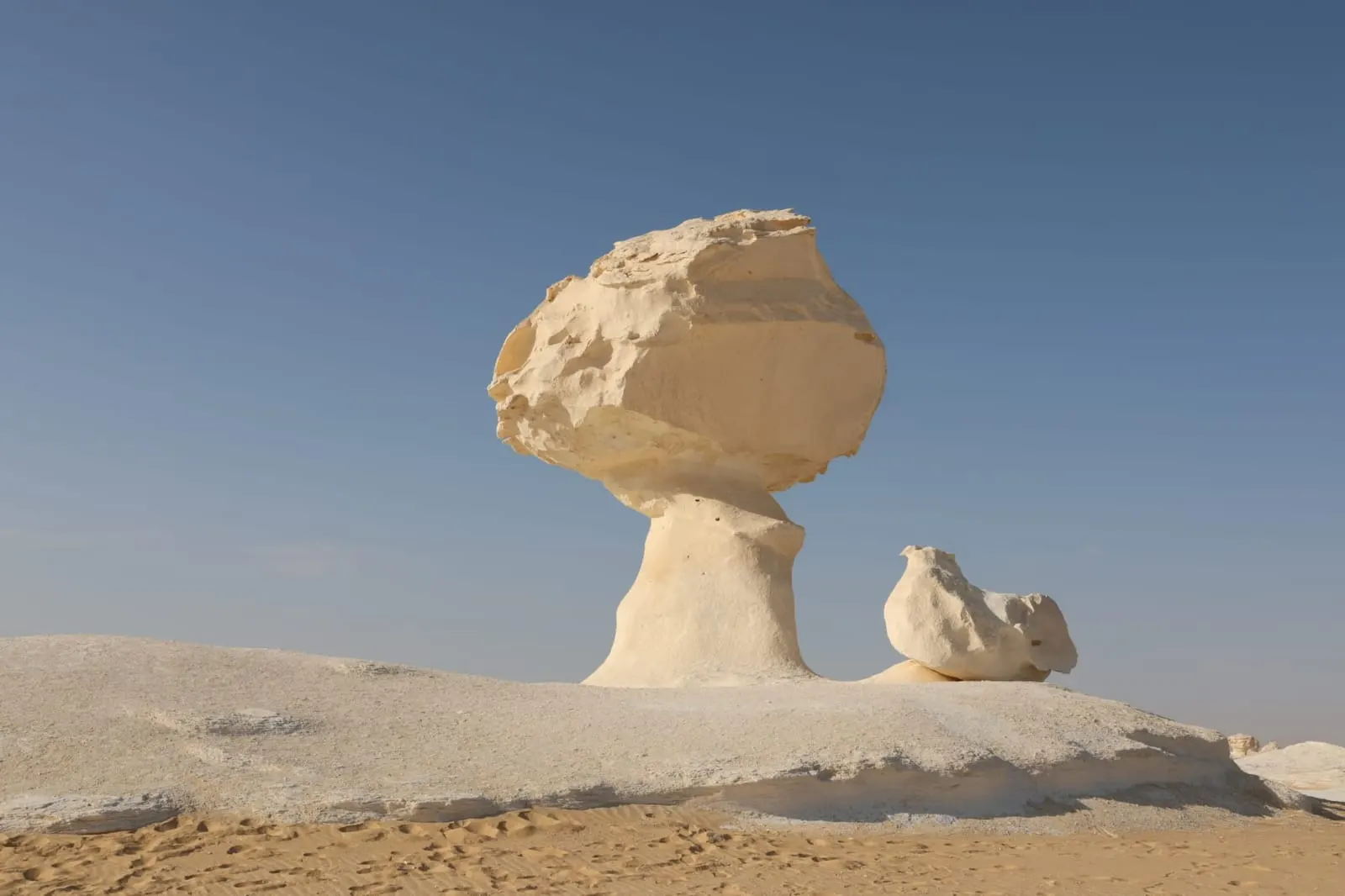
Short answer: The Old White Desert is the postcard view: a wide plain dotted with thousands of small wind-carved chalk formations, including the Mushroom and the Chicken, about 40 km north of Qasr Farafra.
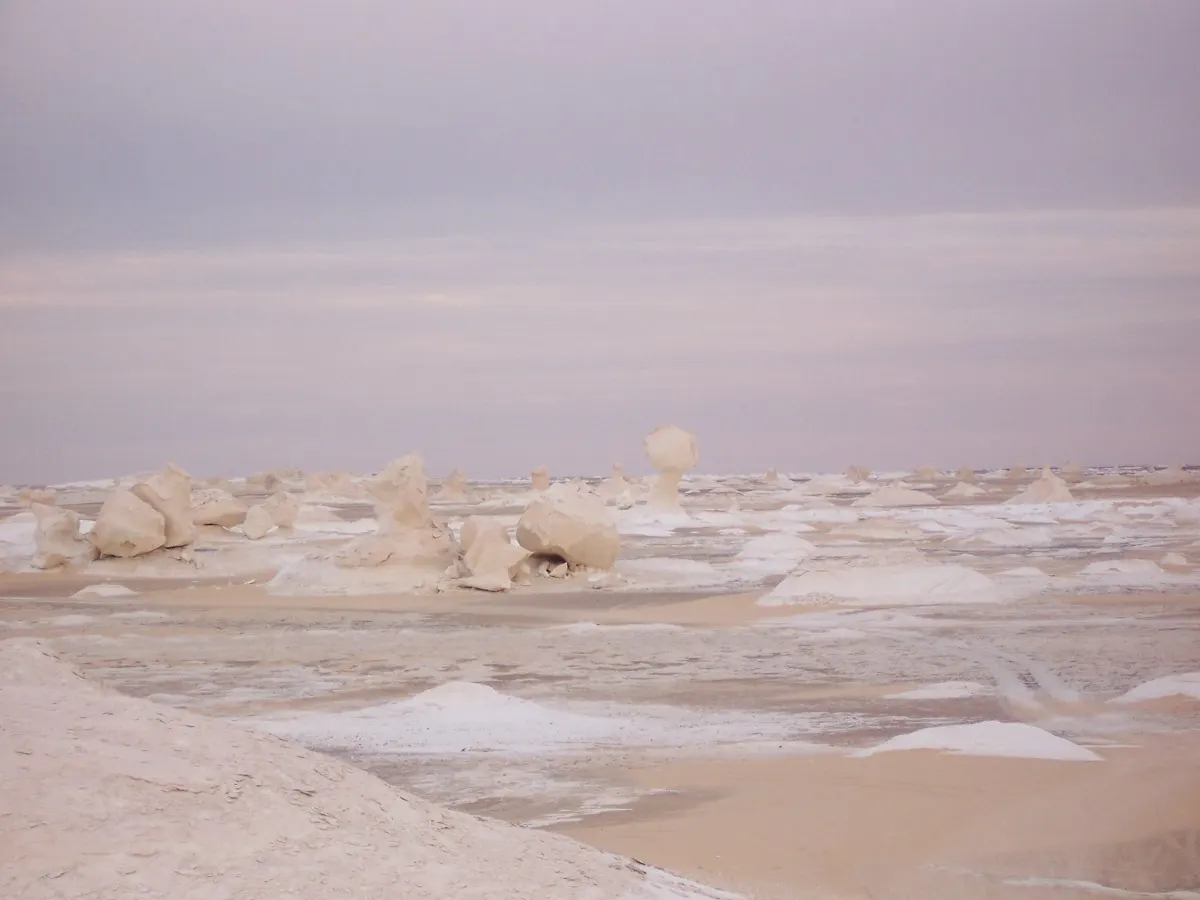
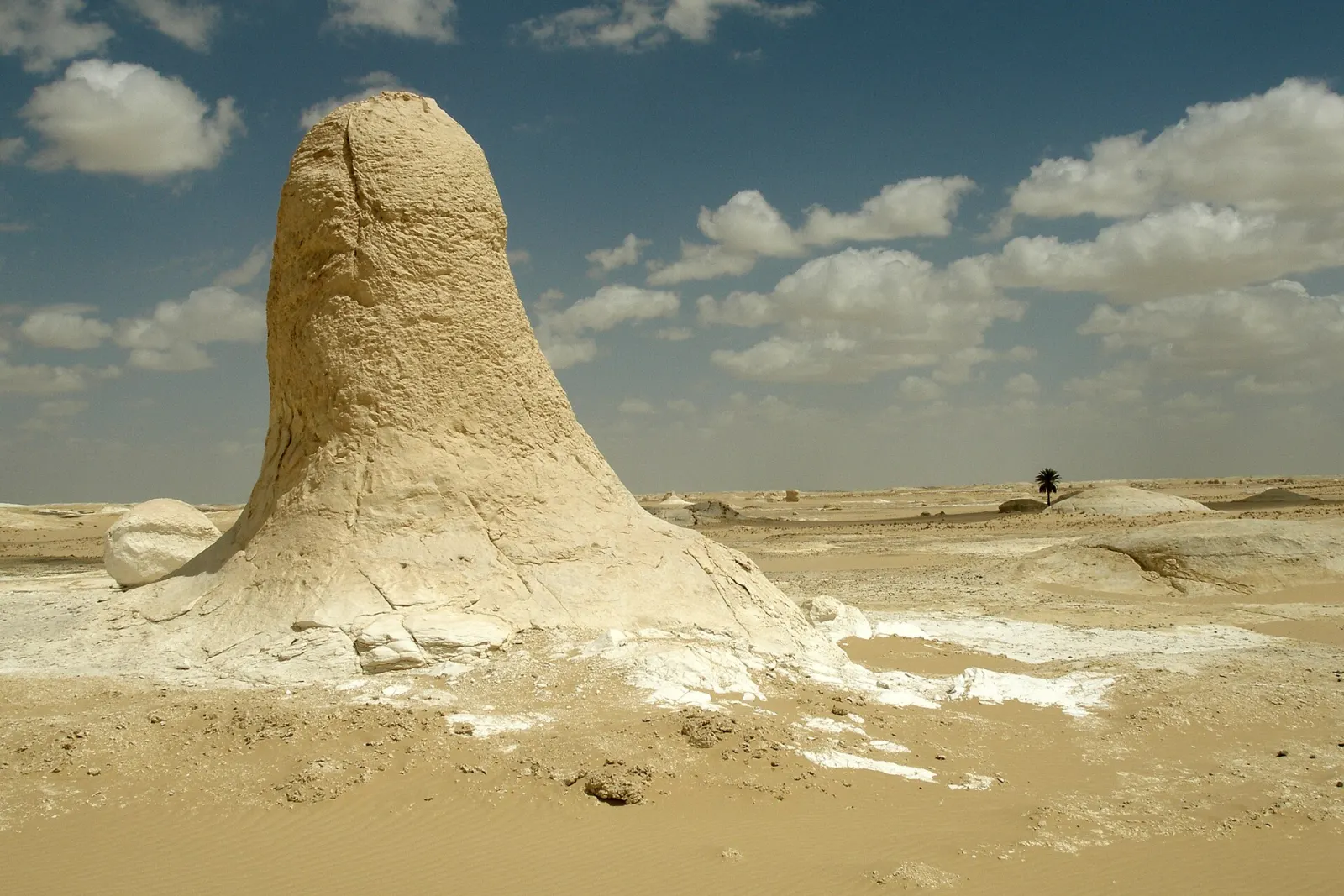
This is the image on every brochure. A wide plain is scattered with formations from knee height to a few metres, many carved by the wind into mushrooms with narrow stems and wide caps. Drivers have names for dozens of them: the chicken, the mushroom, the camel, the tent, the sphinx-like heads. The best-known pair is the Mushroom and Chicken.
At sunset the chalk turns gold, then pink, then grey-blue. Under a full moon it glows almost white, bright enough to walk without a torch. Because it's close to the asphalt, every trip comes here, so it's the busiest part of the park at sunset. Busy is relative: a few dozen cars spread over many square kilometres.
Why they look so different
Short answer: It's the same chalk; the north kept its big hills, while in the south the wind cut the rock down into small, separate pedestals.
Both halves are made of chalk laid down on a shallow sea floor in the Late Cretaceous, roughly 70–80 million years ago. In the north, larger blocks of rock have survived as inselbergs and cliffs. An inselberg is an isolated rock hill or small mountain that rises abruptly from a flat plain, as Wikipedia's inselberg entry (checked 19 November 2026) puts it. In the south, water and then wind broke the surface into thousands of small pieces and sandblasted their bases into stems. Wind-blown sand does most of its cutting close to the ground, which is why the narrowest part of each mushroom sits low down; the Mushroom and Chicken page explains the process in more detail.
Which half suits you?
Short answer: Come for the famous photo and an easy walk, and the Old White Desert is enough. Come for silence, scale and hiking, and make sure the New White Desert gets proper time.
| If you are... | Give more time to | Why |
|---|---|---|
| On your first visit, with one night | Old White Desert | The classic shapes, sunset and camp are all here |
| A keen walker | New White Desert | Longer walks among big towers and cliffs |
| A landscape photographer | Both | Northern cliffs at first light, southern mushrooms at sunset and under the moon |
| Travelling with young children | Old White Desert | Flat ground, short walks, less time bumping off-road |
| Hoping to avoid other groups | New White Desert | Fewer cars, especially in the afternoon |
| Coming for a full moon | Old White Desert | The open plain glows and casts sharp shadows |
How much of each you see on each trip length
Short answer: A day trip is mostly the Old White Desert; one night gives at most a brief look at the north and a full evening in the south; three days gives the north a proper day.
| Trip | New White Desert | Old White Desert |
|---|---|---|
| Day trip from Cairo | Usually little or none | A few hours in daylight |
| Overnight from Cairo | A brief pass at most; the big towers are not on the standard plan | Sunset, camp and sunrise |
| Private comfort camping | Two days: ask us. Three days: a full day | Sunset, camp and sunrise |
| Three days | A whole day, with longer walks and Ain Khadra | One or two nights of camp |
If the northern towers matter to you on a one-night trip, ask us before you book what is possible on your date.
How a good afternoon is planned
Short answer: New White Desert in the early afternoon, the mushroom field an hour before sunset, then camp in or near the Old White Desert.
A well-planned two-day trip uses the light:
- Early to mid-afternoon: off-road into the New White Desert from Agabat. The midday light is harsh, but big shapes still photograph well.
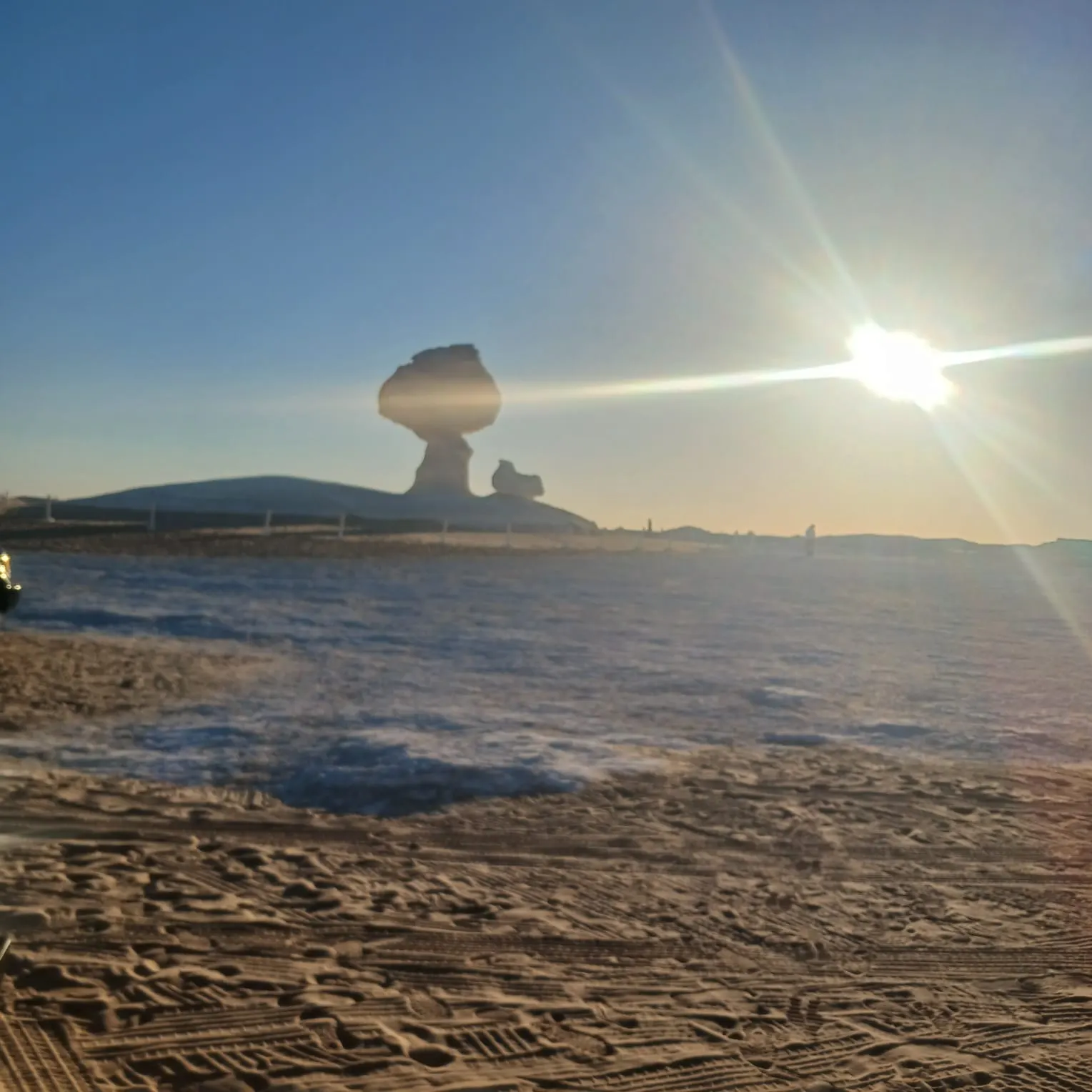
- About an hour before sunset: across to the Old White Desert, so you have time to walk among the formations.
- Sunset: near the Mushroom and Chicken or a quieter group of formations nearby.
- Camp: in the Old White Desert or at its edge, so sunrise is right outside your bed.
On a three-day trip you get a whole day for the northern chalk, including Ain Khadra and longer walks among the towers.
The light changes with the season
Short answer: In winter the sun sets around 17:15, so the afternoon in the north is short; in spring and autumn there is more room for both halves.
The sunset times on our sunrise and sunset page set the rhythm of the day.
| Month (mid-month) | Sunset, roughly | What it means for the two halves |
|---|---|---|
| November | ~17:17 | Short afternoon; an early start from Cairo matters most |
| December | ~17:15 | The shortest days; the tightest afternoon for the north |
| January | ~17:33 | Still short; a second night helps |
| March | ~18:15 | More room for a proper stop in the north |
| April | ~18:31 | Long, warm afternoons; time for both before sunset |
| October | ~18:39 | Long afternoons, still on summer time |
If you leave Cairo early, the drive and lunch in Bawiti usually take most of the morning and early afternoon. That is why a winter overnight trip can feel rushed in the north, and why a three-day trip changes the balance so much. Month-by-month weather is on weather and night temperatures.
Moonlight and the darker nights
Short answer: Around full moon, the Old White Desert glows and you can walk without a torch; around new moon, both halves are dark enough for a sky full of stars.
The open plain of the Old White Desert is the best place in the park for moonlight. The small shapes throw sharp shadows and the chalk looks almost like snow. For this season, timeanddate's moon phase tables for Cairo (2026 and 2027, checked 19 November 2026) list full moons on 24 November 2026, 24 December 2026, 22 January 2027, 21 February 2027, 22 March 2027 and 21 April 2027. The nights either side are bright too.
Moonlight has a trade-off. A bright moon washes out the fainter stars and the Milky Way. If stars are your priority, pick dates near new moon; see stargazing. If moonlight is the point, our full moon camping trip is built around it.
Where we camp
Short answer: Usually in or at the edge of the Old White Desert, so sunrise is right outside your bed; wind or a checkpoint ruling can occasionally move the camp.
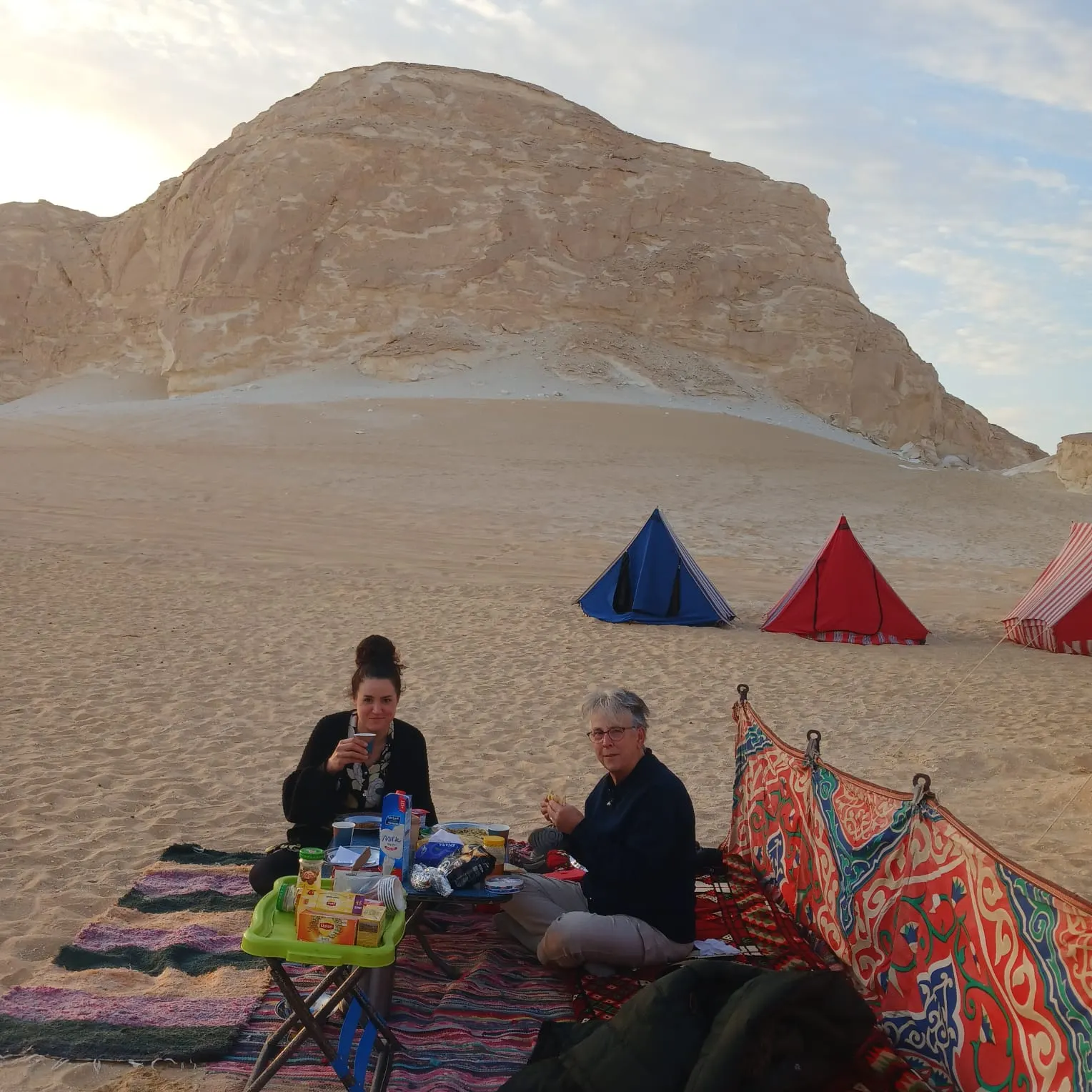
We pick camp areas with a light-pollution map for the darkest sky, and on private trips we camp away from other groups. How we choose each night's spot, and what happens when the plan changes, is on where we camp.
Wherever the camp is, it should be in an area the park allows for camping, away from the formations themselves. Wikivoyage's guide to the park (checked 19 November 2026) says there are fifteen designated rest areas for overnight camping, and that cooking is only allowed at them. It also asks visitors to bring their own fuel and not to burn plants or plant debris for a fire. If a campfire matters to you, ask us what fuel the crew brings.
Wildlife in both halves
Short answer: You are more likely to see tracks than animals: foxes, gazelles, jackals and the sand cat live in the park, and they move mostly at night.
The park protects more than rock. Wikipedia's park entry (checked 19 November 2026) names the endangered rhim gazelle and the vulnerable dorcas gazelle, along with Barbary sheep, jackals, several fox species and the sand cat. Most are shy and active after dark, so look for paw prints around camp in the morning.
Naming confusion
Short answer: Some operators swap "Old" and "New" or call the whole north "Agabat", so ask which areas a trip actually visits.
You'll see the names used the other way round, or the north lumped together with Agabat, or the whole park simply called "the White Desert". Labels matter less than the route. Ask any operator three things:
- Will we drive off-road among the big northern chalk mountains?
- How long do we stop there, and at what time of day?
- Where exactly do we camp, and is it a permitted area?
Our guide to choosing an operator has more questions worth asking.
Responsible visiting
Short answer: Both halves follow the same park rules: keep to existing tracks, don't climb or carve the formations, take nothing and carry every bit of rubbish out.
The chalk is soft. A hand on a mushroom stem or a foot on a tower speeds up its collapse, and fresh tyre tracks across the crust can stay visible for years. The rules are the same in the north and the south:
- Keep the 4x4 on existing tracks.
- Don't climb, lean on or carve the formations.
- Leave fossils, crystals and the dark "desert flower" nodules where they are.
- Camp only where the park allows, away from the formations.
- Carry every piece of rubbish out, including tissues.
The full rules, and why the chalk is so easily damaged, are on our White Desert National Park page.
Our advice
Short answer: If you only have one night, ask for an early start so you reach the chalk by mid-afternoon; if you have two, give one day to the north.
- One night: leave Cairo early and keep the lunch stop in Bawiti short, so you get proper time in the north before sunset in the south.
- Two nights: spend a full day in the New White Desert and camp twice in different areas.
- Photographers: the northern cliffs catch the first sunlight; the southern mushrooms are best at sunset and under the moon.
- Full moon lovers: the Old White Desert is the place; see our full moon camping trip.
- Winter travellers: the days are short, so a second night does more for the north than an earlier alarm.
Both areas lie inside White Desert National Park (protected since 2002), so the same permit and rules cover each. The park charges a government protected-area fee for foreign visitors, collected through the operator and shown as its own line in your quote; see the park page for the details. Send us your dates and we'll tell you how much time each area gets on your trip.
Where it is
Schematic map, not to scale: positions are approximate, and the desert sites spread over many kilometres. The road runs about 180 km from Bawiti to Farafra; shaded areas show roughly where the black hills and the white chalk are.
Questions people ask
Where is the famous mushroom and chicken rock?+
In the Old White Desert, the classic area of formations about 40 km north of Qasr Farafra, a short drive off the asphalt. Every driver from Bawiti knows it, and nearly every group stops there.
Do shared trips include the New White Desert?+
Many shared two-day trips cut through it only briefly on the way south. To spend proper time walking among the big towers, choose a three-day trip or a private overnight where you can ask for a longer afternoon stop.
Can I see both parts on a day trip from Cairo?+
Only briefly. The White Desert is about 500 km from Cairo each way, so a day trip leaves little daylight in the chalk, and most day trips focus on the Old White Desert's mushroom field. To see the northern chalk mountains properly, stay at least one night.
Is the New White Desert worth a third day?+
If you love landscapes or photography, yes. The scale of the chalk mountains is very different from the mushroom field, you can walk for an hour without seeing another car, and Ain Khadra spring fits into the same day.
Are the Old and New White Desert both inside the national park?+
Yes. Both lie within White Desert National Park, a protected area since 2002, and the same rules apply in each: stay on existing tracks, don't climb the formations, and carry all rubbish out.
Why is the northern part called "new" if it isn't newer?+
The names come from tourism, not geology. The southern mushroom field was the area visitors knew first; the northern chalk mountains became a regular stop later. The rock in both parts is the same Late Cretaceous chalk.
Do I need a separate permit or fee for the New White Desert?+
No. Both halves sit inside the same protected area, so one desert permit covers the trip. The park charges a government protected-area fee for foreign visitors, collected through the operator and shown as its own line in your quote. Ask us how it appears on your quote.
When is the Old White Desert brightest under the moon?+
On the nights either side of a full moon. For this season, timeanddate lists full moons in Cairo on 24 November 2026, 24 December 2026, 22 January 2027, 21 February 2027, 22 March 2027 and 21 April 2027. Ask us which camp nights fall closest.
Which half is easier for children or anyone who walks slowly?+
The Old White Desert. The car parks close to the formations on flat ground, and short walks of a few minutes reach dozens of shapes. The New White Desert means more time in the 4x4 on soft sand and longer walks between towers, which suits keen walkers better.
Go with us
Trips that include this

2 days, 1 night
White Desert overnight camping trip from Cairo (2 days, 1 night)About US$185 to 230 shared · US$360 to 460 private, per person
Check dates
3 days, 2 nights
3-day White Desert tour: Bahariya, the White Desert and two nights outAbout US$495 to 660 per person for two travellers, private
Check dates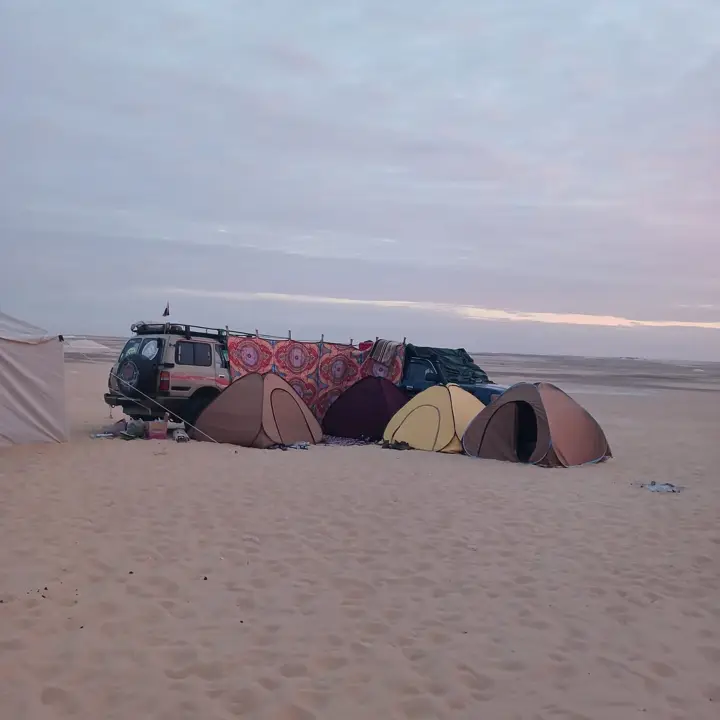
2 or 3 days
Private White Desert camping in comfortOn request (depends on group size and nights)
Check dates